Casey’s Proposed Budget Jumps 53% to $31 Million, Driven by Grant Opportunities
The Casey City Council has moved forward with a proposed fiscal year 2026 appropriations ordinance totaling over $31.1 million, a staggering 53.5% increase from the previous year. City officials, however, were quick to explain that the dramatic jump is not a reflection of a massive spending spree but rather a strategic move to position the city for a historic number of grant opportunities.
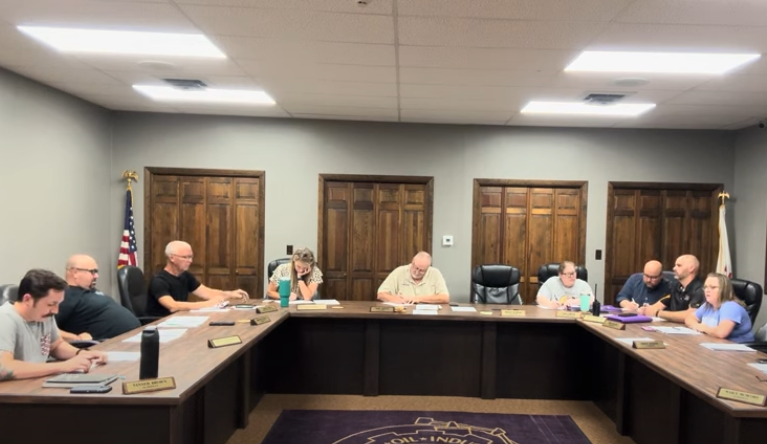
At its Monday meeting, the council voted to place the appropriations ordinance on public display, a required step before a final vote. The total appropriation is $31,128,050, up from $20,275,000 in the prior fiscal year.
Mayor Mike Nichols addressed the significant increase, emphasizing that it is largely driven by earmarking funds for potential projects should the city be awarded competitive grants.
“I said before it was going to be a severe increase in appropriations with all the grants and projects we’ve got,” Nichols stated. “We’re looking at a 53 and a half percent increase on appropriations. We do not have 53 and a half percent more dollars to work with.”
He clarified that the appropriation is a budgetary tool that authorizes spending if funds become available, but does not represent money the city currently has or will necessarily spend. According to the breakdown, $4.1 million of the increase is tied directly to grant applications. Another large portion is for projects at the Casey Municipal Airport, which are largely funded by outside sources, and $2.9 million is set aside in contingency funds for emergencies.
“You’re required to put them in there because you can’t spend on it if you didn’t appropriate for it,” Nichols explained. “That doesn’t mean we’re spending $31 million. It just means that it’s there in the event we have the opportunity to benefit everybody in town and the monies are there.”
Economic Development Director Tom Daughhetee has been actively pursuing grant funding for the city. While some grants require no local match, others necessitate a contribution from the city, typically around 20%. The council will have to evaluate the affordability of each grant if awarded.
“If we get a grant for $850,000, we got to come up with 20% of that, but we may not be able to afford the grant,” Nichols acknowledged. “But we will worry about that if we get the grant and go from there.”
To manage current expenses, the city recently cashed in two certificates of deposit—a $250,000 CD from the electric fund and a $50,000 CD from the water fund.
Before the council can formally adopt the appropriations, it must be available for public inspection for at least 10 days. A public hearing must also be held during that period, with notice published in a local newspaper at least 10 days in advance. City Attorney Tracy Willenborg noted the timeline would be tight for the council’s next meeting on August 4, pending confirmation of the local newspaper’s publication deadlines. The council scheduled a final Finance Committee meeting for July 28 to finalize the details.
Mostly Sunny
Latest News Stories

ACA premiums projected to rise 26% in 2026, far above U.S. inflation

Milestone Moment: Moore hits 1,000th point in season opener

Michigan law firm sued over alleged racial bias in diversity scholarships

WATCH: Libertarian concerns persist as IL Sec of State announces IDs for Apple Wallet
Illinois quick hits: Pritzkers meets the Pope; Broadview to close street outside ICE facility

DHS launches new initiative to crack down on student visa fraud

‘Ghost projects’ haunt power grid planners and taxpayers

WATCH: $10M campaign finance fine dropped; Digital ID unveiled, Chicagoans speak up
ICE, Border Patrol agents experience historic surge of vehicular attacks this year
Poll: Americans support eliminating Department of Education

Exclusive: Nonprofit leader urges fight against ‘woke capitalism’

As pennies disappear, businesses turn to hoarding, rounding

Chicago tax proposals draw concern over legality, ‘economic death spiral’