

Committee highlights failures of Afghan vetting, as funding for refugees in limbo
Amid a scathing committee hearing on the vetting process of Afghan parolees under the Biden administration, nearly $6 billion in continual funding for refugees is poised to be voted on in Congress.
The Senate Judiciary Committee hosted a hearing last week on the Biden administration’s vetting practices surrounding nearly 100,000 Afghan evacuees admitted to the U.S. following the 2021 pullout of American forces from Afghanistan, under Operation Allies Welcome.
U.S. Sen. John Cornyn, R-Texas, says the Biden administration gave an “easy pass” to hundreds of thousands of noncitizens, including the Afghan evacuees, that he argues would “not be eligible to come, but for this discretionary issuance.”
Officials testifying during the hearing admitted that many of the parolees were admitted into the U.S. without critical biographic data, including a person’s name and date of birth. They noted that 1,300 Afghan nationals were admitted into the country before any biometrics, fingerprints, or photographs were required to run background checks on the individuals.
Officials admitted that several agencies lost track of the evacuees once they were resettled in the country, across over 176 communities, and that the government hasn’t been able to locate many of them.
Cornyn highlighted that “18,000 of them were known or suspected terrorists” with the National Counter Terrorism Center identifying “2,000 individuals with ties to terrorist organizations and is actively working with the FBI on their cases.”
U.S. Sen. Josh Hawley, R-Mo., pointed out that “Congress appropriated one and a half billion dollars for this operation on the part of the Biden admittance of all these refugees and parolees.”
The senator claimed that “tens of millions of dollars, went to pro terrorist organizations in this country that were supposed to help monitor these refugees and move them along the parole system, but in fact, took the money and did who knows what with it.”
Hawley highlighted the recent allegations of fraud surrounding the Somali community in Minnesota and how it parallels those of Afghan refugees.
“No, we’re going to find that it happened in this case, in this instance, in multiple states, tens of millions of taxpayer dollars going to organizations that support Hamas, that support terrorism, that have praised the attacks of Oct. 7, that have consistently defended, apologized for and justified terrorist attacks around the nation, around the world, that got money from our own government in order to participate in this boondoggle,” Hawley lamented.
Congress is poised to vote on continued funding for the refugee program, which skyrocketed under the Biden administration as part of the Refugee and Entrant Assistant programs.
The funding rose from less than $2 billion in fiscal year 2021, the last year of President Donald Trump’s first term, to nearly $9 billion the next fiscal year – the first year of former President Joe Biden’s administration.
Despite the government admitting many of the refugees were unvetted, taxpayers could remain on the hook for billions of dollars, as many of these refugees continue to qualify for over a dozen taxpayer-funded benefits.
As part of Operations Allies Welcome, the Biden administration admitted nearly 200,000 Afghan evacuees between 2021 and 2023.
The influx of Afghan refugees contributed significantly to the substantial increase in refugee funding.
The benefits refugees are eligible to receive include: Supplemental Security Income (SSI), Supplemental Nutrition Assistance Program (SNAP), Women, Infants and Children (WIC), HUD Public Housing and Section 8 housing vouchers, emergency Medicaid, Affordable Care Act health plans and subsidies, full-scope Medicaid, Children’s Health Insurance Program (CHIP), federal student aid and Pell grants, REAL ID, Workforce Innovation and Opportunity Act services, refugee resettlement programs through the Office of Refugee Resettlement and Temporary Assistance for Needy Families (TANF), according to the National Immigration Law Center.
For those who didn’t qualify for SSI or TANF, refugees were eligible for up to 12 months of Refugee Cash Assistance (RCA) through the ORR.
In addition, many refugees qualified for employment assistance through Refugee Support Services, which included: childcare, transportation, “employability services,” job training and preparation, job search assistance, placement and retention, English language training, translation and interpreter services and case management, according to the Administration for Children and Families Office of Refugee Resettlement.
The ORR also noted that “some clients may be eligible for specialized programs such as health services, technical assistance for small business start-ups and financial savings.”
Many refugees also qualified for “immigration-related legal assistance” to assist them “on their pathway to obtaining a permanent status.”
Congressionally-appropriated spending on refugee and migrant assistance programs rose sharply under the Biden administration, totaling roughly $30 billion over those four years.
In particular, lawmakers significantly increased appropriations for the Refugee and Entrant Assistance programs – housed in the U.S. Department of Health and Human Services – which provide benefits to eligible refugees.
In fiscal year 2021, the last year of Trump’s first term, Congress appropriated $1.91 billion for REA programs. That number shot up to $8.92 billion the following year, coinciding with the influx of Afghan refugees and record-high border crossings.
Total federal assistance for refugee programs in fiscal year 2023, however, reached $10 billion, as an OpenTheBooks investigation highlighted.
Approximately $6.42 billion of that amount came from the annual HHS appropriations bill, while lawmakers added an additional $2.4 billion of “emergency” designated spending on REA programs in a supplemental appropriations bill. The remaining $1.53 billion, tucked into another supplemental appropriations bill, went to the Department of State for “migration and refugee assistance.”
Spending on REA programs decreased slightly in the last fiscal year of Biden’s term, with the fiscal year 2024 appropriations bill and another supplemental emergency appropriations bill together allocating more than $8.6 billion.
Despite the multitude of costly taxpayer services provided to refugees, some groups in particular, including Afghans, continue to have higher rates of poverty, many continuing to rely on taxpayer-funded programs.
The Migration Policy Institute reported that Afghan refugees “are less likely to be proficient in English, have lower educational attainment, and lower labor force participation” compared to other immigrants in the U.S. Additionally, “compared to both the native born and the overall foreign-born population, they are much more likely to be living in poverty.”
The institute highlighted the “relatively low labor force participation rate” among Afghan immigrants ages 16 and older, showing that in 2022, 61% were in the civilian labor force, compared to 67% for other immigrant populations and 63% for U.S.-born individuals.
The funding is part of a set of appropriations bills up for vote that fund federal agencies in fiscal year 2026, including a bill for Labor, Health and Human Services, and Education, which allocates $5.69 billion for refugee assistance services.






Chance Showers And Thunderstorms
Latest News Stories
Legislative Concerns and Athletic Policy Changes Address School Operations
SCHOOL BOARD MEETING BRIEFS
Casey Approves Historical Society Parade, Adds Employee Medical Benefits
Casey Advances Comprehensive Planning with Public Input Planned
CITY MEETING BRIEFS
Casey Police Face Staffing Changes as Officer Resigns, New Recruit Advances
Economic Development Initiatives Gain Momentum in Casey
CITY MEETING BRIEFS
Casey-Westfield Board Holds Hearing on $4.5 Million Safety Bond Issue
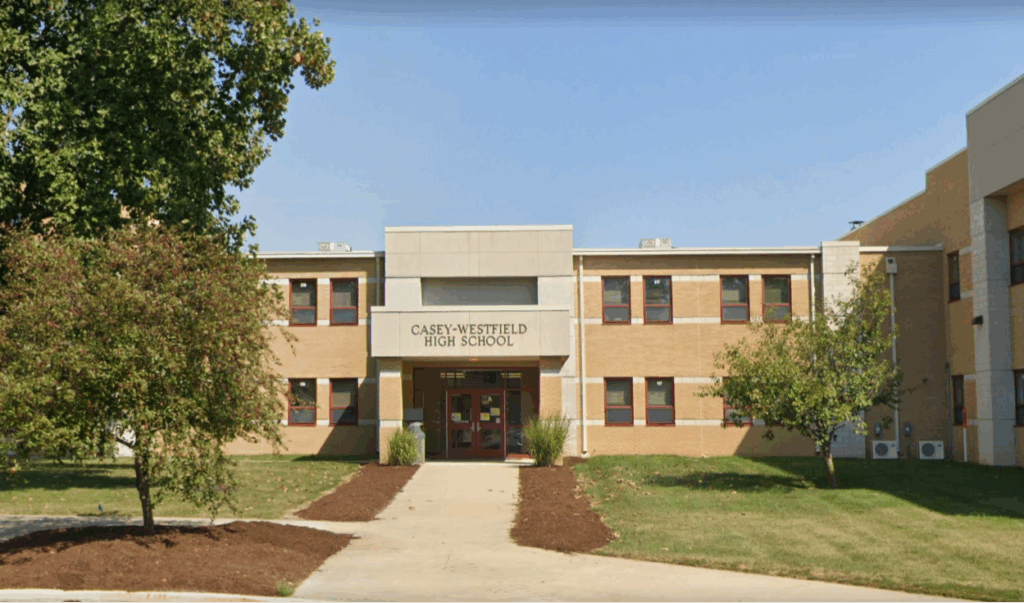
Casey-Westfield Students Excel in Academics and Community Service
SCHOOL BOARD MEETING BRIEFS
Casey Moves Forward with Utility Rate Study as Resident Questions City Processes
CITY MEETING BRIEFS
Casey-Westfield Schools Earn Perfect Financial Rating, Approve Major Purchases