Federal Reserve cuts key interest rate for second time this year
The Federal Reserve cut interest rates by a quarter-point on Wednesday for the second time this year, not nearly as much as President Donald Trump wants the central bank to reduce rates.
The move lowers the Fed’s benchmark short-term interest rate to a range between 3.75% and 4%, the lowest in three years. That’s down from a peak of around 5.4%.
“Available indicators suggest that economic activity has been expanding at a moderate pace,” the Federal Open Markets Committee said in a statement. “Job gains have slowed this year, and the unemployment rate has edged up but remained low through August.”
It also noted that inflation “has moved up since earlier in the year and remains somewhat elevated.”
The federal government shutdown, which started Oct. 1, has limited the economic data available to the rate-setting committee.
“Although some important federal government data have been delayed due to the shutdown, the public and private sector data that have remained available suggest that the outlook for employment and inflation has not changed much since our meeting in September,” Federal Reserve Chairman Jerome Powell said Wednesday at a news conference.
The Fed projected an additional quarter-point cut at its next meeting in December, but Powell said Wednesday that was uncertain. Powell said there were “strongly differing views” about what the Fed should do in December.
“A further reduction of the policy rate in December is not a foregone conclusion – in fact, far from it,” Powell said.
Trump’s newest appointee to the FOMC, Stephen Miran, voted against the move, preferring a 1/2 percentage point cut at this meeting. Jeffrey Schmid also opposed the cut, he preferred no change to the federal funds rate.
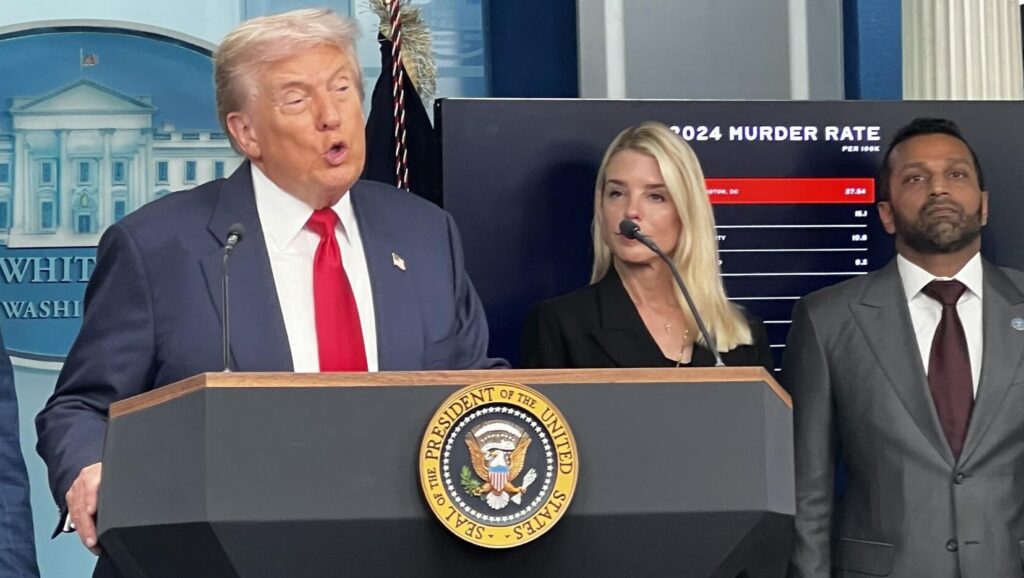
Trump wants even lower rates and has aggressively pushed the independent central bank to lower them.
Trump has said the U.S. should have the lowest rates in the world.
Ryan Young, senior economist with the Competitive Enterprise Institute, said the biggest news was that the Fed will stop reducing its balance sheet as of Dec. 1, which roughly doubled in size during the pandemic.
“That doubling was a leading cause of the pandemic inflation,” he said. “Since about 2022, the Fed has slowly been shrinking its balance sheet back to pre-COVID levels, and still has a ways to go. The Fed’s balance sheet is a much more potent source of inflation than interest rates, because it directly affects the money supply.”
He added: “This is another sign that the Fed is more worried about preventing a recession than it is about keeping inflation in check. Look for inflation to stay elevated for a long time to come if the Fed starts growing its balance sheet again.”
Events

Latest News Stories

Vance optimistic with Gaza peace plan; reiterates no U.S. troops to be on the ground

Poll: Majority of Americans do not support National Guard to deter crime

‘Legal minefield:’ Biometrics reforms needed to keep IL tech biz growing

Warriors Fall to Olney 28-27 in Heartbreaking Battle for Little Illini Title

As military branches celebrate 250 years, Democrats vote against paying them

Chicago transit violent crime at 7 year high, funding concerns persist

WATCH: National Guard case before SCOTUS; Trump insists China soybean deal coming

Illinois quick hits: Harvey furloughs some employees; lead poisoning prevention continues

Illinois quick hits: Filings made to SCOTUS in National Guard case; Chicago sued DHS

Colorado Dems seek restoration of $600M in federal funds

Senate Democrats block bill to end government shutdown for 11th time

WATCH: Eric Trump talks about his book at Reagan Library