
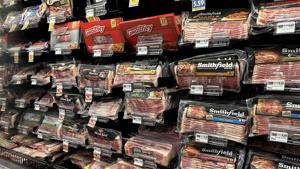
Trump administration will fully fund SNAP despite appeal
The Trump administration said Friday afternoon that it would fully fund the Supplemental Nutrition Assistance Program for November, despite the funding lapse and government shutdown.
Earlier on Friday, the federal government asked an appeals court to pause a lower court ruling that required the administration to fully fund benefits for SNAP, formerly known as food stamps.
SNAP provides federally funded food benefits to approximately 42 million low-income families each month, but these benefits began to run dry when Congress failed to pass bills funding the government.
Patrick Penn, deputy under secretary for Food, Nutrition, and Consumer Services, which is part of the U.S. Department of Agriculture, told states that the USDA will fully fund the program. The memo, obtained by The Center Square, said “FNS is working towards implementing November 2025 full benefit issuances in compliance with the November 6, 2025, order from the District Court of Rhode Island.”
“Later today, FNS will complete the processes necessary to make funds available to support your subsequent transmittal of full issuance files to your EBT processor,” according to the memo Penn sent to state directors. “We will keep you as up to date as possible on any future developments.”
The decision to fully fund the program despite the funding lapse and ongoing shutdown came after weeks of wrangling in the courts and elsewhere.
Crystal FitzSimons, of the Food Research & Action Center, said the funding delays were unnecessary.
“The Trump administration all along had both the power and the authority to ensure that SNAP benefits continued uninterrupted but chose not to act until a court order forced it to do so,” she said in a statement. “Meanwhile, millions of Americans already struggling to make ends meet were left scrambling to feed their families and experienced undo stress and anxiety with confusing messages coming from the administration.”
Attorneys for the administration blamed Congress in an emergency request seeking a pause on the lower court ruling.
“This is a crisis, to be sure, but it is a crisis occasioned by congressional failure, and that can only be solved by congressional action,” attorneys for Department of Agriculture Secretary Brooke Rollins wrote on Friday.
Attorneys for the federal government added: “Courts hold neither the power to appropriate nor the power to spend.” They further argued the lower court had exceeded its authority with the order to fund the SNAP program fully.
“There is no lawful basis for an order that directs USDA to somehow find $4 billion in the metaphorical couch cushions,” the attorneys wrote.
President Donald Trump has used Department of War research funds to continue paying members of the military, but warned that the money will run out.
In fiscal year 2024, SNAP served an average of 41.7 million participants per month. Federal SNAP spending totaled $99.8 billion and benefits averaged $187.20 per participant per month, according to the USDA’s Economic Research Service.
A congressional funding lapse on Oct. 1 prompted what has since become the longest-ever partial shutdown of the federal government. Both parties have blamed the other for the lapse in appropriations.
Events

Latest News Stories

Judge blocks USDA from demanding SNAP info from Illinois, other states

Clark Secures Fourth Career All-Conference Honor at LIC Meet
‘Moral disaster’: Wisconsin leaders want answers on teacher assault probe

Stellantis announces $13B investment in U.S.

Warriors Clinch OT Thriller with Goal-Line Stand to Remain Undefeated
Trump continues pursuit for peace in Eastern Europe, Middle East

WATCH: Sanctuary policies, public safety debated; House resolutions criticize Trump
Illinois quick hits: Pritzker tax payments revealed; teen abortion rate 3rd highest

Poll: Majority of Americans concerned with rise in political violence
Brief filed in effort to restore Fourteenth Amendment, end birthright citizenship

Federal judge extends order on NYC anti-terrorism funds
Trump says he may attend Supreme Court case challenging tariffs