
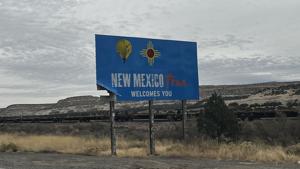
New Mexico attempts to counter Trump’s deportation agenda
The New Mexico legislature is attempting to counter the Trump administration’s immigration enforcement measures.
The Immigrant Safety Act, passed by the New Mexico House of Representatives in March, prevents state and local governments from cooperating with federal immigration enforcement. The bill also proposes blocking the state’s public lands from being used to build immigration detention facilities.
Three detention facilities already in New Mexico have faced allegations of human rights violations, according to the American Civil Liberties Union.
“Behind each detention bed is a human being – parents separated from children, workers torn from their communities, and asylum seekers who fled violence only to face new trauma in detention,” said Jessica Martinez, director of Policy at the New Mexico Immigrant Law Center.
According to the legislature’s website, the bill was passed onto the New Mexico Senate before votes on the action were postponed indefinitely.
The state legislature’s actions raise questions about whether the federal government or state government should have control over immigration enforcement and visa issuances.
In April, New Mexico passed a law allowing noncitizens who are approved by the federal government to become police officers, in an expansion of eligibility for the state’s law enforcement requirements.
The legislation paired New Mexico with states including California and Illinois that don’t require citizenship for a job in law enforcement.
New Mexico Sen. Cindy Nava, a Democrat sponsor of the bill, said shortages in the state’s law enforcement capacity could be helped by expanding eligibility requirements.
“[The bill] opens the door for individuals who might otherwise have never considered a career in law enforcement – people who are already working, living and contributing to our communities but were previously excluded from this essential work,” Nava said.
The legislation is part of an effort the state has attempted to implement for years.
In 2012, New Mexico’s legislature attempted to create a state-level guest worker program for foreigners who were residents in New Mexico. The bill allowed foreign nationals and their immediate family members who were living in New Mexico to obtain temporary work permits.
Foreign applicants for the program would need to undergo background checks and pay a fee equal to the amount of social security payments. An employer looking to hire a foreign worker would also need to pay a fee equivalent to a Social Security payment based on earnings.
“The intent of the Guest Worker Act is to have the state of New Mexico work in partnership with the federal government to achieve effective immigration reform that improves New Mexico’s security and prosperity and fosters a consistent, reliable and understandable immigration policy for all New Mexicans,” the bill reads.
New Mexico’s bill never became law. However, it appeared to be related to a flurry of state activity surrounding the 2012 Supreme Court case Arizona v. United States, where the justices ruled that Arizona could not impose its own immigration enforcement laws.
“It is fundamental that foreign countries concerned about the status, safety, and security of their nationals in the United States must be able to confer and communicate on this subject with one national sovereign, not 50 separate states,” Justice Anthony Kennedy wrote in the court’s majority opinion.
The question of state sovereignty over immigration enforcement has split legal experts and continues to be an issue the Supreme Court has yet to further clarify.
Events

Latest News Stories

Bill blocks Federal Reserve members’ dual appointments

Lawmakers call for changes to cashless bail as Illinois faces federal funding loss

WATCH: House committee debates D.C. crime after Trump emergency order

Illinois quick hits: Unemployment down; Rivian supplier gets tax incentives

Pritzker’s office ‘extremely troubled’ by photo with suspect ‘peacekeeper’

Democrats’ CR could cost up to $1.4 trillion, add millions to Obamacare plans

Treasury goes after fentanyl-producing Sinaloa Cartel faction

Pritzker touts quantum future, state senator urges caution for taxpayers

Supreme Court sets oral arguments in tariff case

Dems release funding counterproposal full of partisan policy riders

Erika Kirk named CEO of Turning Point USA
Assembly leadership condemns violence, pleads for peaceful future