
Competing crypto plans create ‘narrow path’ for adoption
Two competing plans seeking to define market structure for digital assets in the U.S. have left a “narrow path” to pass regulations for cryptocurrency.
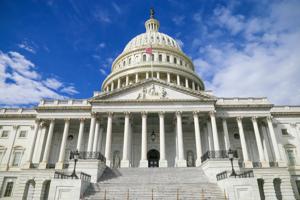
The U.S House passed the Clarity Act in mid-July in a 294 to 134 vote, an indication of bipartisan support. However, the measure has yet to advance in the Senate. Work on the measure continued during the longest-ever government shutdown, but President Donald Trump will face challenges delivering on his promise to make the U.S. the “crypto capital of the world.”
The Clarity Act would give the Commodity Futures Trading Commission a key role in regulating digital commodities, but keep some aspects of Security and Exchange Commission authority over crypto transactions, according to a report from the Congressional Research Service.
Despite passing the House, momentum has stalled for the parallel bill in the Senate. That’s in part because a competing proposal for digital market structure. U.S. Sens. Cynthia Lummis, R-Wyo., and Senate Banking Chairman Tim Scott, R-SC, introduced a different discussion draft that would create a new category for “ancillary assets” defined as “intangible, commercially fungible asset, including a digital commodity, that is offered, sold, or otherwise distributed to a person in connection with the purchase and sale of a security through an arrangement that constitutes an investment contract,” according to the text.
The discussion draft builds on the CLARITY Act, Lummis said in late July when the committee released the proposal.
“This discussion draft represents a thoughtful, balanced approach that will provide the clarity our innovators need while providing robust consumer protections. We cannot allow regulatory confusion to continue driving American innovation overseas,” she said at the time. “Market structure legislation will establish clear distinctions between digital asset securities and commodities, modernize our regulatory framework, and position the United States as the global leader in digital asset innovation.” That will help clarify which digital assets are not securities.
The Senate Banking Committee also issued a Request for Information for stakeholders to submit feedback on the draft and on a wide range of questions.
In August, Kristin Smith, president at Solana Policy Institute, called the path forward “incredibly narrow.”
“We have a path, but it’s incredibly narrow. It’s a 2-step process. First, we need the negotiating parties (Wyden-Lummis-Toomey and Portman-Sinema) to reach a deal. Second, we need no Senator to object to the adoption of the deal,” she wrote in a post on X. “Second, we need no Senator to object to the adoption of the deal. This won’t be easy, but there is a path.”
Earlier this week, Smith told Bloomberg that it was more important for Congress to get the framework done right than to get something done quickly. However, she said she does see signs of progress.
“There is a possibility that these bills be marked up at the committee level before the end of the year, but I think this is a debate that is going to go on into next year,” she said. “There are some significant differences right now between the committees of jurisdiction, between Republicans and Democrats, between the House and the Senate, so there’s a lot of work to do.”
Lummis told Bloomberg last week that Republicans are working closely with Democrats.
“These conversations at this point are very successful, yes, they’re slower than we hoped,” she said.
The Center Square reached out to Lummis for additional comment, but didn’t hear back from her office on Friday.
Events

Latest News Stories

Lower U.S. oil production projected in 2026

GOP leader disputes Newsom’s comments on Colbert’s show

‘Ivy League’ doesn’t mean excellent medical schools, according to new index
Report: ‘weaknesses’ and ‘unusual increases’ found in management of Ukrainian aid
WATCH: Illinois lawmakers clash over election consolidation and compulsory voting

Gubernatorial candidate calls for reason, peace outside Illinois ICE facility

Report: Soros foundation gave $80M to groups tied to ‘extremist violence’

Colorado economists warn of potential recession, cite tariffs
Colombian President calls for criminal charges against Trump over boat strikes

More than 2 million deportations, self-removals in less than 250 days

Illinois quick hits: Officer charged in straw gun case

WATCH: Pritzker looks for 4% ‘efficiencies’ after increasing spending 43% since 2019