Congress used government funding bill to ‘erase’ $3.4 trillion in deficits
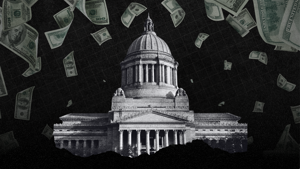
Quietly tucked inside Republicans’ funding deal to end the government shutdown is a provision wiping the congressional Pay-As-You-Go (PAYGO) scorecard, effectively forgiving nearly $3.4 trillion in deficits.
When Republicans passed their budget reconciliation bill in July, which included a permanent extension of the 2017 tax cuts, they broke precedent by operating under current policy baseline. This accounting method treats tax cut extensions as a continuation of current policy that costs nothing, rather than new policy that decreases federal revenues.
As a result, Senate Republicans were able to codify the tax cuts via a simple majority vote without having to fulfill reconciliation rules that require offsetting the deficit impact. Senators could not, however, bypass similar PAYGO rules unless they had 60 votes.
Under PAYGO, a law meant to ensure budget neutrality, the Office of Management and Budget records the deficit impact of legislation.
If Congress passes legislation that hikes mandatory spending or decreases revenue, and does not offset the deficits by the end of the year, automatic spending cuts to Medicare and other programs are triggered.
The tax cuts in the reconciliation bill added roughly $3.4 trillion to the PAYGO scorecard. But rather than finding offsets or accepting the automatic cuts to mandatory spending, Congress added a provision in the recent government funding bill – which fulfilled the 60-vote requirement – to reset the PAYGO scorecard to zero.
“That’s why this was included in the appropriations bill. It had nothing to do with appropriations,” Romina Boccia, director of budget and entitlement policy at the Cato Institute, told The Center Square. “It was all about getting those 60 votes, because that’s what PAYGO requires in order to eliminate those required spending reductions that would have been triggered by the Republicans’ reconciliation bill.”
This is hardly the first time Congress has wiped the PAYGO scorecard to avoid the consequences of a bill’s deficit impact.
In fact, Congress has never allowed the automatic spending cuts to take effect. Lawmakers wiped the PAYGO scorecard for the 2017 Tax Cuts and Jobs Act and the American Rescue Plan, while simply excluding both the CARES Act and the CHIPS and Science Act from the scorecard.
“There’s a lot of hand-waving when it comes to these deficits, but unfortunately, because Congress has pretty much consistently eliminated the spending cuts from the PAYGO scorecard in all instances – whether the Democrats put the deficits on there, or the Republicans – there’s been very little fight on it,” Boccia said.
“What it tells us is that PAYGO has become completely worthless, and that we should replace it and stop pretending like we have a deficit-controlling rule on the books when it’s pretty much understood that it will always be negated,” she added.
The U.S. racked up close to $2 trillion in net federal deficits during fiscal year 2025, according to the Congressional Budget Office, causing the national debt to top $38 trillion in October.
Events

Latest News Stories

Vance optimistic with Gaza peace plan; reiterates no U.S. troops to be on the ground

Poll: Majority of Americans do not support National Guard to deter crime
‘Legal minefield:’ Biometrics reforms needed to keep IL tech biz growing

Warriors Fall to Olney 28-27 in Heartbreaking Battle for Little Illini Title

As military branches celebrate 250 years, Democrats vote against paying them

Chicago transit violent crime at 7 year high, funding concerns persist

WATCH: National Guard case before SCOTUS; Trump insists China soybean deal coming

Illinois quick hits: Harvey furloughs some employees; lead poisoning prevention continues

Illinois quick hits: Filings made to SCOTUS in National Guard case; Chicago sued DHS

Colorado Dems seek restoration of $600M in federal funds

Senate Democrats block bill to end government shutdown for 11th time

WATCH: Eric Trump talks about his book at Reagan Library