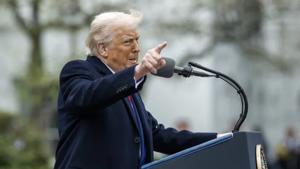
Trump confirms Nvidia chip agreement
Nvidia will pay the United States 15% of the money it makes from selling artificial intelligence chips to China, President Donald Trump said in a press conference on Monday.
Trump said he allowed Nvidia CEO Jensen Huang to sell H20 chips to China while the company provides the U.S. government with a kickback of the profits.
“The H20 is obsolete,” Trump said. “So we negotiate a little deal so he’s, essentially, selling an old chip,” Trump added, referring to Huang.
Trump said he initially asked for a 20% cut from sales of Nvidia’s chips but the two landed on 15%.
In April, Trump banned Nvidia from selling H20 chips to China. The administration later reversed the ban in July.
A coalition of democratic lawmakers, including Sen. Chuck Schumer, D-N.Y., criticized the administration’s July reversal.
“Limiting the PRC’s access to advanced compute has been a focus of Congress: one with a strong bipartisan commitment across both chambers and both parties,” The letter read.
“The PRC’s development of advanced AI capabilities represents a clear risk to the United States’ national and economic security, and the administration’s willingness to trade away that security is extremely troubling,” the letter continued.


Showers And Thunderstorms
Latest News Stories
Trump administration appeals Illinois TRO blocking National Guard deployment

Library Board Approves Air Conditioner Bid Via “Texting” Vote

Casey Pursues $250,000 Grant for Sidewalks to School
Israeli government approves Gaza ceasefire

Florida teens credited for averting school shooting plot in Washington state

IRS reveals tax inflation adjustments for 2026

Spokane leaders mount one-of-a-kind effort to reaffirm treatment-first approach
GOP senators call for restrictions on generic abortion drugs

Federal judge grants Illinois restraining order against Trump for Guard deployment

Senate to vote on bill authorizing $925 billion for military, national security

New York AG Letitia James indicted on fraud charges

Poll: University presidents, athletics directors sour on competition trends