Businesses brace for new tax challenges amid global tariff focus
U.S. businesses and their partners across the globe are looking to make sure they comply with the highest import duties in decades amid a worldwide focus on President Donald Trump’s slate of tariffs.
Since retaking office, Trump has hit nearly every nation with new tariffs and is working to reshape global trade to give U.S. companies a home-field advantage.
Mike Sanders, CEO and co-founder of the sales tax automation company CereTax, told The Center Square that companies big and small want the lowest possible taxes while complying with federal laws. That can get complex quickly.
For example, minor changes to materials, dimensions, or compositions can justify placing products in lower-tariff categories. The practice is called tariff engineering. One example: Converse puts fuzzy fabric on the soles of its signature All Stars so they can be categorized as slippers rather than athletic shoes. The change comes at a significant tax discount.
Sanders said any justifiable reclassification that can save money is a top business priority.
Such changes are legal, but there are some gray and illegal areas, such as intentional misclassification, undervaluation and fraud.
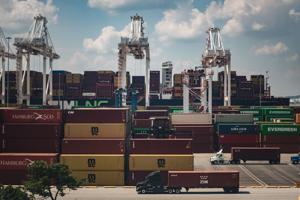
Sanders said businesses are evaluating their options to reduce tariffs by rewiring supply chains, diversifying sourcing and re-shoring. Another option for lower trade duties: Foreign-Trade Zones, which are free-trade zones often located near Customs and Border Protection ports.
Sanders said many companies are rethinking their tax strategies and revisiting classification and supplier options. And they also want to avoid evasion penalties.
“We also have to make sure that there’s no like misclassification or any kind of disguises or false statements or even omissions, because right now, those are driving some significant penalties just for the additional scrutiny,” he told The Center Square.
Sanders said that as companies review classifications, they may also consider how those changes affect overall sales tax compliance.
On Friday, U.S. Customs and Border Protection announced two trade enforcement wins under the Enforce and Protect Act, which authorizes CBP to investigate and stop evasion schemes. CBP said it uncovered more than $400 million in unpaid trade duties through EAPA investigations from the start of Trump’s second term through Aug. 8, 2025. In that same period, CBP identified 89 cases with “reasonable suspicion of duty evasion.”
“We’re working tirelessly to prevent evasion and ensure a level playing field for U.S. companies,” CBP Commissioner Rodney Scott said.
CBP also investigated 23 U.S. importers and a network of Chinese shell companies funneling goods through Indonesia, South Korea, and Vietnam. Discovered in May, the scheme identified more than $250 million in revenue owed – a figure expected to rise as the probe expands.
CBP enforcement teams carried out port inspections, analyzed trade data, and conducted on-the-ground verifications in Indonesia and Taiwan as part of the investigations. Every importer investigated was found in violation, more companies were exposed, and new evasion tactics uncovered, CBP officials said.
Last week, Trump’s tariffs on products from 66 nations, the 27-nation European Union, and others took effect.
New tariffs raised $58.5 billion in revenue between January and June of this year before accounting for income and payroll tax offsets, according to an analysis of federal data from the Penn Wharton Budget Model. The study found that the average effective tariff rate increased to 9.14% in June from 2.2% in January, when Trump returned to office.
Trump has said he wants to use tariffs to restore manufacturing jobs lost to lower-wage countries in decades past, shift the tax burden away from U.S. families, and pay down the national debt.
A tariff is a tax on imported goods paid by the person or company that imports the goods. The importer can absorb the cost of the tariffs or try to pass the cost on to consumers through higher prices.



Mostly Sunny
Latest News Stories

Comptroller, Chicago officials debate tax fund sweeps

Casey-Westfield School Board Approves $560,000 HVAC Phase 2, Annexes Tennis Court Parking Lot

No public funds for new transit safety group
The future of American troops in Europe; Iran lead Rubio’s meeting with NATO

Tennessee congressman files articles of impeachment against Roberts

Illinois Quick Hits: Chicagoland chamber opposes ditigal ad tax

Board suspends Camp Mystic co-owner’s nursing license

Illinois bill banning ‘easily convertible’ handguns could pass this session

Deadline approaches for $1 million school choice award

Biometrics privacy law’s territorial reach limited, appeals court says
Watchdog says Biden Education Department defied court order on Title IX enforcement
Congress skips town without passing $72B immigration enforcement bill