States sue over Victims of Crime Act grant funding
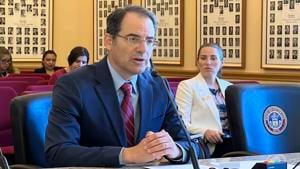
Colorado Attorney General Phil Weiser has joined a 20-state coalition and Washington, D.C., suing the Trump administration over restrictions it has put on Victims of Crime Act grants.
The funding in jeopardy, which has already been appropriated by Congress, totals more than a billion dollars.
The Justice Department has declared that states will not be able to access Victims of Crime Act funding unless they agree to support the administration’s immigration enforcement.
The lawsuit called these “unprecedented conditions.”
“Tying congressionally mandated funds for crime victim support to immigration conditions not authorized by Congress is wrong and an illegal overreach by the Justice Department,” said Weiser.
The Victims of Crime Act was first enacted in 1984. Administered by the U.S. Department of Justice, the grant programs help fund a wide variety of programs including victim and witness advocacy services, emergency shelter, crime scene cleanup, sexual assault forensic exams, and medical, funeral and burial expenses.
“Withholding these funds will retraumatize crime victims and survivors who are trying to pick up the pieces and rebuild their lives,” Weiser said. “And this stunning action by the administration does not make communities safer.”
In 2024 alone, Colorado’s Office for Victims Programs received over $21 million in funding from Victims of Crime Acts grants. Funding is distributed to states based on fixed statutory formulas.
To continue receiving the funding, Colorado must comply with immigration efforts by the U.S. Department of Homeland Security.
Colorado is joined on the lawsuit by New Jersey, California, Delaware, Illinois, Rhode Island, Connecticut, Hawaii, Maine, Maryland, Massachusetts, Michigan, Minnesota, Nevada, New Mexico, New York, Oregon, Vermont, Washington, Wisconsin and the District of Columbia.
Colorado has been a critical player in the coalition of Democratic states fighting against the many cuts pushed by the Republicans. So far, Colorado has joined or filed 35 lawsuits against the Trump administration.
Currently Colorado and its capital city Denver have been under scrutiny for their so-called sanctuary city policies, which limits their cooperation with federal immigration authorities.
Notably, Denver Mayor Mike Johnston joined four other sanctuary city mayors in testifying before a U.S. House Oversight and Government Reform committee in March on the issue, as previously reported by The Center Square.
More recently, the U.S. Department of Justice released a list of “states, cities, and counties identified as having policies, laws, or regulations that impede enforcement of federal immigration laws.”
Colorado and Denver were both on that list.
“Sanctuary policies impede law enforcement and put American citizens at risk by design,” said U.S. Attorney General Pamela Bondi. “The Department of Justice will continue bringing litigation against sanctuary jurisdictions and work closely with the Department of Homeland Security to eradicate these harmful policies around the country.”
Weiser is confident the lawsuit will be successful.
“We sued in the first Trump administration when it attempted a similar tactic with law enforcement grants, and we won,” he said. “I’m confident we’ll win again.”




Mostly Sunny
Latest News Stories

WATCH: Trump administration to designate Antifa a foreign terror organization
WATCH: Trump admin singles out Chicago, Pritzker during Antifa roundtable
WATCH: Lawmakers spar over Biden administration’s censorship campaign

Illinois quick hits: Charges against protesters dropped; ISP crime suppression in Metro East

EXCLUSIVE: Van Duyne wants to treat Antifa like the mafia amid crackdown

Another lawsuit expected over school districts hiring criminal Guyanan superintendent
IL House GOP leader: Pritzker ‘deliberately lied’ to score political hit
SCOTUS considers IL congressman’s standing to challenge ballot counting law
No progress on government shutdown, jeopardizing military paychecks

Colorado boosts EV rebates as federal incentives end

Man charged with starting Palisades Fire in L.A.
Trial date set for Jan. 5 after Comey pleads not guilty to charges