Appeals court: Serious Chicago police disciplinary hearings must be public
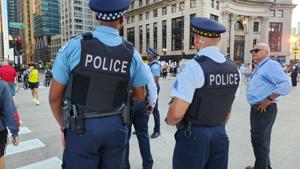
(The Center Square) – A panel of appellate court judges has ruled Chicago police officers facing serious misconduct allegations must have their hearings heard in public. A law school professor says it’s a victory, but just the beginning.
University of Chicago Law School professor and Civil Rights and Police Accountability Project founder Craig Futterman said a panel of appellate court judges made the only decision they could in upholding a lower court’s ruling stipulating that all Chicago police officers facing serious misconduct allegations must have their hearings heard in public.
“Holding these hearings in secret destroys public trust,” Futterman told The Center Square. “People don’t trust what they can’t see and a very first principle of policing is that we as police officers work for the public, serve the public and are accountable to the public. Among the lessons that have long been learned is that accountable and transparent policing is essential for public safety.”
In a move that upholds a Cook County judge’s earlier ruling, the panel of three judges cited “police accountability and transparency” concerns in rendering their decision. At the same time, the ruling allows officers to continue having their fate decided by an arbitrator as opposed to Chicago Police Board members.
If upheld, the ruling could mean big changes for the system after more than six decades of officers facing such disciplinary proceedings having their fates wholly decided by board members.
Futterman is quick to add there is still much work to be done in the name of greater transparency and accountability.
“One ruling doesn’t solve all our problems,” he said. “If the court did not stand up and speak up to protect police accountability and transparency, we’d be in a heap of trouble. We would essentially be undermining any form of police accountability and transparency in Chicago and in the state of Illinois.”
In the end, Futterman said such policy is a win-win situation for all the parties involved.
“If you protect the minority of officers who are abusive or racist and are acting as bullies or abusing their powers, people aren’t going to trust the 80-90% who aren’t doing that stuff because the message that sends to the public is the real police are those officers who are protected,” he said. “That’s not in the interest of the officers I admire and respect.”
Thus far in 2025, the Police Board has heard just one case and in two others Chicago taxpayers have been forced to pay out at least $12.75 million to resolve misconduct related lawsuits.






Sunny
Latest News Stories
Meeting Summary and Briefs: City Council of Casey for February 17, 2026

Physicians assistants leave for Iowa due to licensing wait times in Illinois
Illinois quick hits: Chicago debt deal pushes payments down road
Republican candidates for governor, U.S. Senate discuss energy, SCOTUS
Illinois Quick Hits: Indiana governor signs Bears stadium bill
Marshall City Council Passes Ordinances Regulating Underage Vaping and Drug Paraphernalia
Microsoft hit with IL biometric class action over Teams call transcriptions
Amended Bears megaproject bill could have major impact on property tax payers
Illinois Quick Hits: Police report drop in homicide rates in East St. Louis
Convention of States rally pushes for fiscal restraint, limits on federal power

Illinois lawmakers push bipartisan energy choice package

Illinois Quick Hits: Chicago suffers credit rating downgrades
Council Approves School Resource Officer Renewal and Water Main Easement
Martinsville Appoints Josh Stowers as Head Football Coach