Appeals court rejects Trump’s tariffs, but leaves them in place
A federal appeals court said Friday that President Donald Trump doesn’t have the authority to issue blanket tariffs, in a blow to the president’s domestic and economic policy plans.
The U.S. Court of Appeals for the Federal Circuit affirmed a previous lower court ruling, but said the tariffs could remain in place while the administration appeals to the U.S. Supreme Court.
In a 7-4 decision, the court said tariff power rests with Congress, not the president. It also said that the 1977 International Emergency Economic Powers Act didn’t grant the president such authority.
“Because we agree that IEEPA’s grant of presidential authority to ‘regulate’ imports does not authorize the tariffs imposed by the Executive Orders, we affirm,” the court wrote.
“For the second time in this case, a federal court has held that the President’s so-called ‘Liberation Day’ tariffs are unlawful,” said Jeffrey Schwab, senior counsel and director of litigation at the Liberty Justice Center, which brought the case. “The President cannot lawfully impose tariffs on his own; and IEEPA does not give him unlimited unilateral tariff authority. This decision protects American businesses and consumers from the uncertainty and harm caused by these unlawful tariffs.”
Trump responded on Truth Social shortly after, calling the appeal court partisan
“Today a Highly Partisan Appeals Court incorrectly said that our Tariffs should be removed, but they know the United States of America will win in the end,” the president said. “If these Tariffs ever went away, it would be a total disaster for the Country. It would make us financially weak, and we have to be strong. … But they know the United States of America will win in the end.”
One of the four dissenting judges, Circuit Judge Richard Taranto, wrote: “We conclude that IEEPA’s authorization of presidential action in this realm is not an unconstitutional delegation of legislative authority under the Supreme Court’s decisions, which have upheld broad grants of authority, including tariffing authority, in this foreign-affairs-related area.”
Trump announced a slate of “Liberation Day” tariffs on April 2 on imports from every U.S. trading partner. He then paused those tariffs for 90 days while working on trade deals with top U.S. trading partners. After reaching deals with some key partners – and extending talks with China, Canada and Mexico – Trump put in force the highest tariffs in nearly a century on 66 countries, the 27-bloc European Union and others. Each nation was assigned a specific import duty, with some as high as 50%. Those tariffs went into effect Aug. 7.
In a letter to the U.S. Court of Appeals for the Federal Circuit filed after oral arguments, Solicitor General D. John Sauer and Assistant Attorney General Brett Shumate warned the court that tariffs must stay in place to prevent a financial disaster.
“Suddenly revoking the President’s tariff authority under IEEPA would have catastrophic consequences for our national security, foreign policy, and economy,” they wrote in a letter. “The President believes that our country would not be able to pay back the trillions of dollars that other countries have already committed to pay, which could lead to financial ruin.”
In May, the U.S. Court of International Trade unanimously ruled that Congress did not give the president tariff authority under the International Emergency Economic Powers Act of 1977. The ruling voided Trump’s “Liberation Day” tariffs and struck down other tariffs Trump issued under the IEEPA. The administration appealed to the Federal Circuit, which ruled that Trump’s “Liberation Day” tariffs could remain in place while the legal challenge continued.
New tariffs raised $58.5 billion in revenue between January and June of this year before accounting for income and payroll tax offsets, according to an analysis of federal data from the Penn Wharton Budget Model. The study found that the average effective tariff rate increased to 9.14% in June from 2.2% in January, when Trump returned to office.
Trump has said he wants to use tariffs to restore manufacturing jobs lost to lower-wage countries in decades past, shift the tax burden away from U.S. families and pay down the national debt.
A tariff is a tax on imported goods paid by the person or company that imports the goods. The importer can absorb the cost of the tariffs or try to pass the cost on to consumers through higher prices.
Economists, businesses and some public companies have warned that tariffs could raise prices on a wide range of consumer products.




Chance Showers And Thunderstorms
Latest News Stories
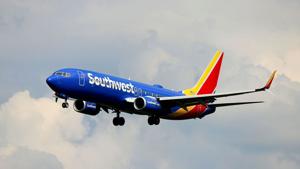
Illinois quick hits: Southwest to lay off 107 as O’Hare service ends
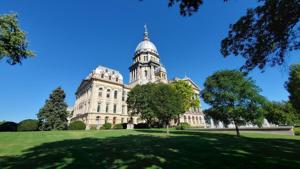
State House passes 133 bills, many potential impacts for Illinoisans

Breese Central Powers Past Casey-Westfield 7-1 in Saturday Afternoon Clash
Early Offensive Surge Propels Casey-Westfield Past Farina South Central 6-4

Goble Tosses Shutout, Homers to Lead Casey-Westfield Past Murphysboro 3-0
Casey-Westfield Holds Off Central A & M Rally for 5-4 Tournament Victory

Casey Police Department to Receive Upgraded Tasers in $59,778 Agreement
Walk-Off Winner: Pruemer’s Complete Game Lifts Windsor/Stewardson-Strasburg Over Casey-Westfield
Goble, Bonds Go Deep as Casey-Westfield Offense Overwhelms BHRA, 17-4
Lock’s Homer, Jones’ Complete Game Power Cumberland Past Casey-Westfield, 7-4

Casey-Westfield Men, Marshall Women Capture Team Titles at Quad Meet

Casey City Council Secures Final Easements for I-70 Sewer Extension Project