
Trump’s tariff revenue in doubt after appeals court ruling
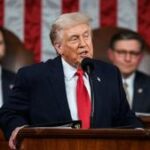
President Donald Trump’s tariff revenue – a key source of funding for his political agenda and the GOP’s priorities – is in jeopardy after an appeals court rejected the president’s unilateral tariff authority.
Earlier this month, the Congressional Budget Office, the government’s official scorekeeper, estimated that Trump’s tariffs could bring in $4 trillion over the next decade. That’s nearly enough to cover the spending and tax cuts in the GOP’s massive One Big Beautiful Bill Act.
The U.S. Court of Appeals for the Federal Circuit affirmed a lower court ruling that invalidated the tariffs. Still, the court said the tariffs could remain in place while the administration appeals to the U.S. Supreme Court.
Trump’s Section 232 tariffs – those on steel, aluminum, copper, vehicles, and vehicle parts – remain legal and in place.
The Supreme Court is likely to decide the case.
An analysis from the Committee for a Responsible Federal Budget found that if the appeals court ruling is upheld by the Supreme Court, 71% of the projected tariff revenue would vanish. The nonprofit group said the CBO’s score would likely drop from a $4 trillion total deficit reduction through fiscal year 2035 down to $1.2 trillion.
Trump recently said that if the courts nix his tariffs, America could sink into a “Great Depression.”
“If a Radical Left Court ruled against us at this late date, in an attempt to bring down or disturb the largest amount of money, wealth creation and influence the U.S.A. has ever seen, it would be impossible to ever recover, or pay back, these massive sums of money and honor,” the president wrote on Truth Social. “It would be 1929 all over again, a GREAT DEPRESSION!”
The president’s attorneys told the appeals court the same thing. In a letter to the U.S. Court of Appeals for the Federal Circuit, Solicitor General D. John Sauer and Assistant Attorney General Brett Shumate warned that tariffs under the 1977 International Emergency Economic Powers Act must stay in place to prevent a financial disaster.
“Suddenly revoking the President’s tariff authority under IEEPA would have catastrophic consequences for our national security, foreign policy, and economy,” they wrote in a letter. “The President believes that our country would not be able to pay back the trillions of dollars that other countries have already committed to pay, which could lead to financial ruin.”
Attorneys for the administration told the court that Trump could use other laws to implement tariffs. Still, those wouldn’t work nearly as well as the International Emergency Economic Powers Act – the law that’s under review in the legal challenge of Trump’s tariffs filed by small businesses and some U.S. states.
“Other tariff authorities that the President could potentially use are short-term, not nearly as powerful, and would render America captive to the abuses that it has endured from far more aggressive countries,” Sauer and Shumate wrote in the letter. “There is no substitute for the tariffs and deals that President Trump has made. One year ago, the United States was a dead country, and now, because of the trillions of dollars being paid by countries that have so badly abused us, America is a strong, financially viable, and respected country again. If the United States were forced to pay back the trillions of dollars committed to us, America could go from strength to failure the moment such an incorrect decision took effect.”
Trump publicly predicted an economic collapse similar to the “Great Depression.”
“These deals for trillions of dollars have been reached, and other countries have committed to pay massive sums of money,” Sauer and Shumate wrote. “If the United States were forced to unwind these historic agreements, the president believes that a forced dissolution of the agreements could lead to a 1929-style result. In such a scenario, people would be forced from their homes, millions of jobs would be eliminated, hard-working Americans would lose their savings, and even Social Security and Medicare could be threatened. In short, the economic consequences would be ruinous, instead of unprecedented success.”




Showers And Thunderstorms Likely
Latest News Stories
Hundreds of National Guard activated in Illinois

Illinois quick hits: Texas Guard arrives in Broadview; former governors join case against Trump

Officials, police criticize Chicago ICE stand-down; CPD says officers responded

WATCH: Pritzker tells Trump ‘come and get me;’ SCOTUS hears ballot counting case

Exclusive: Nevada lieutenant governor’s legislation blocked because of his opposition to males in female sports
28 journalists arrested, 118 assaulted so far this year, report finds

Casey Library Board Hires Architect to Draft Expansion Plans, Lays Groundwork for Fundraising

Casey Partners with Land Bank on New Strategies to Tackle Blight, Spur Housing Growth

Illinois quick hits: Another quantum company announced for incentives

WATCH: Israel, Hamas agree to peace deal, Trump says
WATCH: Trump administration to designate Antifa a foreign terror organization
WATCH: Trump admin singles out Chicago, Pritzker during Antifa roundtable