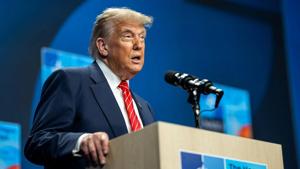
Supreme Court sets oral arguments in tariff case
The Supreme Court said Thursday it will hear arguments Nov. 5. in a case critical to a wide swath of President Donald Trump’s economic agenda.
The nation’s highest court will hear oral arguments in a case challenging Trump’s tariff authority long before Congress can weigh in on the president’s rapid reordering of the global trade market in favor of American businesses.
A group of Democrat-led states, five small businesses, and two private companies took Trump to court saying the president overstepped his authority by hitting every U.S. trading partner with tariffs not seen in nearly a a century.
Trump has made tariffs the centerpiece of his economic agenda. Trump used a 1977 law that doesn’t mention tariffs to reorder global trade in a matter of months through tariffs to try to give U.S. businesses an advantage in the world market. Using tariffs under the International Emergency Economic Powers Act, Trump put import duties of at least 10% on every nation that does business with the U.S.
The challengers argue that Congress, not the president, retains the power to tax. Trump says he has the authority and that his deals around the world are to benefit of all Americans.
Trump’s new tariffs raised $80.3 billion in revenue between January 2025 and July 2025 before accounting for income and payroll tax offsets, according to an analysis of federal data from the Penn Wharton Budget Model.
The Congressional Budget Office estimated that Trump’s tariffs could bring in $4 trillion over the next decade, but would raise consumer prices and reduce the purchasing power of U.S. families.
In August, the U.S. Court of Appeals for the Federal Circuit affirmed a previous lower court ruling, but said Trump’s tariffs could remain in place while the administration appeals to the U.S. Supreme Court.
In the 7-4 decision, the majority of the Federal Circuit said that tariff authority rests with Congress. It used that same language: “We discern no clear congressional authorization by IEEPA for tariffs of the magnitude of the Reciprocal Tariffs and Trafficking Tariffs. Reading the phrase ‘regulate … importation’ to include imposing these tariffs is ‘a wafer-thin reed on which to rest such sweeping power.'”
Trump has said he wants to use tariffs to restore manufacturing jobs lost to lower-wage countries in decades past, shift the tax burden away from U.S. families, and pay down the national debt.
A tariff is a tax on imported goods that the importer pays, not the producer. The importer pays the cost of the duties directly to U.S. Customs and Border Protection, a federal agency.




Slight Chance Showers And Thunderstorms then Chance Showers And Thunderstorms
Latest News Stories

WATCH: Businesses argue Congress holds purse strings in tariff challenge
Report: FEMA under Biden politically discriminated against Americans
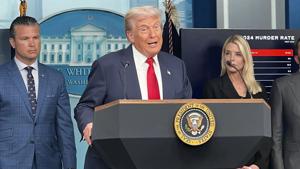
Trump begins accepting $100k visa payments
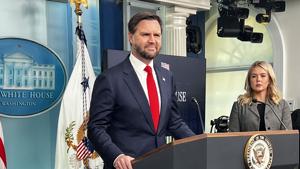
Vance optimistic with Gaza peace plan; reiterates no U.S. troops to be on the ground

Poll: Majority of Americans do not support National Guard to deter crime
‘Legal minefield:’ Biometrics reforms needed to keep IL tech biz growing

Warriors Fall to Olney 28-27 in Heartbreaking Battle for Little Illini Title

As military branches celebrate 250 years, Democrats vote against paying them

Chicago transit violent crime at 7 year high, funding concerns persist

WATCH: National Guard case before SCOTUS; Trump insists China soybean deal coming

Illinois quick hits: Harvey furloughs some employees; lead poisoning prevention continues

Illinois quick hits: Filings made to SCOTUS in National Guard case; Chicago sued DHS