Treasury goes after fentanyl-producing Sinaloa Cartel faction
The Treasury’s Office of Foreign Assets Control designated Sinaloa Cartel faction Los Mayos, along with the leader of the faction’s armed wing on Thursday.
The sanctions follow Under Secretary of the Treasury for Terrorism and Financial Intelligence John K. Hurley’s visit to the U.S.-Mexico border.
OFAC also designated five people and 15 companies in connection with one of Los Mayos’ regional networks operating south of the U.S.-Mexico border. OFAC further designated the leader of a separate Sinaloa Cartel-affiliated gang engaged in fentanyl production.
“The Sinaloa Cartel is a foreign terrorist organization that continues to traffic narcotics, launder its proceeds, and corrupt local officials,” Hurley said.
Treasury officials said the Los Mayos faction is responsible for producing and smuggling fentanyl, cocaine, marijuana, heroin and methamphetamine from northwest Mexico to the U.S. Los Mayos is involved in kidnapping, extortion, money laundering, and local government corruption in Rosarito, Baja California, according to Treasury officials. Its proximity to the U.S. border, Rosarito form a key artery for Sinaloa Cartel’s drug trafficking operations.
The Sinaloa Cartel is a U.S.-designated Foreign Terrorist Organization that is responsible for a significant portion of illicit fentanyl trafficked to the U.S. In addition, the Sinaloa Cartel smuggles migrants across the southern border, according to OFAC.
The Los Mayos faction of the Sinaloa Cartel rivals the Los Chapitos faction. Los Mayos focuses on Baja California, Sonora and Zacatecas. Turf wars between Los Mayos and Los Chapitos have resulted in the deaths of over a thousand people in the Mexican state of Sinaloa, according to OFAC.
The sanctions essentially cut of cartel members and businesses controlled by them from the U.S. financial system.
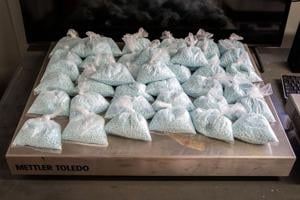
The move away from plant-based drugs to synthetics such as fentanyl has helped the cartels rake in cash. Cartels maintain steady supply chains for precursor chemicals, primarily from China and India, needed to produce these synthetic drugs.
In the 12 months ending in October 2024, the U.S. recorded 52,385 overdose deaths from synthetic opioids – a 33% decline – while overall overdose deaths, from any drug, declined about 26%, according to the most recent available CDC provisional data. Provisional data from the CDC showed that 74,702 of the 107,543 total drug overdose deaths in 2023 involved synthetic opioids, primarily fentanyl. That’s about 69% of all overdose deaths in the U.S.
The DEA seized about 29% less fentanyl in 2024 compared to the prior year. In 2024, the DEA seized 21,936 pounds of fentanyl. The agency also seized 61.1 million fake pills in 2024, a 24% decrease from the previous year. Data from the El Paso Intelligence Center’s National Seizure System – which consolidates drug seizure data from federal, state and local agencies throughout the U.S. – indicated a similar trend, with 23,256 total kilograms seized in 2024, down from the previous year.






Mostly Sunny
Latest News Stories
Trump says he won’t back down on Antifa terrorism designation

Exclusive: DOJ ‘weaponization’ victim still in jail, asking for Trump pardon
Champaign stabbing raises concerns over Illinois mental-health law

Lake Land College Invests Over $360,000 in Allied Health Program Technology

Colorado tops nation for millennial migration, report finds
Congress unmoved by imminent government shutdown threat

Illinois quick hits: DHS apprehends ICE protester with firearm; bill allows campaign funds for security

Exclusive: BlackRock pressured ‘woke’ ideology on companies

Trump’s tariffs on imported drugs could raise prices

Lawmaker responds to IL’s push for adult COVID shots against CDC guidance

Immigration advocates sue Trump administration over ‘unlawful’ ICE arrests

18% of med schools receive F when judged by academic excellence, DEI rejection