Champaign stabbing raises concerns over Illinois mental-health law
(The Center Square) – A state lawmaker who also serves as a police officer says the recent stabbing of non-police first responders in Champaign underscores his criticism of a new state law.
The Illinois Community Emergency Services and Support Act, signed by Gov. J.B. Pritzker in 2021, limits police presence unless violence or criminal activity is anticipated. The law’s full implementation has faced repeated delays, with the deadline now pushed back to June 30, 2027, as the state conducts pilot tests in select 911 centers.
State Rep. Dennis Tipsword, R-Metamore, voiced skepticism about the law’s safety implications for first responders.
“So the idea is that if someone calls a 911 center and they’re having some sort of mental episode, a dispatcher would be trained to figure that out during the call. Instead of sending law enforcement, they would send a counselor or transfer the call to counselors who would then respond,” Tipsword told The Center Square. “My worry is that you can’t judge what’s going on on the other end of that phone from a distance.”
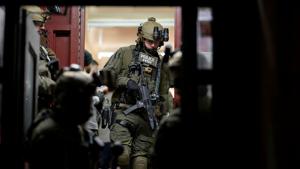
According to a City of Champaign news release, 23-year old suspect Trevor Lewis was arrested on multiple charges, including attempted murder, after stabbing emergency personnel before police arrived, an incident Tipsword says highlights the dangers of sending non-law enforcement responders into volatile situations.
“That’s when you end up with a situation like we had earlier this month over in Champaign, where we had a couple firefighters and a paramedic injured because they were responding to one of these types of calls,” Tipsword said.
He also warned of potential costs to taxpayers if more incidents occur.
“Obviously, there are work comp claims, so there’s going to be taxpayer funds spent on workman’s compensation claims because they got hurt while they were working,” Tipsword said.
Tipsword said Illinois’ new limits on police involvement in mental-health crisis calls are being rolled out without the infrastructure to keep first responders safe.
“The rollout of this has been so difficult because when you get outside of the bigger cities and the bigger areas, the infrastructure’s not there,” Tipsword said. “There aren’t counselors on call 24 hours a day that can respond to these things. There are not even call centers.”
Tipsword explained under the law, 911 dispatchers need additional training to recognize when certain calls should be redirected to the 988 crisis line. If dispatchers can identify those situations, the calls could be transferred directly to 988. However, Tipsword noted there are still many moving parts and unknowns in how the system will ultimately work.
Tipsword warned the law exposes responders to unnecessary danger.
“I’m not against the idea of trying to find a solution that’s workable, but I feel like sending non-law enforcement people into these situations alone is not the answer,” Tipsword said.
For Tipsword, the issue is less about the concept and more about execution.
“Because we feel better by not sending law enforcement to that situation, that doesn’t make it okay,” he said. “Our feelings shouldn’t matter. Our feelings should be to make sure all folks, those responding and those involved in the situation, are safe and protected first and foremost.”






Mostly Sunny
Latest News Stories

Maryland Supreme Court tosses Blue cities’ climate lawsuits against energy companies
Arizona Senate majority leader blasts Phoenix resolution limiting ICE operations

$4.4B budget request for new Illinois early childhood agency draws scrutiny

Lawmaker, officer warns Elgin officer firing could chill free speech

Airline nixes perk for flying lawmakers as DHS shutdown continues

Student sues school over removal of Charlie Kirk tribute

Illinois quick hits: Coalition calls for more action on data centers

Asylum advocates disappointed by Supreme Court arguments
IL House GOP asks “Have you had enough yet” following student’s murder
EXCLUSIVE: 5-year anniversary of Operation Lone Star, nearly 540,000 apprehended
Many Republicans say proposed bipartisan DHS funding deal ‘impossible’

Mullin sworn in as secretary of Homeland Security