U.S. Supreme Court looks to start consequential new term
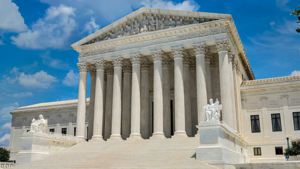
The U.S. Supreme Court will hear the first oral arguments of its new term on Monday, with several high-profile cases already on the docket.
The high court announced it will hear arguments on such consequential cases as the president’s power to fire individuals on federal boards, the president’s authority to impose tariffs, transgender participation in sports and conversion therapy.
The court’s new term marks 20 years since Chief Justice John Roberts began on the nation’s highest judicial body. Legal experts said while Roberts’ leadership has marked a decrease in the number of cases heard by the court overall compared to past judicial terms, their level of significance has increased substantially.
“You can contrast how boring the Supreme Court was in 2005 before Justice Roberts came on the bench with what’s on the docket for this term already,” said Xiao Wang, a law professor at the University of Virginia.
Experts pointed out that the court has made more high-profile decisions recently, which has led to overturning many previous judicial precedents, including the decision to overturn Roe v. Wade.
“What matters is really more quality than quantity,” said Benjamin Mizer, a partner at the law firm Arnold and Porter. “What we have seen in the last five years is the overruling of major precedents.”
Experts said a portion of the court’s term will be defined by taking up cases it previously ruled on to go through oral arguments and offer more clarity in its decisions.
One precedent that could be overturned is with the high court’s decision in Trump v. Slaughter, a case on whether presidents have the constitutional power to fire members of the Federal Trade Commission without cause.
If the court upholds the president’s authority, it could undo an almost 90-year-old precedent that prevented President Franklin Delano Roosevelt from firing members of federal boards like the FTC. Legal experts said the court appears poised to undo the long held precedent.
In a brief September order, the court allowed Trump to fire Rebecca Slaughter, a commissioner on the FTC. This decision came after years of court cases widening the president’s authority to fire members of federal boards.
“The court said that where a multi-member commission exercises substantial executive power, the president has the plenary power to remove that official,” said Kannon Shanmugam, a Supreme Court and appellate litigator.
The court still plans to take the case up for oral arguments and come to a more substantial ruling.
“We’re going to get some more guidance and we already have a lot of removal power,” said Stephanie Barclay, a law professor at Georgetown.
Birthright citizenship is also on the court’s docket for consideration on the merits of the Trump administration’s claim that the 14th Amendment does not extend to children born to immigrant parents.
Legal experts said the return of birthright citizenship to the court’s discretion will most likely not result in the administration’s success.
“As cases reach the court on the merits, we shouldn’t presume that the administration will win them all,” Mizer said. “Birthright citizenship case is probably the one that most people are expecting to be an administration loss.”
The court will also weigh two high-profile decisions on transgender participation in sports for the upcoming term: Little v. Hecox out of Idaho and West Virginia v. B.P.J. The case in West Virginia accuses the state of violating Title IX protections for not allowing a transgender student to participate in sports aligning with their gender identity.
Jonathan Adler, a law professor at William and Mary Law School, said he suspects the court will continue to uphold restrictions preventing transgender athletes from participating in sports.
“I think the court has indicated it is less sympathetic to the idea that sexual orientation or gender identity or transgender status is the sort of thing that should be subject to heightened scrutiny,” Adler said
On Oct. 7, the court is expected to hear arguments in Chiles v. Salazar, a case challenging Colorado’s law prohibiting conversion therapy. The law prevents therapists from providing minor patients with conversion therapy.
Plaintiffs in the case argue therapists have a right to freedom of speech and can help a child who expresses unwanted sexual attractions.
“The state hasn’t been able to marshal a single evidence that that type of talk therapy would be harmful,” Barclay said. “I think the state’s going to really struggle and Colorado might be continuing its losing streak when it comes to these First Amendment cases.”
The president’s power to impose tariffs and a challenge to concealed carry permit restrictions in Hawaii are some other high-profile cases on the books.
Legal observers also pointed out that the court’s emergency docket will most likely continue to be important as the Trump administration pursues broad executive action and is challenged in court. They said this is a trend that has been happening for the last several years.
“The rise of executive orders and other forms of unilateral executive action really [became] the primary form of lawmaking in our country with the disappearance of Congress and that has posed enormous challenges to the court,” Shanmugam said.




Mostly Clear
Latest News Stories

Casey-Westfield FCCLA Ranked No. 1 in Region for Service Hours
Senate Bill Secures $1 Million for Casey Sewer Improvements

EXCLUSIVE: 5 largest U.S. cities don’t have enough money to pay bills: report
INVESTIGATION: Wisconsin university closes DEI unit but keeps most staff working on equity issues

Board Approves Updated School Resource Officer Agreement
Casey Advances Housing Strategy with Land Bank Transfers and Inspection Contract

Chicago’s $41 billion financial hole exposes city’s pension crisis

Trump seeks $1B from Harvard in federal funding dispute
Lawmakers react to U.S. Supreme Court’s ruling on Prop. 50

WATCH: Senators slam fraud, call for welfare scrutiny in Minnesota

Nurses demand inclusion in professional degree definition
Early voting starts Thursday in most Illinois jurisdictions