

Trade deal between Canada, U.S. will likely require more time
President Donald Trump hosted Canadian Prime Minister Mark Carney at the White House Tuesday for the second time but was reluctant to say the meeting would result in a trade deal.
When asked whether Canada would leave Washington “empty-handed,” Trump suggested they would be pleased with Tuesday’s negotiations without specifically mentioning a deal.
“I think they’re going to walk away very happy. I think so,” the president said.
Though the U.S. has negotiated deals with several other countries, it had not yet reached an agreement with its neighbor to the north heading into Tuesday’s meeting. Carney left the White House in the mid-afternoon without responding to questions from journalists about how the meeting went, according to reports.
Currently, there’s a 35% tariff on most Canadian goods not covered under the United States-Mexico-Canada Agreement, a trade agreement the previous Trump administration had negotiated that preserved free trade (or tariff-free trade) among the three countries on most goods.
In March, Trump imposed broad 25% tariffs on Canada and Mexico, claiming their lack of border enforcement was contributing to America’s problems with illegal immigration and drug trafficking. He later added imported cars to the items tariffed at 25%. In August, the Republican raised tariffs to 35%, saying that Canada had not done enough to suppress fentanyl trafficking.
On Tuesday, Trump appeared satisfied with Canada’s efforts in that regard.
“Canada’s worked hard, and they’ve done a much better job than in the past. We have very few people coming in through our southern border too. We’ve worked with Canada and we’ve worked with Mexico, so we’ve made it a lot better,” Trump said.
The U.S. also levies a 50% tariff on Canadian steel and aluminum and will charge a 45% customs duty on Canadian lumber starting Oct. 14.
Despite Canada’s progress on the border, there are “natural conflicts” between the two countries simply due to their proximity, according to Trump, that make it harder to reach a sustainable agreement.
“Well, it’s a complicated agreement, more complicated maybe than any other agreement we have on trade, because, you know, we have natural conflict,” Trump said. “The problem we have is that they want a car company, and I want a car company… They want steel, and we want steel.”
Trump added that while other countries were “very far away,” Canada’s geographic closeness to the U.S. means they’re more likely to compete economically – but both want to avoid competing as much as possible.
“We don’t like to compete because we sort of hurt each other when we compete,” the president said.
Trump did indicate that there would be at least some tariffs in the final agreement between the U.S. and Canada, but that the U.S. would treat Canada “fairly” – likely meaning that he won’t allow the U.S. to be “ripped off” by Canadian trade policies but perhaps that America won’t demand exorbitant tariffs.
“We’re going to especially treat Canada fairly,” Trump said. “All we do now is fairness, but fairness leads us to the most successful country there’s ever been.”




Mostly Sunny
Latest News Stories

Medical device manufacturer invests $110M to expand Nebraska plant, boost drug supply

Chicago council considers ‘not a tax’ surcharge on hotels

IL Senate GOP: Pritzker, not Trump, raised power bills

SC weighs whether Amazon must pay workers for mandatory COVID screenings

WATCH: Tax increase talk at Statehouse; Bost’s election lawsuit against Illinois wins standing

Illinois Quick Hits: Indiana governor ‘working hard’ to attract Bears
Vance’s tie-breaking vote tanks resolution restricting Venezuela military actions
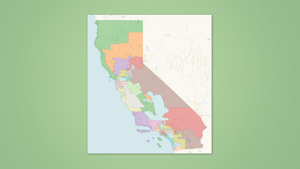
Federal court upholds California congressional redistricting

Trump orders new mediation for New York rail contract dispute

U.S. House passes two more govt funding bills, sending to Senate

Governors seek delay on sharing cost of food stamp errors

Supreme Court ruling allows Bost to challenge Illinois election law

Illinois quick hits: Illinois auto insurance rates dropping
SCOTUS rules on warrantless searches, double convictions and election suits