Religious rights don’t trump IL’s authority to force abortion coverage
Illinois’ state government can force all health insurers regulated by the state to provide abortion coverage without violating the religious rights of Christian abortion opponents – including churches – because they can still purchase health insurance elsewhere, an Illinois state appeals court has ruled.
On Oct. 1, a three-justice panel of the Illinois Fourth District Appellate Court in Springfield rejected the appeal brought by the Illinois Baptist State Association, as they sought to overturn the ruling of a Sangamon County judge.
In that earlier ruling, Sangamon County Circuit Judge Christopher G. Perrin had sided with the state in knocking down a legal challenge brought by the Baptist group against an Illinois state law requiring all health insurance policies issued by insurers regulated by Illinois’ state government to include coverage for abortions, regardless of the views on the procedure or the desires of their policyholders.
The Springfield-based Illinois Baptist State Association is a religious organization representing a partnership of nearly 900 local Southern Baptist churches in Illinois.
The Illinois Baptist State Association’s lawsuit came as one of two lawsuits filed which accuse the state of trampling the religious rights of abortion opponents.
In 2019, the pro-abortion Democrats who dominate Springfield enacted the law, which they called the Reproductive Health Act.
The law requires every health insurance plan regulated by the Illinois Department of Insurance to provide abortion coverage, if the plans also provide pregnancy-related benefits.
Pritzker and other Illinois Democrats have described the law as a key cog in their goal to make Illinois into a safe haven for abortions and abortion providers.
“In this state, women will always have the right to reproductive health care,” Pritzker said at the time he signed the RHA into law.
The lawsuits from religious organizations and other abortion opponents, however, claim the state’s goal of advancing abortion rights conflicts with the rights of those opposed to abortion – an opposition often based on deep religious beliefs concerning the sanctity of human life – to not be forced by the state to pay for others’ abortions.
After the Illinois Baptists filed their lawsuit, a coalition of pro-life organizations, chuches, employers and individuals lodged a separate lawsuit in federal court, accusing the state of violating federal law and the U.S. Constitution in imposing the abortion coverage mandate.
Both lawsuits claim the law forces them to choose between foregoing health insurance coverage for themselves and their employees, or purchasing health insurance policies which include abortion coverage, which they said would make them complicit in a procedure they regard “as an act of murder.”
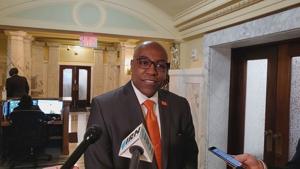
In response, however, Illinois Attorney General Kwame Raoul – a noted strong supporter of abortion access – has argued the lawsuits should be ended by the courts, in large part, because the state is not “forcing” anyone to purchase health insurance coverage.
The case in federal court remains pending, as a judge has not taken any action in the case since July. At that time, the judge granted Raoul permission to argue that a recent U.S. Supreme Court decision that permitted the state of South Carolina to cut funding for abortion mega provider Planned Parenthood should also be read to allow the state of Illinois to require health insurers to cover abortion, regardless of the religious beliefs and moral principles of policyholders.
In Sangamon County court, though, Judge Perrin agreed with the state that the religious convictions and beliefs of the Baptist churches in the IBSA are irrelevant in this case because the Baptists can purchase health insurance elsewhere that is not governed by Illinois state law.
On appeal, the Fourth District justices also landed on the same conclusions.
The decision was authored by Justice Amy C. Lannerd. Justices Robert J. Steigmann and David L. Vancil Jr. concurred.
The decision was issued as an unpublished order under Supreme Court Rule 23, which may limit its use as precedent.
In arguments, the IBSA based its case largely on a different U.S. Supreme Court ruling, in which the country’s highest court said the federal government couldn’t force retailer Hobby Lobby to purchase health insurance which included coverage for a type of contraception known as abortifacients.
The IBSA said that ruling should be applied in this instance in combination with a state religious freedom law to mean the state’s abortion coverage mandate can’t be applied to them and other religious employers who object to paying for abortions.
However, the Illinois appellate court said the IBSA’s case was very different from that of Hobby Lobby. In this case, they said, unlike the federal law, the state law doesn’t require IBSA to provide health insurance for its employees, nor will the state “tax” or otherwise financially penalize them if they do not.
Further, the appellate panel said, the IBSA is not required to purchase a policy through an insurer regulated by the state of Illinois.
“In other words, the Association (IBSA) is free to purchase health insurance, either out of state or through a self-funded or level-funded in-state plan, that does not include coverage for abortions without having to pay any kind of penalty or tax to the State,” Justice Lannerd wrote.
And finally, the justices noted, the IBSA allegedly chose to purchase a state-regulated policy that included abortion coverage because the plan offered in-network coverage for its employees at a particular desired health clinic in Springfield.
“As a result, the mandate, as applied to the Association under the facts of this case, did not create a substantial burden for the Association,” Lannerd wrote.
Writing in a special concurring opinion in the case, Justice Steigmann took the opportunity to further return to a familiar topic of his, urging the Illinois Supreme Court to potentially use this case or another as a vehicle to end a judicial practice he believes shouldn’t continue:
The use by judges of so-called “legislative intent” to interpret laws.
In this case, the IBSA pointed to discussion held among lawmakers at the time the Illinois Religious Freedom Restoration Act was passed to buttress its claims that the lawmakers who enacted the IRFRA law would have backed the IBSA’s claims in this case.
Currently, Illinois Supreme Court decisions require Illinois state courts to consider “legislative history” to help determine who to interpret laws.
In his concurring opinion, though, Steigmann said he believed the courts should not be bound by the intent of the people who passed the laws being interpreted.
“In my opinion, a claim that a statute should be interpreted based upon the remarks of some legislators during the legislative process is completely without merit and should be rejected by the courts accordingly,” Steigmann wrote.






Sunny
Latest News Stories

Meeting Summary and Briefs: Casey-Westfield Board of Education for Jan. 26, 2026

Casey-Westfield FCCLA Ranked No. 1 in Region for Service Hours
Senate Bill Secures $1 Million for Casey Sewer Improvements

EXCLUSIVE: 5 largest U.S. cities don’t have enough money to pay bills: report
INVESTIGATION: Wisconsin university closes DEI unit but keeps most staff working on equity issues

Board Approves Updated School Resource Officer Agreement
Casey Advances Housing Strategy with Land Bank Transfers and Inspection Contract

Chicago’s $41 billion financial hole exposes city’s pension crisis

Trump seeks $1B from Harvard in federal funding dispute
Lawmakers react to U.S. Supreme Court’s ruling on Prop. 50

WATCH: Senators slam fraud, call for welfare scrutiny in Minnesota

Nurses demand inclusion in professional degree definition