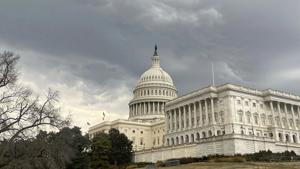
Government shutdown continues, crippling IRS tax services
Nine days into the government shutdown, Congress once again failed to re-open the federal government on Thursday.
All but three Democratic senators are refusing to cross the partisan divide, demanding that Republicans include a costly extension of the pandemic-era enhanced Obamacare Premium Tax Credits in any government funding bill.
Republican leaders, however, refuse to negotiate health care policy until Democrats provide the necessary votes on Republicans’ clean Continuing Resolution. The CR would end the shutdown and keep agency funding on cruise control for seven weeks.
“To Democrats, this is just a political game. [Senate Minority Leader] Chuck Schumer told the press yesterday that ‘every day gets better for us,’” Senate Majority Leader John Thune, R-S.D., said Thursday. “To Republicans, this is not about which party wins or loses. This is about getting the government open for the American people.”
So far, both sides seem content to wait for the other out, despite hundreds of thousands of federal workers on unpaid leave, air travel delays across the country, and a suffering U.S. economy. Each week the government remains closed, an estimated $15 billion in Gross Domestic Product is lost, as The Center Square reported.
Most recently, the Internal Revenue Service furloughed 34,429 employees – 47% of its workforce – and announced Wednesday that it is halting some tax services.
These include responding to taxpayer questions, processing Non-Disaster Relief transcripts, and most administrative functions “not related to the safety of life and protection of property.”
Only federal agencies and operations deemed “essential” – including national security, law enforcement, Border Patrol, outbreak monitoring, and emergency response – remain fully open, with “essential” employees working without pay.
But the Food and Drug Administration’s routine food facility safety inspections and the Environmental Protection Agency’s inspections of water systems, chemical facilities, and hazardous waste sites are currently halted.
National parks and museums have closed, clinical trials at the National Institutes of Health are interrupted, and applications for federal housing or small business loans are not being processed. Federal food assistance programs are in danger of running out of resources if the shutdown drags on for weeks.
Most Americans will not immediately feel the effects of a government shutdown, however. They continue to receive their mail, Social Security benefits, Medicare, Medicaid, and veterans’ benefits. These services can remain open because the U.S. Postal Service is almost entirely funded by its own revenue and the entitlement programs are funded by mandatory spending, which automatically renews without congressional approval.
Federal budget watchdogs are urging Congress to pass a CR and finish the regular appropriations process, without adopting any expensive health care add-ons.
“Reopening the government should not be conditioned on more federal borrowing,” Maya MacGuineas, president of the Committee for a Responsible Federal Budget, said Thursday.
“With interest costs surging and the national debt approaching record levels as a share of the economy, there’s simply no excuse for our elected officials to make a functioning government contingent on more borrowing.”
The national debt surpassed $37 trillion earlier this year.






Chance Showers And Thunderstorms
Latest News Stories
Illinois quick hits: Arlington Heights trustees pass grocery tax

Casey Joins Land Bank, Secures EPA Grant for Sewer Planning
Plan launched to place redistricting amendment before voters in 2026

Rose G. (Crandall) Penrod

Casey Targets Two Dilapidated Properties for Remediation
Illinois GOP U.S. Senate candidates point to economy, Trump gains

Lawmaker criticizes $500 student board scholarships amid lowered K‑12 standards

Illinois news in brief: Work begins on $1.5 billion O’Hare expansion; Police catch man accused of road rage, shooting
Newsom files FOIA request on border patrol’s appearance

Soaring utility bills, solar federal tax credit cuts dominate Illinois energy debate

Illinois quick hits: Pritzker signs crypto regulations

Trucking industry leader: New law may drive business out of Illinois