Report: State reliance on federal funds up significantly since 1990s
States rely on federal dollars more than they have in modern history, according to a new report, with one of the report’s authors saying such dependency makes states easy victims to the whims of federal bureaucrats and turmoil.
Co-author of the State Policy Network’s report as well as senior policy adviser at the State Policy Network’s Center for Practical Federalism Jennifer Butler told The Center Square that “this report is a wake-up call.”
“States are more entangled with Washington than at any point in modern history – federal aid now makes up nearly 37% of state budgets,” Butler said.
According to the State Policy Network’s report, this percentage is double what the average was in 1990.
SPN is an organization “dedicated to building and mobilizing a Durable Freedom Infrastructure in the states,” according to its website.
Butler told The Center Square: “The more reliant states become, the more leverage federal bureaucrats have to dictate how states govern themselves, and the more vulnerable they are to federal budget turmoil like the shutdown we’re experiencing right now.”
Butler is referring to the government shutdown that began Oct. 1 and has caused “hundreds of thousands of federal workers [to be put] on unpaid leave, [led to] air travel delays across the country, and a suffering U.S. economy,” as The Center Square reported.
Butler told The Center Square, “the good news is that states can act now to hardwire resilience into their own systems before the next inevitable federal budget crisis or funding freeze.”
“Nebraska and Ohio require agencies to plan for the potential loss of federal dollars; Tennessee and Oregon give legislators a role in approving certain federal grants before agencies accept them; and Utah and Oklahoma have adopted transparency laws requiring agencies to disclose federal guidance that can quietly reshape policy without public debate,” Butler explained.
“These kinds of reforms strengthen both fiscal independence and self-governance,” Butler said.
SPN’s report is based on fiscal year 2023 data, when the amount the federal government disbursed to states came to $1.05 trillion.
“State dependency remained almost as high in 2023 as during the peak Covid stimulus years,” the report stated.
Additionally, “23 states now get a higher proportion of their budgets from federal dollars than they did during pandemic lockdowns,” according to the report, with “every state but Idaho and New Mexico [receiving] a higher share of revenue from the federal government in 2023 than pre-pandemic.”
At 51.6% of state revenue coming from federal sources, the state that relies the most on federal money is Louisiana, while the state that relies the least is Hawaii at 26.3%.
California and Florida lie in the middle at 38.5% and 37.8% respectively.
Similar to what Butler told The Center Square, the report calls on states to take action and reduce their reliance and dependency on the federal government.
Additionally, the report stated that “the Trump administration is actively rewriting the federal–state funding map through freezes and new conditions, which will affect how states budget moving forward.”
As examples of the president’s work, the report outlined how unspent funds have been frozen, the One Big Beautiful Bill reworked Medicaid and SNAP systems, and changes were made to grants.





Partly Sunny
Latest News Stories

WATCH: Trump designates Antifa a ‘major terrorist organization’
ABC pauses Kimmel over comments on Charlie Kirk assassination
Advocates debate free speech, executive power over student deportations

Survey: Teachers not optimistic about the future of education
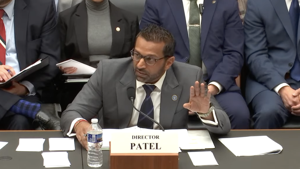
Congressman calls Patel a ‘breath of fresh air’ for the FBI

Arizona Senate leader seeks to rename highway after Kirk

Southern California events canceled because of ICE

House committee to investigate nexus between CCP, ‘civil unrest’
Report: Congress authorized $15 trillion in ’emergency’ deficit spending since 1991
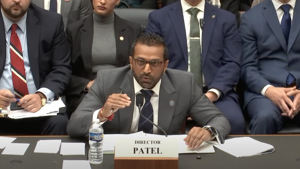
House Dems press Patel on handling of the Epstein files

Illinois quick hits: Suspect in custody after state senator’s home struck with gunfire
WATCH: Governor candidate: Low-cost districts shine while most IL schools spend, fail