
Senate GOP leaders switch tactics as govt funding bill fails for 9th time
As Democrats in the Senate repeatedly tank Republicans’ bill to reopen and extend funding for the federal government, Senate Majority Leader John Thune, R-S.D., is adjusting his strategy.
Republican leaders are still refusing to grant Democrats’ health care policy ultimatums. But Thune is hoping he can garner enough bipartisan support to at least fund the Department of War.
A Senate procedural vote is scheduled for Thursday on the House-passed full-year appropriations bill for the DOW, formerly the Department of Defense. If passed, the bill would both assure that service members are paid during the government shutdown and also make slight progress in the regular appropriations process.
The Pentagon has already dipped into untapped research and development funds in order to subsidize service members’ Oct. 15 paychecks.
“Democrats’ motivation is pleasing their far-left base and preserving their political careers. Meanwhile, military families are lining up at food banks,” Thune said. “The entire country would like to know when Democrats are going to end their tantrum.”
Congress was supposed to pass all 12 annual appropriations bills funding federal agencies for fiscal year 2026 by Sept. 30.
Realizing lawmakers couldn’t finalize all the bills in time to meet the government shutdown deadline, House Republicans passed a clean Continuing Resolution to keep government funding on cruise control until mid-November, buying Congress more time.
Senate Democrats blocked the CR, however, demanding that any funding stopgap include costly health care policies, such as a $662 billion extension of the pandemic-era enhanced Obamacare Premium Tax Credits.
As a result, the federal government ran out of money and partially shut down Oct. 1. Lawmakers are no closer to a deal than they were 15 days ago after the CR failed in the Senate for the ninth time Wednesday.
“Republicans say they will deal with the health care crisis ‘later.’ But for millions of Americans ‘later’ is too late,” Sen. Richard Blumenthal, D-Conn., posted on X after he voted against the CR Friday. “People can’t get sick on Republicans’ timeline; we must act now to make sure people can access affordable health care.”
In the meantime, the Trump administration is using the opportunity to try to eliminate thousands of non-essential government positions while federal employees are placed on temporary unpaid leave.
Russ Vought, director of the Office of Management and Budget, said the 4,000 positions that he’s already eliminated are just “a snapshot” of what’s to come, estimating that the total number of Reductions in Force will “probably end up being north of 10,000.”
Government employee unions have already filed lawsuits, however, and a federal district judge blocked the firings Wednesday.






Sunny
Latest News Stories

Democratic candidates focus on national politics in campaign for U.S. Senate

Arizona Chamber praises new interstate natural gas pipeline

Dems oppose Trump’s bid to end mail-in ballots, voting machines

Trump says court’s tariff decision could lead to ‘catastrophic’ collapse
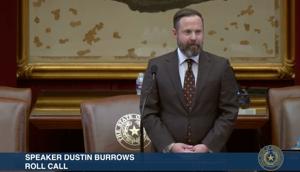
After two weeks fleeing Texas, House Democrats return, quorum reached

Trump: Zelenskyy could end Russia-Ukraine war ‘if he wants to’

$750 million facility to protect Texas cattle, wildlife from screwworm threat

Chicago posts fewest homicides since 2016, arrests rate also declines
Three years later, Inflation Reduction Act blamed for higher Medicare costs

Illinois quick hits: Prosecutors charge two more in Tren de Aragua case; Senate Energy and Public Utilities Committee meets today; Illinois Little League team loses in World Series

Report: Human Rights Campaign pressures transgender procedures on minors

Everyday Economics: Housing market and Fed policy in focus in the week ahead