Trump says he may attend Supreme Court case challenging tariffs
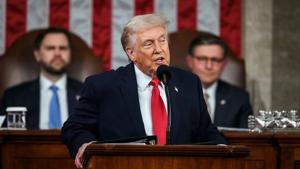
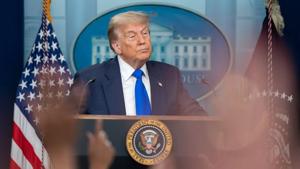
Calling it “one of the most important cases in the history of our country,” President Donald Trump said on Wednesday that he might attend the U.S. Supreme Court arguments challenging his tariff authority in person, an unprecedented move for a sitting president.
“If we don’t win that case, we will be a weakened, troubled financial mess for many, many years to come,” Trump said. “I don’t even know if it is survivable … That’s why I think I’m going to the Supreme Court to watch it. I’ve not done that. And I’ve had some pretty big cases,”
Trump’s economic agenda is linked to tariffs. However, a group of small businesses, some Democrat-led states, and two education businesses have challenged the president’s tariff authority under the International Emergency Economic Powers Act of 1977.
Trump said the tariffs would make the nation wealthy, and he credited his tariff authority with helping to end multiple global conflicts.
“We’re allowed to do whatever we want,” the president said. “We just had presidents that didn’t want to do it for whatever reason. Of the eight wars, tariffs are directly responsible for me ending six of them. Five or six.”
Trump also said that the lawyers who challenge his power to impose tariffs are “aligned with foreign nations.” This is similar to his past comments. The lawyers have noted that they represent U.S. businesses struggling under the burden of U.S. taxes.
In his second term, Trump used the 1977 law to reorder global trade through tariffs to give U.S. businesses an advantage at home. Using tariffs under the International Emergency Economic Powers Act, Trump put import duties of at least 10% on every nation that does business with the U.S. Some nations, including many U.S. allies, face much higher tariff rates.
The U.S. Supreme Court agreed to take up the challenge to Trump’s tariff authority in September, setting a schedule for an expedited review.
Texas-based nonprofit Liberty Justice Center represents the small businesses in the case. It previously noted all of its clients in the case are U.S. businesses.
The Center Square contacted Liberty Justice Center for comment after hours on Wednesday.
The last time Trump made similar comments, Jeffrey Schwab, the senior counsel and director of litigation at Liberty Justice Center, noted the risk to Americans.
“Our clients are American-owned, American-based small businesses that collectively import from at least 27 countries, employ hundreds of Americans, manufacture products in the United States, and provide a variety of important products to American consumers,” he previously said. “The so-called ‘Liberation Day tariffs’ have severely harmed not only our clients, but thousands of other small businesses, which because of the tariffs, have been and will continue to be forced to make decisions that could result in American workers being laid off, a reduction in American manufacturing, an increase in prices for American consumers, a reduction in the number of products available to American consumers, and even American companies going out of business.”
In August, the U.S. Court of Appeals for the Federal Circuit affirmed a previous lower court ruling saying Trump did not have the authority, but said Trump’s tariffs could remain in place while the administration appeals to the U.S. Supreme Court. In the 7-4 decision, the majority of the Federal Circuit said that tariff authority rests with Congress. It used that same language: “We discern no clear congressional authorization by IEEPA for tariffs of the magnitude of the Reciprocal Tariffs and Trafficking Tariffs. Reading the phrase ‘regulate … importation’ to include imposing these tariffs is ‘a wafer-thin reed on which to rest such sweeping power.'”
A Supreme Court victory for Trump would cement the federal government’s newest revenue source in place, at least for now.
New tariffs raised $80.3 billion in revenue between January 2025 and July 2025 before accounting for income and payroll tax offsets, according to an analysis of federal data from the Penn Wharton Budget Model.
Trump has said he wants to use tariffs to restore manufacturing jobs lost to lower-wage countries in decades past, shift the tax burden away from U.S. families and pay down the national debt.
A tariff is a tax on imported goods paid by the person or company that imports the goods. The importer can absorb the cost of the tariffs or try to pass the cost on to consumers through higher prices.
Economists, businesses and some public companies have warned that tariffs will raise prices on a wide range of consumer products.



Chance Showers And Thunderstorms
Latest News Stories

Soaring costs and short supply shut millennials out of housing market
Vought testifies before lawmakers on Trump’s $2.1T budget request

SNAP eligibility changes spark debate on gap for impacted recipients

Trump puts spotlight on China, Iran’s top oil consumer
Lawmakers, auditors offer fraud prevention solutions

Illinois unions seek to kill Waymo-friendly bill in Springfield
Rich States Poor States: Tax policy largely determines states’ economic competitiveness
78 pro-life orgs ask DOJ to stop undermining state laws by favoring aborting drug industry

Illinois Quick Hits: Two of ComEd four released; new trial expected

Casey-Westfield Launches Seven Home Runs in 18-4 Rout of Tri-County

Meeting Summary and Briefs: Casey City Council for April 6, 2026

Chicago suit vs oil cos. may yet survive SCOTUS ruling, judge hints