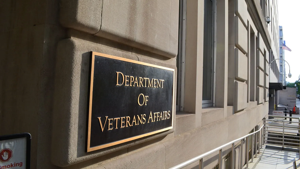
Law designed to help veterans affected by nuclear testing
Nevada veterans are awaiting the final passage of S.2220, a landmark bill that would acknowledge those who served at the radioactive Nevada Test and Training Range.
The bill would enable them to get compensation for the health impact from atomic bomb testing. One hundred tests were conducted above the ground in 1951 to 1962, and another 828 were conducted underground from 1962 to 1992, according to the Nevada National Security Site.
The FORGOTTEN Veterans Act was included in the recently passed $925 billion defense spending package by the U.S. Senate in a 77-20 vote. “FORGOTTEN” stands for Fighting for the Overlooked Recognition of Groups Operating in Toxic Test Environments in Nevada.
A similar package was passed by the House, with the two chambers now waiting to reconvene and agree on a final version for the near-trillion dollar defense budget.
The legislation is sponsored by two Nevada Democrats, U.S. Sens. Catherine Cortez Masto and Jacky Rosen. S.2220 opens up a pathway for veterans to receive medical care on par with their U.S. Department of Energy co-workers. U.S. Rep. Mark Amodei, R-Nevada, sponsored a similar bill for the House.
“As a nation, it is our obligation to take care of all veterans once their service has ended,” Cortez Masto said in announcing the legislation. “This is especially true for veterans of the Nevada Test and Training Range, who faced toxic exposure daily as part of their duties and should have parity with their civilian counterparts.”
S.2220 would establish a “presumption of toxic exposure” for Department of Defense employees who served at the NTTR, taking away the burden of proof of their many ailments from the veterans.
To address the national security concern, a “process … to provide proof of their assignment” would be established for the veterans, although the language is vague and does not specify what the process would be.
Hundreds of the veterans who served at the nuclear test site in Nevada have since died young with severe health issues. Due to the classified nature of their work, those who are still alive have received little to no compensation or medical assistance from the government. But they’ve been fighting for the FORGOTTEN Veterans Act, which would finally put a target on “the invisible enemy.”
“I have left brain atrophy. I have a brain cyst. I have all kinds of tumors. I have limited lung function,” Dave Crete told The Center Square about damage he suspected to be from nuclear radiation. He worked as a security guard at the Nevada Test and Training Range, in a section famously known as Area 51, between 1983 to 1987.
“But when I go down to the VA [Veterans Administration] and I try to file a claim for disability because of these problems, I’m denied,” said Crete. “Because the government says I was never anywhere there was contamination, and I was never up on the range. They keep it classified.”
Compensation and medical assistance denials are common among veterans stationed at the NTTR. Veterans said that because their work was highly classified, personnel files that would show they worked at a known site of nuclear radiation are purposefully closed to the VA and other agencies. Their employer, the Department of Defense (now called the Department of War by the Trump administration), has kept the files redacted for decades, citing national security concerns.
“ The only thing that they’ve given me compensation for is a detached ligament in my ankle,” Pomp Braswell told The Center Square. He served in the Air Force at the NTTR from 1987-90. “ Not my knee issues, my bulging discs in my back, my arthritis or ligament damage. Not my tinnitus, thyroid cancer, nothing.”
Braswell said veterans with bladder cancer received no compensation and had to pay for their own surgery.
In response to the veterans’ concerns, the Nevada Department of Veterans Services told The Center Square that it “does not take positions on proposed or pending federal legislation.”
However, the NDVS added, “We know some Nevada veterans have faced unique health challenges as a result of their military service, including those exposed to radiation or other hazardous/toxic materials. NDVS remains committed to connecting these veterans and their families to the resources, health care and support they need and deserve.”
Like many other NTTR veterans, Crete and Braswell said they lived with chronic medical issues for years without realizing the connection to their time at the nuclear test site. It was not until the spread of Facebook, which eventually led to a small reunion in the mid-2010s, that they began to see the link.
At the reunion in Crete’s Las Vegas home, about 150 miles from the NTTR, a conversation struck up about some oddly similar medical issues the veterans had, including a specific tumor “about the size of a grapefruit,” Crete said. He added he and 75% of the attendants had that tumor.
In the general U.S. population, the same lipoma tumor would occur only twice in a crowd of 1,000, according to the National Library of Medicine.
Statistically, it seemed unlikely they would all have these tumors, Crete said. Across many more reunions in the decade since, similar diseases for their children have come up, as well as high rates of miscarriages for their wives.
At the same time that Crete, Braswell and the other NTTR veterans were connecting the dots between their medical misfortunes and time at the nuclear test site, another group of former NTTR employees had been receiving compensation.
The Department of Energy had been present alongside the Department of Defense at the NTTR, building out and operating the infrastructure of the desert site. These employees, who aided and served defense workers like Crete and Braswell, have been eligible for compensation of around $400,000 with free lifetime medical coverage – since 2000.
The Energy Employees Occupational Illness Compensation Program (EEOICP) expanded compensation to NTTR employees for their nuclear radiation exposure, but didn’t help Department of Defense employees, who continue to have their names hidden behind the redacted files.
“ Since we were never (officially) there, we don’t get anything,” said Crete, who added that was nonsense. “The guy that made my cheeseburger [a DOE employee], if he got sick, he’s been compensated. Me? The guy that ate the cheeseburger? Isn’t even eligible.”
The frustration pushed Crete to learn more about the radiation danger present at the NTTR.
Plutonium-239, a byproduct of nuclear bombs, has a half-life of 24,100 years – meaning it will be around in dangerous doses for many generations. The harmful substance is one of many that litters the NTTR area, and when inhaled can cause a wide variety of damage, especially to the bones, liver and spleen, according to the U.S. Environmental Protection Agency.
Along his journey to understand the connection between his chronic pain and the NTTR, Crete discovered a previously classified 1975 document “Final Environmental Impact Statement for Nevada Test Site,” which he said flipped the script on his understanding of the Nevada test site.
Now published on the Nuclear Regulatory Commission website, the 412-page federal report spelled out in detail how the hundreds of nuclear tests had severely poisoned the air, ground and water that sat beneath it. The paper explained what it called the many associated dangers. Still, it concluded in a short summary that the risk of not testing nuclear weapons and other highly classified technology mattered more than the radiation damage to the on-site personnel.
The 1975 document deemed the NTTR’s uniquely low population and near-geographical center in the continental U.S. as making the Nevada site suitable for nuclear weapons testing.
“Often science discovers that an activity that was done in the past was a bad idea,” said Crete. “We know that in this case they said, ‘We know this is a bad idea for the people that are gonna be here, but for us, we think it’s worth it – so we’re just gonna do this to ’em.’”
“Not only did they subject us to this contamination, they don’t even tell us that that’s what’s going on,” Crete added. “I had to discover myself, through years of research, reading thousands and thousands of pages of documents and websites that that’s what happened, and they admitted what happened.”
Braswell had harsher words for the 1975 decision. “Our government willingly and knowingly sent us there with a death sentence – knowing that it would take 30 years to kill people with this ionized radiation,” he said.
After years of research, Crete formed The Invisible Enemy. The organization has worked to get support for the military personnel who worked at the NTTR. Its website calls radiation poisoning “invisible enemy” and said “the injured” veterans live with life-altering damage. It also described “the fallout” of the U.S. government’s 1975 environmental toxicity document and “the battleground” that is the NTTR.
“The fallen” within The Invisible Enemy community – which counts over 2,600 members on Facebook – refers to the documented 518 deceased former NTTR personnel, which Crete believed to be a gross undercount. The average age on their memorial list was 62.5 – almost 16 years shorter than the Centers for Disease Control and Prevention’s verage life expectancy estimate.
“What’s the value of that loss?” Crete asked, referring to shortening lives by 16 years. “You can’t put a value on that.”






Mostly Sunny
Latest News Stories
WATCH: IL Republican pushes for TX quorum rules that Pritzker hails as ‘hero’ move
Casey Cracks Down on Blighted Properties, Considers Parental Responsibility Ordinance
Lake Land College Invests Over $63,000 in Grammarly AI Tool to Boost Student and Staff Writing Skills
Casey Faces Utility Rate Hikes Amidst Inflation and Shrinking Customer Base
What’s Happening at the Library in August?
Casey Council Approves $33.27 Million Appropriation Plan for FY 2026
Cecile Stephens
Lake Land College Board Approves 3% Pay Raises, New Salary Structure for Staff

Lake Land College Backs 12-Year Extension for Mattoon’s Midtown TIF District
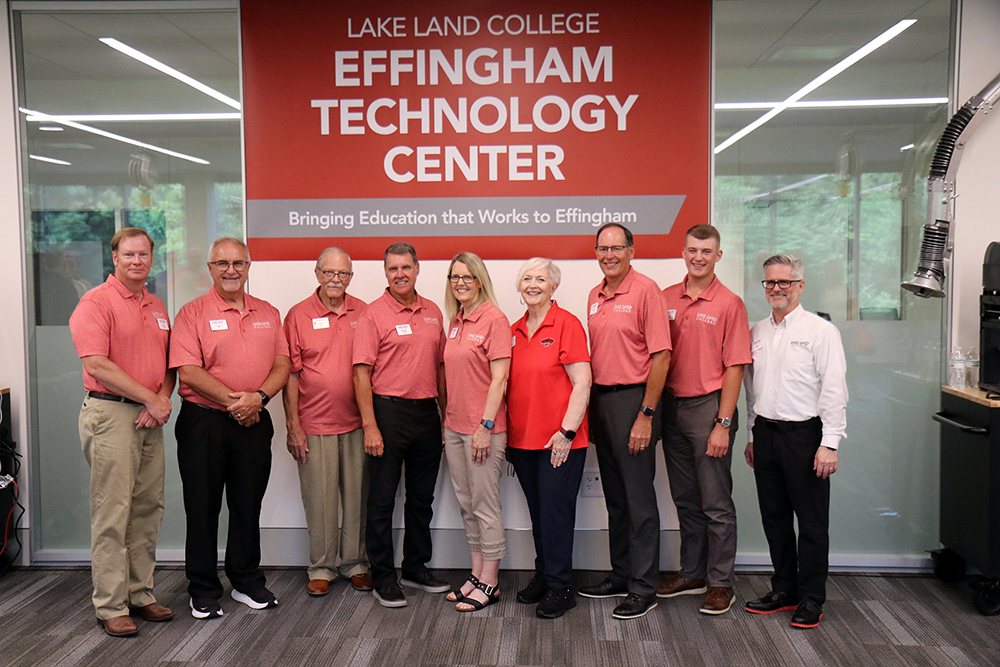
Lake Land College Celebrates Grand Opening of New Effingham Technology Center

EIU Leads OVC With 48 Academic Medal Of Honor Winners
Suncode Energy Pitches Six-Part Community Solar Project Near Martinsville