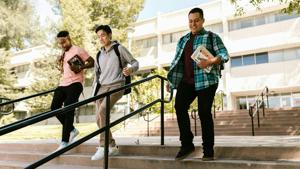
Universities respond to new federal Grad PLUS loan caps
Santa Clara University School of Law will guarantee $16,000 annual scholarships starting next fall, fully covering tuition following the new federal Grad PLUS loan caps set for 2026 by the Trump administration.
Starting July 1, 2026, Grad PLUS loans will be capped at $50,000 per student per year. New borrowers pursuing professional degrees, such as law, will face a lifetime limit of $200,000, while those in other graduate programs will be restricted to $100,000.
The new PLEDGE Scholarship from the California Law School is the first public response by a law school to federal Grad PLUS loan caps.
The scholarships will “relieve next year’s students from the kind of financial pressure that might otherwise preclude them from pursuing rewarding legal careers of great prominence and purpose,” Santa Clara Law Dean Michael Kaufman said in a statement.
Critics of the caps warn they will create funding shortfalls for students enrolled in high-cost professional programs.
University of North Carolina Student Body President Adolfo Alvarez expressed alarm in a LinkedIn statement about the caps in federal loan assistance.
“It’s going to be really damaging,” Alvarez said.
Supporters argue that the limits address long-standing issues in the student loan system.
Wayne Winegarden, senior fellow in business and economics at Pasadena-based Pacific Research Institute, told The Center Square in an exclusive interview that unlimited borrowing has fueled rising tuition costs.
“There’s been a problem with the student loan program in that it enables schools to cost a lot of the subsidy that’s been going to students to be able to kind of borrow, especially borrow cheaply, which has ended up just driving up the costs of universities,” said Winegarden.
He urged students to weigh program expenses against future earnings potential.
“Financial realities don’t go away just because we wish that they weren’t there,” Winegarden added. “If you’re going to be going to a university that costs $20,000 a year, you need to come out with a degree that increases your economic value.”





Chance Showers And Thunderstorms
Latest News Stories

Researchers put a number on how much debt U.S. can carry

Colorado governor vetoes legislation allowing ICE to be sued

Ballots processed slowly as Californians await 36-day count

WATCH: WA mayor stands by pro-ICE, anti-Antifa proclamations

U.S. House narrowly passes bill to fund USDA, FDA in 2027
Ruling: Illinois Supreme Court likely overstepped in ousting of Cook County judge

Illinois passes law to restrict new federal migrant detention centers

Alcohol tax amendments may be unconstitutional

Illinois quick hits: Lawsuit filed over drunk driving deal involving noncitizen

Illinois to regulate intoxicating hemp products, loosen up on cannabis

Questions loom after data center legislation stalls

Illinois quick hits: Stop child care scams act clears U.S. House, Illinois U.S. Reps introduce immigrant due process bill

Pratt, Bass on track to face each other in Nov. 3 mayoral race
Kiley, Wahab, Desmond hold onto leads in House districts