Union Pacific to ask appeals court for biometrics lawsuit exemption
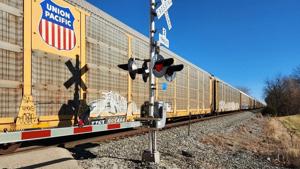
Though he has said he believes the company’s position would lead to legally “absurd” results, a federal judge will still allow freight railroad giant Union Pacific to ask an appeals court to determine if an exemption under Illinois’ stringent biometrics privacy law that shields governments from costly privacy lawsuits also should extend to also protect government contractors, like Union Pacific.
On Oct. 28, U.S. District Judge Jorge Alonso granted Union Pacific’s request to appeal the judge’s ruling, delivered two months earlier, which had appeared to allow a class action lawsuit to continue against the railroad.
Union Pacific has been defending itself in court against the lawsuit since last year, when attorneys from the firm of DJC Law, of Chicago and Austin, Texas, lodged the action in Chicago federal court on behalf of potentially thousands of truck drivers whose fingerprints were scanned when entering the company’s rail yards.
The lawsuit, like thousands of others filed against employers in Illinois in the last decade, accuses Union Pacific of failing to secure authorization from the drivers and provide them with notices concerning how their data may be used, shared, stored, and ultimately destroyed, before requiring them to digitally scan their fingerprints to verify their identity, as required by BIPA.
Union Pacific and other railroad operators have been among the largest employers targeted by such class actions under BIPA in state and federal courts in Illinois.
The potential financial stakes are high in the actions. Under the BIPA law, plaintiffs can demand damages of $1,000 or $5,000 per violation. Further, under an interpretation of the law affirmed by the Illinois Supreme Court, Union Pacific could be on the hook to pay that amount for each and every fingerprint scan, not just per truck driver.
When multiplied across thousands of drivers scanning their fingerprints numerous times, potential claims for damages could quickly climb into the hundreds of millions or even billions of dollars.
Last year, to stop the potential for such astronomical and ruinous financial payouts, Illinois state lawmakers revised the BIPA law to explicitly state such damages should be calculated per person, not per scan.
However, courts have not yet decided if lawsuits filed before the law was signed by Gov. JB Pritzker – like the truck drivers’ action against Union Pacific – should be interpreted, and damages calculated, using the revised version of the law or the prior one.
In the meantime, Union Pacific has tried to defeat the lawsuit.
Most recently, the company argued it should be protected against the lawsuit by a clause in the BIPA law exempting governments from the law.
Union Pacific asserted that, as an ongoing government contractor working with several government agencies in Illinois, those exemptions should be extended to also protect the railroad.
Specifically, Union Pacific pointed to its contracts with Metra commuter rail and the Illinois Department of Transportation, among others.
In August, however, Alonso sided with plaintiffs, saying he believed the governmental exemption shouldn’t apply to a company who was merely a government contractor. Rather, Alonso said the exemption needs to be earned, through a “nexus” – meaning, the company required the scans as an essential part of their government contract and as part of the work being performed for the government.
“… A categorical exemption would lead to absurd results in which a large company with a single government contract would be categorically exempt from BIPA even when the company’s BIPA violations were entirely unrelated to the contract,” Alonso wrote on Aug. 25.
The judge noted Union Pacific pointed to work IDOT hired the railroad to perform on a rail crossing in the small southern Illinois town of Steeleville, “over three hundred miles away from the intermodal facilities in Chicago.”
“The fact that Union Pacific improved a single railroad crossing in Steeleville is entirely unrelated to the collection of truck drivers’ fingerprints at its intermodal facilities,” Alonso wrote in August.
Union Pacific asked Alonso for permission to appeal that ruling, saying the question needs to be addressed by the U.S. Seventh Circuit Court of Appeals.
In his latest ruling, Alonso said he continues to believe his earlier decision was correct. But he conceded the question is not clearly in favor of either side. So, without a controlling ruling from an appellate court, the judge said the question remains open to debate and in some doubt.
Should an appeals court ultimately side with Union Pacific in the dispute, it would provide a new avenue for potentially a host of employers to defend themselves against the continuing onslaught of class action lawsuits under the Illinois Biometric Information Privacy Act (BIPA).
To this point, courts have handed out such exemptions to private companies sparingly, handing such wins only to banks and some healthcare providers, in certain circumstances, citing explicit exemptions for such companies already provided in the original law.
Ultimately, the question may not be decided by the Seventh Circuit. Rather, that federal appeals court may yet choose to punt on the matter and ask the Illinois Supreme Court to rule, as the ultimate arbiter of Illinois state law.
The Seventh Circuit has done so on other questions related to the BIPA law.
Union Pacific is represented in the case by attorneys with the firm of Latham & Watkins, of Chicago.




Mostly Sunny
Latest News Stories

Buck to run against Titus in Las Vegas congressional race
Candidates notch wins in Nevada U.S. House primaries
Lombardo, Ford projected to run in Nevada’s Nov. 3 gubernatorial race

Platner will face Collins in November; U.S. House races pending

Seattle enacts one-year ban on data centers
Social Security fund to run dry in 2032, automatic cuts loom
$70B bill funding ICE, Border Patrol through 2029 heads to Trump’s desk
Lawmakers probe taxpayer savings in military contracts
U.S. launches retaliatory strikes against Iran
Congress debates effects of U.S. immigration policies
Another approach to border security: Denaturalization

Kennedy nutrition pledge lacks enforcement as health costs rise