With shutdown ending, debate on Obamacare subsidies to begin
As Congress moves to reopen the federal government this week, debate is shifting toward how to pay for the federal health care programs that helped trigger the shutdown.
Health policy experts say one option is to make health insurers shoulder more of the cost, as their stock values have surged more than 1,000% since the Affordable Care Act became law in 2010, according to a Paragon Institute report. The report found health-insurer stocks have risen 1,032% since 2010, compared with 251% for the S&P 500.
“Republicans could kill three birds with one stone….cut $124B in Medicare fraud, use $30B to fund a year of HSA’s, and the rest to pay down the debt,” health care policy expert Mark Merritt writes.
Merritt was referring to overbilling in Medicare Advantage, where insurers are accused of inflating patient conditions to draw higher federal payments.
The Congressional Budget Office estimates the practice will cost taxpayers $124 billion over the next decade.
A bipartisan bill called the No Upcode Act from Sens. Bill Cassidy, R-Louisiana, and Jeff Merkley, D-Oregon, would crack down on those billing abuses by adding new oversight measures, as The Center Square previously reported.
Republicans argue that since health insurers have benefited enormously from government programs, they should help pay for them. Medicaid spending alone reached $880 billion in fiscal year 2023, with 69% of that coming from federal funds, according to Kaiser Family Foundation data.
In fiscal year 2023, federal subsidies through the ACA’s Medicaid expansion and exchange plans totaled $218 billion, almost all of which went to insurers, according to Paragon Institute data.
Most Medicaid recipients are enrolled in managed care plans run by private insurers.
Critics say the Affordable Care Act has created a cycle of rising government payments and massive corporate profits.
UnitedHealth Group, for example, collected $92 billion in federal payments last year and is now under Justice Department investigation for overbilling.
“Congress can no longer ignore the nearly one-quarter trillion dollars it will pay private insurance companies next year to administer public health plans,” Merritt previously told The Center Square. “It’s the only real pot of money there is.”
The Senate is expected to vote this week to finalize the government funding measure, after enough Democrats joined Republicans to advance it over the weekend.





Showers And Thunderstorms Likely
Latest News Stories

Pentagon commits to tripling Patriot missile production at $4 million per

Supreme Court appears skeptical of Trump’s birthright citizenship order

Advocates urge stable tariff policy, protections against China
Illinois senators scrutinize diversity commission’s high salaries, poor performance
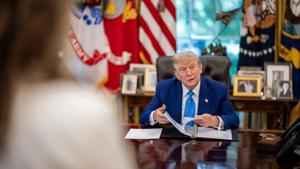
Trump demands second ‘big beautiful bill’ on his desk by June 1

ALEC: State regulations drive up electricity prices

Chicago mayor announces homelessness plan with unclear funding sources

Minnesota wins legal fight over tuition benefits for illegal immigrants

Illini Final Four trip expected to benefit University of Illinois, state of Indiana

Trump makes history at Supreme Court amid landmark birthright citizenship challenge

New Hampshire school district sued over transgender policies

Trump watches as high court hears challenge to his birthright citizenship order