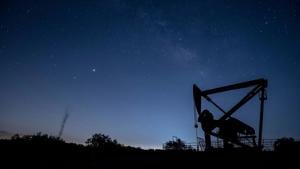
Revenues from energy production at $14.6B for 2025
Energy production on federal lands and waters and in U.S. tribal areas generated $14.61 billion in government revenues in the 2025 fiscal year, according to the Department of the Interior’s Office of Natural Resources Revenue.
Revenues generated from royalties, rents, and bonuses paid by energy and mineral producers are disbursed to a wide range of initiatives and programs, including those that support public infrastructure, education, emergency services, conservation and reclamation projects and historic preservation.
The amount represents the fifth-largest disbursement since 1982, according to the Interior Department.
The revenues were down from $16.45 billion in the 2024 fiscal year and $18.24 billion in the 2023 fiscal year. In the 2022 fiscal year, revenues reached a record-high $21.53 billion, according to the department.
A decrease in this year’s disbursements was mostly due to a drop in commodity prices, according to the department.
Just over $5 billion was disbursed to the Treasury Department, $4.07 billion was allocated to 34 states and $2.98 billion went to the Bureau of Reclamation, which builds and operates dams, power plants, canals and other water resources in the western U.S. About $1.0 billion went to tribes and individual Native American minerals owners during the 2025 fiscal year.
New Mexico received $2.76 billion, the highest amount of royalties from energy production on federal lands within its borders.
It was followed by Wyoming at $544.87 million, Louisiana at $162.42 million, North Dakota at $114.95 million and Texas at $99.83 million.
The revenues disbursed to 33 federally recognized tribes and approximately 31,000 individual Native American mineral owners represent 100% of the revenues received from energy and mining activities on tribal lands in the 2025 fiscal year, according to the Interior Department.
Tribes use the revenues to fund infrastructure development, provide health care and education and support other community programs such as senior centers, public safety projects and youth initiatives, according to the department.






Sunny
Latest News Stories

Federal judge blocks Trump’s 100K visa fee
U.S. House report: Minnesota officials failed to stop fraud

Senator says disability service workers’ raise falls short

Illinois Quick Hits: Cyber attack shuts down Evanston High School

DC schools use sex ed curriculum that avoids using ‘male,’ ‘female,’ promotes abortion

U.S. Supreme Court slaps down Biden administration energy ruling
Trump calls on Iran, Israel to ‘stop shooting,’ return to talks

Everyday Economics: A stable labor market is not enough

Fishermen advocate begins campaign against offshore wind, ‘industrializing’ of the ocean

Sorensen drug-pricing bill draws criticism from former FDA official

Supporters, critics clash over future of taxpayer funding for Rx Kids
U.S. Senate race headlines Maine primaries as voters head to polls Tuesday
Bessent backs 3% deficit goal despite 5% budget forecasts