Economists question necessity of farm bailout, say tariffs don’t help
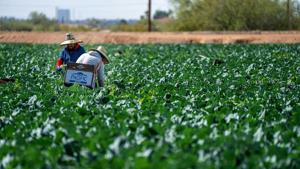
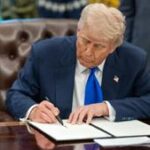
The Trump administration last week announced it would be giving about $12 billion in direct cash assistance to American farmers, similar to how it assisted farmers in 2018 – only, its stated reasons for doing so are different.
At a roundtable, Secretary of Agriculture Brooke Rollins said Biden-era policies had plunged farmers into “one crisis after another” and the new Farmer Bridge Assistance program was meant to transport them from a tumultuous present to a more prosperous future.
“This bridge is absolutely necessary, based on where we are right now,” Rollins said. “[This is] the bridge that is needed to get from the last administration and what basically happened under the last president… to this new golden age for farmers.”
The first Trump administration also provided American farmers with a bailout of $12 billion in taxpayer dollars, only that time, it said the disbursement was needed as a temporary buffer while the administration worked out better trade deals. The bailout was described as “a short-term relief strategy to protect agricultural producers while the Administration works on free, fair, and reciprocal trade deals to open more markets,” according to a Department of Agriculture press release at the time.
Even though President Donald Trump has brought a renewed intensity to tariff and trade policy in 2025, the farm economy is in a different place, according to senior research fellow at the International Food Policy Research Institute, Joseph Glauber – which could account for the difference in messaging.
In 2018, when the first supplemental aid package was announced, the farm economy had endured more sustained losses.
“Back in 2018 you really did see some big trade losses… and they were sustained, right? They lasted a year and a half, or almost two years,” Glauber said.
But American farmers have received a lot of supplemental aid since 2018, in addition to that first payout.
Farmers received additional financial assistance during the COVID-19 pandemic, as did most segments of the American economy, amounting to about $57.7 billion in 2020 alone, according to a USDA working paper.
“We find $57.7 billion in total financial assistance was provided to farm operations and households in calendar year 2020,” the paper reads. “Programs specifically designed to address the economic impacts of COVID-19 in 2020 delivered an estimated $35.2 billion, the assistance provided under non-COVID-19 related programs (other than net indemnity payments) delivered an estimated $16.8 billion, and the net indemnity payments provided the remaining $5.7 billion.”
The Agriculture Department is also given broad authority under the Commodity Credit Corporation Charter Act to issue discretionary agricultural support payments of up to $30 billion per year, in addition to the regular funding, insurance and disaster assistance provided by the Farm Bill. (Congress can also authorize more if needed.) The Act was passed in 1933 as an emergency relief measure to help farmers during the Great Depression. Like many other New Deal programs such as Social Security, it remains in effect today.
As a result of these additional disbursements in recent years and shifts in global food markets, the American farm economy overall is in a better position, according to Glauber.
“If you concentrate on farm income, which is the big, big number that includes both livestock and crop producers, that’s pretty good and is higher than the 10-year average,” Glauber told The Center Square. “By a lot of measures like that, it’s pretty good.”
Glauber said land values, too, would likely reflect signs of a crisis if the farm sector was, in fact, facing a crisis that most American farmers “haven’t seen in their lifetime,” as Rollins described it.
“If the farm sector were in a serious downturn, you would think that land values would be falling. They haven’t been. They’ve actually been holding fairly firm,” Glauber said.
Crop farmers have been hurt by recent government policy, but because of the infusion of supplemental assistance the sector has seen since 2018, they likely suffered worse during the recession in 2009 or in the 1980s when they didn’t have that kind of assistance, according to Glauber.
Ryan Young, senior economist with the Competitive Enterprise Institute, said much of the damage that has been done to the farm sector comes from tariffs both from Trump’s first and second terms – and former President Joe Biden could have improved things for farmers if he had undone some of them.
“Two wrongs don’t make a right. That’s the main point. President Trump’s tariffs got farmers in this mess in the first place. The solution is to remove the tariffs, not to try covering up that mistake with a taxpayer-funded bailout,” Young told The Center Square.
Tad DeHaven, policy analyst with the Cato Institute, called attributing farmers’ current challenges to the Biden administration “laughable” due to the fact that the Trump administration’s choice mirrors the bailout in the president’s first term, before Biden had been president.
“Certainly the Biden administration was responsible for a good part of the inflation that we went through,” DeHaven told The Center Square. “The first Trump administration initiated a trade war and they lost. Farmers lost market access. They got a bailout.”



Sunny
Latest News Stories

WATCH: Expect tax and fee increases for veto; Democrats want more sanctuary policies

Lake Land Board Authorizes Tuition Waivers for Special Events to Boost Recruitment

Meeting Summary and Briefs: Casey-Westfield School Board for October 20, 2025

A Taste of 4-H: A Fun Challenge for Third Graders

Judge: Benefits of feeding babies beat risk claims in NEC lawsuits
Illinois quick hits: Raoul joins SNAP benefits lawsuit; disaster declaration denial appealed
WATCH: Democratic attorneys general sue feds to release food benefits
WATCH: GOP lawmaker: Pritzker-back energy omnibus will lead to higher bills

Illegal border crossings in September historically low

Vance says U.S. troops will get paid Friday despite shutdown

WATCH: Constitution debated as IL judge orders reports from Border Patrol commander
WATCH: Tax increases expected before Illinois legislators adjourn veto session