Senate passes $900 billion Pentagon funding bill, sends to Trump’s desk
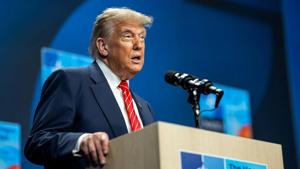
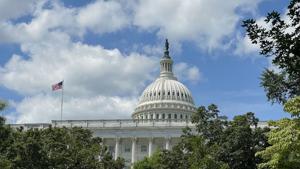
The U.S. Senate passed the 2026 National Defense Authorization Act in a 77-20 vote Wednesday, sending the roughly $901 billion bill to President Donald Trump’s desk for his signature.
“This year’s NDAA ushers in the most significant acquisition reform in decades and helps the U.S. deter increasingly hostile nations,” Senate Armed Services Committee Chair Roger Wicker, R-Miss., said. “The American people voted for peace through strength, and this NDAA delivers.”
Among other provisions, the mammoth NDAA authorizes $38 billion for aircraft, $34 billion for nuclear defense, $26 billion for shipbuilding, $25 billion for munitions and $900 million to combat drug trafficking.
Military members will receive a 3.8% pay raise, and $1.4 billion is set aside for the construction of barracks and family housing. Hundreds of millions of taxpayer dollars are allocated for new childcare centers and schools, and $577 million will go toward renovating military hospitals and building new medical facilities.
A significant portion, $142 billion, goes toward research and development of new military technologies, including biotechnology, hypersonic weapons and artificial intelligence.
The bill provides $500 million for the U.S.-Israel missile defense cooperation and $1 billion for the Taiwan Security Cooperation Initiative. It also prohibits American taxpayer dollars from going to certain Chinese biotech companies.
While the majority of the NDAA’s content is bipartisan, both sides of the aisle made compromises in the bill.
Republican leadership allowed for $800 million in assistance to go to Ukraine over the next two years, repealed the 2002 Authorization for Use of Military Force for Iraq, and agreed to a provision limiting funding to the Secretary of Defense until he releases unedited footage of the strikes on Venezuelan drug boats.
Democratic leadership swallowed a $1.6 billion cut to climate change-related spending, an expansion of the Trump administration’s ability to enforce immigration laws via military force, and a directive to intelligence agencies to review – and if possible, declassify – intelligence about the origins of the COVID-19 virus.
The House passed the more than 3,000-page bill last week, also with bipartisan support.




Isolated Rain Showers
Latest News Stories

NYC sues Trump over pullback of federal funds
Illinois quick hits: ICE ordered to wear body cameras; Fed’s Beige Book released

WATCH: GOP says Pritzker out of touch winning $1.4 million; veto session week 1 wraps

Pritzker sounds alarm on DOJ voter data request; conservatives call response paranoid

Republicans more likely to say DOGE effective at cutting waste

Braves Participate in 8th Grade All-Star game
WATCH: Trump administration seeks to make fertility, IVF treatments more affordable
States say they get big return on anti-Trump litigation

WATCH: Braver Angels CEO: Political dialogue is still possible – even in deep-blue WA
Des Moines school board chair ends U.S. Senate campaign amid superintendent controversy

Former national security advisor Bolton indicted by grand jury

Retail advocate: ‘Empty storefronts’ will result from Chicago mayor’s budget