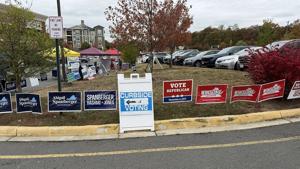
SCOTUS to consider second election law case
The U.S. Supreme Court ruled this week that an Illinois congressman had the right to sue the state over ballot counting after Election Day.
The high court’s decision in Bost v. Illinois State Board of Elections brought praise from election integrity advocates, including Jason Snead, director of the Honest Elections Project.
Snead told The Center Square he has seen inequity of access to the courts for conservative candidates compared to liberal candidates.
“It’s been far, far easier for candidates on the left or for interest groups as well as political parties to get into court and use courts to throw out those election integrity laws than it has been for candidates and parties on the right to try to uphold them,” Snead said.
U.S. Rep. Mike Bost, R-Murphysboro, filed the original lawsuit against the state in 2022 for counting ballots postmarked on Election Day up to two weeks later. The court affirmed Bost had legal standing to sue without addressing whether states could allow mail-in ballots received after Election Day to be counted.
Sixteen states and the District of Columbia accept mail-in ballots as much as two weeks after Election Day. The nation’s highest court is set to determine whether federal election laws prohibit states from accepting ballots after Election Day.
The case, Watson v. Republican National Committee, specifically challenges Mississippi’s law allowing ballots to be counted up to five days after an Election Day as long as the ballots are postmarked by Election Day.
“That is the day for consummating the election, meaning that all ballots have to be cast by the close of polls on election day in order to be counted,” Snead said.
With the midterm elections closing in, Snead urged state lawmakers to implement provisions to block delayed mail-in ballot receipt deadlines. He said there is a “good chance” that the Supreme Court strikes down the various state laws allowing for late mail-in ballot deadlines.
“States are just beginning to come into session in their legislatures and they have plenty of time and plenty of runway to adjust their state statutes right now to protect against any mid-year changes that the Supreme Court might force them to make,” Snead said.
In December, Ohio Gov. Mike DeWine signed a law restricting mail-in ballots after Election Day. DeWine acknowledged the Supreme Court’s pending decision in Watson v. RNC as justification for his signature of the legislation.
Some voting rights advocates have criticized the court for taking up the decision during a consequential midterm election year. However, Snead said as long as the court makes a decision by June or July it will give enough time to educate the public on the issue.
“I don’t think that this is going to be particularly disruptive,” Snead said. “The most important thing is going to be getting the word out to voters if they’re casting mail ballots that they need to do so early.”






Mostly Sunny
Latest News Stories

FAA partners with college to train next generation air traffic controllers

Judge denies Madigan’s motion to remain free pending appeal

The U.S. Department of Education launches nationwide tour

Trump takes aim at Chicago crime, no-cash bail while singling out Pritzker
Burrows: Only thing standing in the way of disaster relief are missing Democrats
Trump confirms Nvidia chip agreement
Doran Coins Celebrates Grand Opening with Ribbon Cutting

States challenge federal report promoting coal plants
U.S. Supreme Court could rule on Texas lawsuits brought in Democratic-led state courts

WATCH: Illinois In Focus Daily | Monday Aug. 11th, 2025

Illinois quick hits: Judge denies Madigan’s motion; legislator urges action on DCFS interns

About Us