Senate takes recess, leaving only five days to pass six govt funding bills
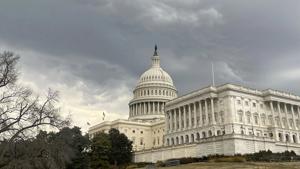
U.S. senators have left town for a week-long recess, leaving themselves only five days to pass the six remaining federal government funding bills.
Congress is already three months overdue on finishing the regular order appropriations process for fiscal year 2026, which consists of passing 12 full-year funding bills that allocate money for federal agencies.
Four of those massive bills, which are also the thorniest, have not even passed the lower chamber, though House leaders hope to advance them in a package next week while the Senate is off.
If they accomplish this, the Senate will likely pair the four-bill minibus with the two-bill minibus that passed the House Wednesday.
Senate Majority John Thune, R-S.D., believes it’s possible for the six bills to reach President Donald Trump’s desk by the Jan. 30 deadline, when government runs out.
If Congress fails to meet the deadline – which many, including the National Governors Association, anticipate – they face a partial government shutdown.
In that instance, the only way lawmakers could prevent a shutdown would be by punting the deadline via a Continuing Resolution, keeping agency funding levels on autopilot.
That would mark the fifth consecutive time Congress resorted to a stopgap instead of finishing appropriations on time.
In fact, nearly two years have passed since Congress refreshed annual federal funding levels, meaning dozens of departments, agencies and offices are still operating on funding levels from the Biden administration. Those include the departments of Defense, Transportation, Education, Homeland Security, Health and Human Services, Labor, and others.
But the departments of Commerce, Justice, Energy, and Interior, as well as the Environmental Protection Agency and Drug Enforcement Agency, will soon receive fresh funding once Trump signs a trio of funding bills the Senate passed Thursday into law.
The departments of Veterans Affairs and Agriculture, the Food and Drug Administration, and the Legislative branch are also covered for fiscal year 2026, with Congress attaching the three bills covering those sectors onto the most recent CR in November.





Sunny
Latest News Stories

U.S. Supreme Court rules against automatic prison release punishments

State Police address FOID, cyber security audit findings
Poll: Trump demonstrates stronger cognitive, communication skills compared to Biden

Illinois Quick Hits: Red Line funds ordered to be unfrozen

EXCLUSIVE: 5 years in, Operation Lone Star seizes 870 million lethal doses of fentanyl

Proposal to decrease reliance on paper documents passes House

Late Sixth-Inning Surge Lifts Casey-Westfield Baseball Past Altamont 4-1
Monroe Elementary Reading Initiatives Raise $13,000 as Students Log Nearly 91,000 Minutes

Gilbert Drives in Five as Casey-Westfield Outslugs Windsor/Stewardson-Strasburg 11-7
Meeting Summary and Briefs: Marshall C.U.S.D. C-2 Board of Education for March 12, 2026

Chicago can’t ditch airlines’ suit vs ‘disruptive’ paid sick leave rules

FEMA says funding debate didn’t affect response to Hawaii

Maryland Supreme Court tosses Blue cities’ climate lawsuits against energy companies