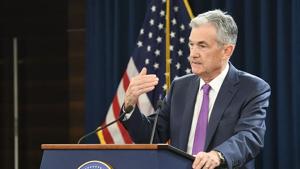
Everyday Economics: Fiscal reality meets Central Bank caution in week ahead
At Davos, Citadel CEO Ken Griffin pointed to Japan’s bond selloff – where super-long yields surged and 40-year yields hit record highs – as an “explicit warning” about what happens when investors start to doubt a government’s fiscal trajectory. His message was blunt: when a country’s “fiscal house is not in order,” “bond vigilantes” can “extract their price.”
That is not political rhetoric. It is bond arithmetic.
Long-term yields can be thought of as a bundle of (1) expected real short rates, (2) expected inflation, and (3) risk premia – especially the term premium and inflation-risk premium. The fiscal channel matters because persistent deficits affect yields through multiple mechanisms simultaneously:
More issuance increases the compensation investors demand. When governments run larger deficits, they supply more duration risk to the market that must be absorbed by private balance sheets. A large economics literature finds that higher deficits and higher debt are associated with higher long-term sovereign yields, with effects that grow when starting debt levels are already elevated.
Inflation tail risk raises premia. When inflation is already above target, deficit-financed demand can sustain price pressures, raising the compensation investors require for bearing inflation uncertainty.
The effects compound through higher term premiums. When fiscal and inflation uncertainty rise together, the compensation investors demand for holding long-duration bonds increases – showing up as higher term premiums embedded in long-term yields.
Griffin’s point matters because higher long-term yields cascade throughout the economy: mortgage rates reprice off Treasuries plus a spread, corporate borrowing costs rise tightening financial conditions, and federal interest expense increases, which worsens future deficits and reinforces the cycle.
The Supply-Side Constraint: Deficits Without Productivity Growth Mean Persistent Inflation
The deeper concern is on the supply side, and this is where Griffin’s warning becomes a story about why interest rate cuts may be off the table for months. If deficit-financed spending remains strong while productivity growth disappoints, the economy faces sustained price pressures without the relief that faster potential growth would provide.
Griffin was explicit about this risk at Davos, expressing skepticism that AI productivity gains – Washington’s hoped-for fiscal savior – would materialize quickly enough to matter for near-term policy. While the AI industry requires “tremendous hype” to fund infrastructure buildout, Griffin cautioned that AI “may or may not be” the economic breakthrough needed to expand the economy’s capacity fast enough to absorb fiscal impulse without inflation.
Without productivity acceleration, inflation could remain sticky and well above the Fed’s target. The Fed cannot cut rates in an environment where demand is being sustained by fiscal policy while supply-side capacity is failing to keep pace. Doing so would risk re-accelerating inflation expectations – exactly what the Federal Open Market Committee spent 2022-2023 fighting to control.
The Fed’s Inflation Problem: Forecasts Keep Getting Revised Higher
Start with the inflation facts. The latest PCE report shows headline PCE inflation at 2.8% year-over-year, up from 2.7% the prior month. Core PCE is also at 2.8%. The direction is not alarming, but it is enough to keep the Fed cautious – because it underscores that inflation is not gliding cleanly back to 2%.
Now compare that outcome to the Fed’s own forecasting record:
December 2024 SEP: median projection of 2.5% for end-2025 PCE, 2.1% for end-2026December 2025 SEP: revised to 2.9% for end-2025 PCE, 2.4% for end-2026 (with core PCE at 3.0% in 2025 and 2.5% in 2026)
That upward revision is the key story: disinflation proved slower than forecast, and the committee has marked up the expected inflation path into 2026. The Fed entered 2025 thinking “close to 2% in 2026” was reasonable. It is entering 2026 with inflation expected to remain in the mid-2s – still 40 basis points above target at year-end.
The committee’s credibility is directly tied to actually delivering 2% inflation, not 2.4% inflation. With the forecast already revised higher once, the bar for delivering additional accommodation is extremely high. Each cut risks being interpreted as the Fed giving up on the 2% target.
The December FOMC minutes framed policy as risk management: inflation remained “somewhat elevated,” uncertainty “remains elevated,” and the committee emphasized assessing “incoming data” and the “balance of risks.” But crucially, several participants argued that incoming data did not suggest significant further weakening in the labor market.
The original justification for the 100 basis points of cuts delivered in the second half of 2025 was insurance against labor-market deterioration. If that deterioration has stopped – or never materialized to the degree feared – then the insurance motive evaporates. The Fed is left with inflation at 2.8% and no compelling reason to ease further.
Putting It Together: The Case for an Extended Hold
Griffin’s fiscal warning and the Fed’s own forecast revisions point in the same direction. When productivity growth disappoints and fiscal policy remains expansionary, inflation stays sticky at 2.8%, and the labor market stabilizes rather than weakens, the Fed faces a simple reality: there is no affirmative case for cutting rates in the first quarter of 2026.
The likely outcome this week is not just “no cut” – it could be the beginning of an extended hold period. The Fed will wait for concrete evidence of one of two things: either inflation convincingly moves toward 2%, or the labor market deteriorates meaningfully enough to justify insurance cuts despite elevated inflation.
How to Treat the 2026 Inflation Projection
Given the Fed’s track record of upward revisions, the right approach to the 2.4% end-2026 projection is:
Treat it as a baseline that may prove optimistic. The 2024→2025 revision demonstrated that persistence can surprise. With fiscal policy likely to remain expansionary and productivity gains uncertain, risks are skewed toward higher inflation outcomes.Recognize it still implies 40 bps above target. Even if the Fed hits its own forecast, 2.4% is not 2.0%. The committee will likely require inflation to actually reach 2% on a sustained basis before resuming cuts.Understand the policy implication: A 2.4% inflation path combined with resilient growth suggests the neutral rate may be higher than the 2010s conditioned us to expect. If inflation proves sticky, “neutral” could be 3.5% or higher – close to where policy already sits.
Here’s the bottom line
The confluence of absent productivity gains, sticky inflation, declining labor supply – partly due to immigration policy – and upwardly-revised Fed forecasts creates powerful constraints on further easing. The most likely outcome is not gradual cuts through 2026, but an extended hold – with any resumption of easing contingent on inflation actually converging to 2%, not just being forecast to do so. For the week ahead, expect no cut and a message that patience is the entirety of 2026 policy.






Sunny
Latest News Stories
GOP legislators propose creating new state from CA counties

WATCH: Pro-life groups step up to meet growing demand in post-Dobbs America

FDA approves latest versions of COVID vaccines but under new ‘framework’

Illinois quick hits: Gun ban challengers petition SCOTUS; man sentenced for COVID fraud
WATCH: Trump: Illinois’ ‘slob of a governor’ should call for help with public safety
WATCH: Legislator says Illinois’ child welfare agency uses interns, has legal exposure

Cyberattack closes state government services in Nevada

Economic index shows reduced uncertainty, more stability in Midwest

Trump hits India with 50% tariff on imports as talks continue

RFK Jr. wants doctors to learn more about nutrition

WATCH: Congressional candidates debate ICE, other issues

Walz: Praying for kids, teachers after horrific act of violence