DOE issues emergency orders to mitigate blackouts in New England, Texas
U.S. Energy Secretary Chris Wright issued emergency orders to mitigate blackouts in New England and Texas as 24 states have declared an emergency due to an Arctic blast moving across the U.S. over the weekend.
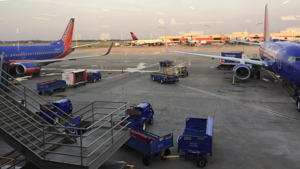
More than 200 million people are in Storm Fern’s 2,300-mile path, stretching from New Mexico to Maine. The storm has led to roughly 12,000 flight cancellations, impacting airports stretching from Dallas to Boston. More than 31,000 flights were disrupted nationwide since Friday, according to FlightAware data.
Twelve states have reported more than a foot of snow so far, Fox Weather reported. Massachusetts, Maine and New Hampshire are expected to get more than a foot before the storm is over.
Southern states have been hit hard, including in northern Mississippi, where tens of thousands of residents are without power due to ice-laden trees downing power lines.
More than 900,000 electricity customers have lost power nationwide, according to multiple reports.
Wright issued the emergency orders pursuant to Section 202(c) of the Federal Power Act, authorizing ISO New England Inc. and the Electric Reliability Council of Texas (ERCOT) to run specified resources in their regions, overriding environmental permits or state law restrictions. He has issued two emergency orders in response to ERCOT requests to leverage backup generation at data centers and other industrial sites.
There are three major grids in the U.S. New England states fall under the Eastern Interconnection electric grid managed by the North American Electric Reliability Corporation’s Northeast Power Coordinating Council. Texas operates its own grid managed by ERCOT.
Wright argues the orders will help ISO-NE and ERCOT manage power generation, minimize blackouts and reduce electric costs. He also blames the Biden administration for increasing electricity costs and weakening the grids nationwide.
“The previous administration’s energy subtraction policies weakened the grid, leaving Americans more vulnerable during events like Winter Storm Fern,” Wright said. The Trump administration is “reversing those failures and using every available tool to keep the lights on and Americans safe through this storm,” he said in a news release.
On his first day in office, President Donald Trump declared a national energy emergency “after the Biden administration’s energy subtraction agenda left behind a grid increasingly vulnerable to blackouts,” Wright said. The Biden administration’s “premature forced closure of reliable generation such as coal and natural gas plants leaves American families vulnerable to power outages,” he added.
Wright cites a North American Electric Reliability Corporation (NERC) warning stating that “winter electricity demand is rising at the fastest rate in recent years” and a NERC 2025-2026 Winter Reliability Assessment warning about elevated blackouts risks nationwide during extreme weather conditions.
Power outages also cost Americans $44 billion a year, according to DOE Lawrence Berkeley National Laboratory analysis. It cites several extreme weather events in 2021 as examples, including Winter Storm Uri in Texas.
The storm caused wind turbines to freeze and natural gas pipelines were impacted by ice, preventing fuel delivery to many gas-powered plants, the report notes. Systemic failures impacted 40% of Texas’ power generation capacity; subsequent outages impacted roughly 4.5 million customers left without power for one week, the report notes.
State legislative hearings found that ERCOT failures weren’t attributed to Biden administration policies but ERCOT policies and failed state regulatory oversight, The Center Square reported. ERCOT board members didn’t even live in Texas, were using “phantom reserve margins” and systemic failures were identified within the state utility commission, The Center Square reported. Multiple people were fired and resigned.
The Texas legislature enacted a series of reforms that state regulators and the energy industry have since implemented, The Center Square reported.
As a result, electricity customers have seen their electricity rates and bills increase exponentially. They have also not experienced a repeat of the 2021 catastrophic failures.
During last January’s polar vortex, the Texas grid and energy companies set three all-time records for demand and supply and met energy needs during subfreezing temperatures, The Center Square reported.
Storm Fern ushered in thundersleet, snow and ice to most of Texas, including the oil and gas producing Permian Basin and Houston region where refineries are located. Ahead of the extreme weather, the Texas energy industry weatherized operations and says oil and natural gas production will continue to meet increased demand. ERCOT says Texas’ grid remains strong despite issuing the DOE requests, The Center Square reported.






Slight Chance Showers And Thunderstorms then Chance Showers And Thunderstorms
Latest News Stories

Soaring costs and short supply shut millennials out of housing market

Vought testifies before lawmakers on Trump’s $2.1T budget request

SNAP eligibility changes spark debate on gap for impacted recipients

Trump puts spotlight on China, Iran’s top oil consumer
Lawmakers, auditors offer fraud prevention solutions

Illinois unions seek to kill Waymo-friendly bill in Springfield
Rich States Poor States: Tax policy largely determines states’ economic competitiveness
78 pro-life orgs ask DOJ to stop undermining state laws by favoring aborting drug industry

Illinois Quick Hits: Two of ComEd four released; new trial expected

Casey-Westfield Launches Seven Home Runs in 18-4 Rout of Tri-County

Meeting Summary and Briefs: Casey City Council for April 6, 2026

Chicago suit vs oil cos. may yet survive SCOTUS ruling, judge hints