WATCH: Supreme Court case could add to $10.8B midterm spending projection
The U.S. Supreme Court could issue a decision by July that could unleash billions more dollars into political campaigns ahead of the 2026 midterm elections.
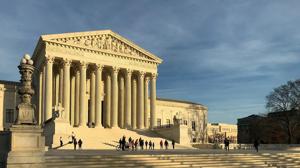
In December, justices on the court heard arguments in National Republican Senatorial Committee v. Federal Election Commission, a case that could strike down limits on political party spending. The case would determine how much political parties can spend in coordination with candidates for expenditures like advertising.
Alongside Republican groups, former Senate candidate JD Vance, R-Ohio, brought the challenge. He argued rules that prevent coordination go against the First Amendment.
Travis Trawick, CEO of non-partisan political technology firm FullPAC, told The Center Square he is confident the Supreme Court will rule in favor of the Republican groups.
“The Supreme Court has already ruled that political speech is free speech and you can’t put limits on free speech and political [speech] is one of the most protected forms of free speech,” Trawick said.
According to AdImpact, spending in the 2026 midterm elections is projected to reach over $10.8 billion. However, Trawick said this figure does not account for money that could be unleashed after the Supreme Court’s decision.
“They don’t even have figures out for if this ruling was to be approved and have those federal spending limits removed,” Trawick said, “That’s obviously going to open up another avenue of billionaire donors to be able to support candidates.”
Elon Musk, a billionaire, donated $10 million to support Nate Morris, a Republican candidate for Kentucky Senate. Trawick said this kind of spending is expected to increase based on the Supreme Court’s decision.
“We’re going to see that trend continue and that’s just kind of what America allows in our democracies,” Trawick said.
The Federal Elections Campaign Act limits contributions to individual candidates each year. For 2025-2026 federal elections, the maximum individual donor contribution to a national party committee is $132,900.
“We don’t know what it could go to but we definitely know that it will be going up with those limits being removed,” Trawick said.
During oral arguments in December, Justice Sonia Sotomayor appeared skeptical of dealing with the case. She argued the Supreme Court would be elevating the voice of a politician by allowing for greater cooperation between parties and candidates.
“Every time we interfere with the Congressional design, we make matters worse,” Sotomayor said. “Our tinkering causes more harm than it does good.”
“We’re not buying votes here,” Trawick said. “We are spending money in advertising to give the public a better perception of an individual candidate so that they can create a more lasting and favorable relationship to win more votes on Election Day.”
Trawick argued local races will benefit from the Supreme Court’s decision to open funding avenues with elections. He said city council, school board and local judge races could receive the trickle down effects of unlimited funding.
Over the past year, redistricting efforts in states across the country have brought on national attention as political parties battle for control of Congress in 2026. Trawick said the Supreme Court’s decision in this case will be especially important considering mid-decade redistricting efforts.
“It makes some of them more competitive, it flips other ones entirely and makes some way safer,” Trawick said about new congressional districts. “All we do here at FullPAC is making sure that their message is going to their new communities in a way that the voters are educated that they are voting for a different candidate now.”
Justices on the U.S. Supreme Court could take until July to decide NRSC v. FEC, leaving only a few months before midterm Election Day and after many state primary elections take place. Trawick urged justices on the court to quickly issue a decision for funds to be released.
“The Supreme Court needs to make a decision on this relatively quickly before the midterm elections so that these groups that are going to be benefitting from this can make that happen,” Trawick said.

Sunny
Latest News Stories
WATCH: Gun ban cases and the Supreme Court; English and CDLs; Don Tracy eyes Senate

Illinois quick hits: Madigan disbarred; taxpayers subsidize medical debt relief
Audit Confirms Utility Losses as Casey Council Approves First Property Tax Hike in Five Years

Reshoring manufacturing will take a more skilled workforce, small manufacturers say
WATCH: Feds take steps to dismantle ED, states respond
Inflation-adjusted teacher salaries drop despite record spending on public education
State officials race clock amid legal changes to gerrymandered maps
Illinois quick hits: CDC’s autism and vaccines website criticized by IDPH

Federal judge orders halt to National Guard deployment in DC
Consumer group files amicus brief on behalf of NRA’s petition to Supreme Court

Report links Minnesota welfare fraud to terrorist funding
White House denies Trump wants to execute ‘seditious’ Dem lawmakers