
Everyday Economics: The economy expands, but massive transformation masks weakness
The Atlanta Fed’s GDPNow model is tracking 4.2% real GDP growth in Q4 2025 – a number that screams “strong economy,” powered in part by an AI investment boom and the spending power of wealthier households.
This week’s headline is Friday’s January jobs report. But the setup matters just as much: January auto sales, plus the Institute for Supply Management manufacturing and services surveys, will give us an early read on whether the foundation is weakening at the start of 2026.At the end of 2025, the deterioration in labor-market conditions looked like it had stalled. Job growth was low, but the unemployment rate stopped rising. That “stabilization” is exactly why the Federal Reserve held rates steady at last week’s meeting, emphasizing a labor market that no longer appears to be worsening rapidly – and inflation that remains uncomfortably sticky.But the labor market isn’t healed just because the headline rate stopped climbing.1) “Stabilization” has been helped by participation dynamicsA key reason the unemployment rate hasn’t accelerated is that the labor force hasn’t been expanding as steadily. When fewer people enter (or stay in) the labor force, the unemployment rate can look more stable even if hiring remains weak. That’s why it’s risky to treat a flat unemployment rate as proof the economy has found its footing.The story of the last year has been simple: companies were slow to hire, but also slow to fire. That combination can keep the labor market upright – until it doesn’t.2) Younger workers are the first to get iced out — and the damage compoundsOne reason this expansion still feels K-shaped is that when hiring slows, younger workers lose the “front door” first.Here’s what’s changed since the unemployment rate trough in 2023:Overall unemployment: up 1.0 percentage point (from 3.4% to 4.4%).Teen unemployment (16–19): up 6.3 points (from 9.4% to 15.7%).Unemployment (20–24): up 2.7 points (from 5.5% to 8.2%).That gap matters for the outlook. Younger households tend to spend a larger share of incremental income. When entry-level hiring tightens, consumer spending can cool faster than top-line averages suggest – especially for discretionary categories.It also matters for longer-run productivity. Delayed entry into the labor force delays skill accumulation and early-career learning-by-doing. Even if the economy avoids a downturn, weaker job access today can translate into slower earnings growth and reduced economic growth tomorrow.3) Cost-cutting is becoming the growth strategy – and AI makes it easierThe late-January wave of layoff announcements is a reminder that many businesses are taking matters into their own hands: protecting margins through headcount reductions, re-orgs, and efficiency drives.And here is where the transformation theme becomes unavoidable: modern cost-cutting isn’t just “do more with less.” It increasingly means “replace tasks with software,” and AI lowers the friction to do that – faster, cheaper, and at scale.Importantly, this isn’t only an entry-level story. Evidence increasingly suggests that tasks most exposed to AI are often concentrated in higher-paying, white-collar roles. So while younger workers are being iced out at the margin, AI-enabled restructuring can also put pressure on experienced, higher-income workers – especially in occupations heavy on routine knowledge work.4) The macro risk: profits protected, demand weakenedIf profits are protected by cutting labor costs – while wage income growth and job access weaken – aggregate demand becomes more fragile. That’s one way a K-shaped economy breaks: the spending power of households with higher propensities to consume gets squeezed, while gains accrue disproportionately to capital owners.Over time, rising inequality isn’t just a social story – it can be a growth story, too, by weakening on-the-job investments, social mobility, and the durability of expansions.What I’m watching FridayIf the jobs report shows hiring re-accelerating and unemployment holding steady for the “right” reasons (stronger labor force and job creation), the soft-landing narrative survives.But if we see weaker payrolls and signs that layoffs are spreading across industries, the stabilization narrative could shift quickly.This is the uncomfortable reality of 2026: the economy may look stable on the surface, but it’s navigating a once-in-a-generation transformation in how businesses hire, produce, and cut costs. That’s not a backdrop – it’s the main plot.






Mostly Clear
Latest News Stories

Illinois takes over health insurance marketplace in 2026 amid skepticism

WATCH: IL state reps challenge IEMA-OHS responses to local agencies

Meeting Summary and Briefs: Casey Township Library Board of Trustees for June 26, 2025
Judge expands restraining order against ‘Beto’ O’Rourke, adds ActBlue
Reversing Biden’s precedent, students complete FAFSA in minutes at beta-testing event

Trump, Zelenskyy to meet Monday in steps toward peace with Russia

Casey Library Reports High Turnout for Summer Reading and Imagination Library Programs

Possible ‘agreement’ reached in Trump-Putin meeting; more discussion likely

WATCH: Gun rights supporters celebrate 9th Circuit’s ruling against CA gun rationing law

Feds sue California over emission standards for trucks
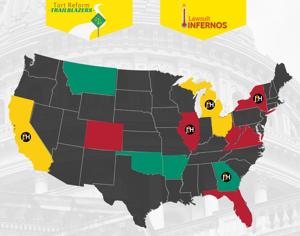
Illinois quick hits: ‘Lawsuit inferno’ bill takes effect after Pritzker signed 267 measures Friday

WATCH: UW-authored study on surgery times contradicts CMS basis for reimbursement cuts