Nationwide redistricting efforts could impact control of Congress
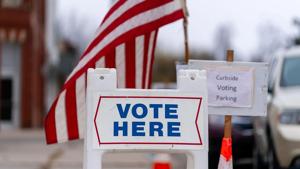
As the 2026 midterm elections approach, state legislatures have grappled with fierce mid-decade redistricting efforts in an attempt to give an advantage to their political party. Based on current map projections, Republicans could flip three more seats than Democrats. Republicans currently have a slim majority in the U.S. House of Representatives.
Six states have enacted new Congressional districts that aim to make certain races more competitive or give a party advantages before the midterm elections. While the districts are likely to make some races more competitive, voters will ultimately decide who takes control of Congress.
Additionally, litigation in states across the country leaves some redistricting measures largely uncertain.
Barring the legal challenges, advantages in partisan makeup appear minimal, even in states that have implemented redistricting measures, according to projections.
The Cook Political Report ranks 206 races that at least lean in favor of Republicans and 211 that at least lean in favor of Democrats. Eighteen races are seen as true tossups, according to the Cook Political Report.
Other projections differ slightly in overall totals for the House races but most are similar to the Cook Political Report. Even in states that have enacted redistricting legislation, the Cook Political Report only ranks five as true tossup races.
Republicans cleared a hurdle in the U.S. Supreme Court, which allowed new maps in Texas that changed five congressional seats that previously leaned Democrat to now lean in their favor going into the 2026 midterms.
“By allowing an egregiously racially gerrymandered map that brazenly dilutes the voices of communities of color to stand, the Court is not only turning a blind eye to discrimination – it is actively enabling it,” said Eric Holder, former Democratic U.S. attorney general under President Barack Obama.
However, California countered with a congressional redistricting ballot measure to favor Democrats in five congressional districts. Lawyers for the Trump administration urged justices on the Supreme Court to strike down California’s map.
The lawyers argued Prop 50, the California ballot measure to approve the new congressional district lines, made distinctions on race and should be classified as racial gerrymandering.
“An injunction effectively requiring California to return to its earlier map would be less disruptive to the State’s election apparatus than allowing the Prop 50 map to go into effect,” the lawyers wrote.
“Under the proposed lines, Democrats could gain up to 5 seats in the U.S. House of Representatives,” California Democrats wrote. “With a majority in the House, Democrats can fight back against Trump and Republicans’ MAGA agenda.”
Utah legislators have battled over competing redistricting maps. State Judge Dianna Gibson chose a map instead of the redistricting proposal from the Republican-led state legislature.
Gibson’s selected map created one potentially competitive Democratic district in Utah. This is a stark contrast to the legislature’s proposal, which had two competitive Republican districts and zero competitive Democrat districts.
The Utah map is likely to be appealed to the state’s Supreme Court.
“The Utah Supreme Court can decide now if the Legislature is the sole and exclusive authority over redistricting in Utah or if it shares that responsibility with the people,” Gibson wrote.
Florida, Maryland, Illinois, New York, Nebraska, Kansas and Virginia have signaled or made attempts to pursue redistricting efforts in their states. These changes could shift the balance of power in either direction significantly.




Showers And Thunderstorms
Latest News Stories

Tri-Valley Outlasts Casey-Westfield 11-9 in High-Scoring Tournament Clash

Clark County Sheriff’s Office Issues Warning Over Fake Parking Violation Text Scam

Lawmaker criticizes surplus spending bill
Calumet Christian Uses Late Surge to Defeat Casey-Westfield 5-3

Meeting Summary and Briefs: Clark County Board for February 20, 2026

Salvation Army rehab ‘enrollees’ who work at thrift stores aren’t ‘employees’

Illinois housing affordability efforts pit tax cuts against new spending

Illinois Quick Hits: Chicago city workers owe more than $19M

Attorney expects conversion therapy ruling to impact Illinois ban

Millionaire’s tax proposal draws mixed reviews as deadline approaches

Universities warn state funding delays are wasting millions in taxpayer investment

Illinois Quick Hits: Loyola student’s alleged killer faces federal firearm charge