
Trump admin to define banking privacy laws
The Trump Administration is set to revisit regulations on data privacy and consumer protections between banks and financial technology firms such as Venmo.
The administration is looking to review the section of the Dodd-Frank Act, a 2010 regulation designed to end taxpayer bailouts and protect consumers from unfair financial practices. A provision in the act required financial institutions to provide consumers with access to their financial data.
Paul Watkins, managing partner at Fusion Law, called the provision an “essential part of our financial lives.” He said the provision allowed consumers to share their financial data with mortgage lenders or companies like Venmo and Plaid.
“The consumer, because they have access to their data, is able to unbundle products and use the information at their bank in order to get a mortgage or to get a line of credit or to transfer funds into a different account,” Watkins said.
While financial tech companies increased in power and growth, data sharing became more common. The Biden Administration then formalized the largely untouched provision in 2024 to give consumers greater access to financial data and make it easier to shop around for competing services.
While attempting to help consumers, some advocates said the Biden administration’s rules made regulations too narrow. The advocates also warned future regulations need to adequately protect consumers’ financial data.
“What we want is a system where the information can be used well, it can be used to benefit all consumers, to grow competition and the like,” said Todd Zywicki, law professor at George Mason University.
Zywicki also warned against allowing large banks to act as monopolies with future rulemaking. He said banks could charge millions of dollars to financial tech companies like Plaid to grant access for customers to receive data.
“I think there is a role here for some sort of government control over price,” Zywicki said. “If we don’t make this information available at reasonable costs to consumers so that they can use it for their benefits, people are going to come up with workarounds that could very well be less secure.”
Advocates said the decision for the CFPB will hinge on how it chooses to define “authorized third parties” that can get access to consumer data from banks.
“If that definition is interpreted the way I think it will be, then we’re going to end up with a very pro-consumer fintech and the banks are going to lose on most of these issues,” Watkins said.





Sunny
Latest News Stories
Six Texas Republicans leaving Congress, finishing out terms next year

WATCH: Johnson responds to Trump; Migrant rental assistance urged; Credit card oversight

Illinois quick hits: Cyber Monday security tips; expecting mother discharge legislation

Everyday Economics: A consumer slowdown, fraying margins, and a big test for the Fed

Casey Residents See 5 Inches of Snow; More Accumulation Forecast for Tuesday

Watchdog: Donations to liberal causes will continue despite Arabella’s rebrand
Meeting Summary and Briefs: Lake Land College Board of Trustees for October 2025
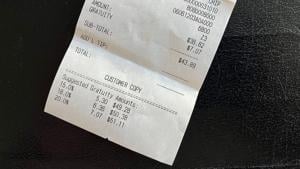
Illinois rejects federal ‘no tax on tips’ rule, keeps state tax on tipped income

Attack foiled in Ft. Worth day before National Guard troops shot in WDC

Hundreds of flights canceled in Chicago as winter storm wreaks havoc
Fiscal Fallout: States continue to increase budgets despite end of COVID emergency

Lake Land College Board Approves Bids for Fire Alarm System, John Deere Engine