
Trump admin to define banking privacy laws
The Trump Administration is set to revisit regulations on data privacy and consumer protections between banks and financial technology firms such as Venmo.
The administration is looking to review the section of the Dodd-Frank Act, a 2010 regulation designed to end taxpayer bailouts and protect consumers from unfair financial practices. A provision in the act required financial institutions to provide consumers with access to their financial data.
Paul Watkins, managing partner at Fusion Law, called the provision an “essential part of our financial lives.” He said the provision allowed consumers to share their financial data with mortgage lenders or companies like Venmo and Plaid.
“The consumer, because they have access to their data, is able to unbundle products and use the information at their bank in order to get a mortgage or to get a line of credit or to transfer funds into a different account,” Watkins said.
While financial tech companies increased in power and growth, data sharing became more common. The Biden Administration then formalized the largely untouched provision in 2024 to give consumers greater access to financial data and make it easier to shop around for competing services.
While attempting to help consumers, some advocates said the Biden administration’s rules made regulations too narrow. The advocates also warned future regulations need to adequately protect consumers’ financial data.
“What we want is a system where the information can be used well, it can be used to benefit all consumers, to grow competition and the like,” said Todd Zywicki, law professor at George Mason University.
Zywicki also warned against allowing large banks to act as monopolies with future rulemaking. He said banks could charge millions of dollars to financial tech companies like Plaid to grant access for customers to receive data.
“I think there is a role here for some sort of government control over price,” Zywicki said. “If we don’t make this information available at reasonable costs to consumers so that they can use it for their benefits, people are going to come up with workarounds that could very well be less secure.”
Advocates said the decision for the CFPB will hinge on how it chooses to define “authorized third parties” that can get access to consumer data from banks.
“If that definition is interpreted the way I think it will be, then we’re going to end up with a very pro-consumer fintech and the banks are going to lose on most of these issues,” Watkins said.





Chance Showers And Thunderstorms
Latest News Stories

WATCH: Businesses argue Congress holds purse strings in tariff challenge

Report: FEMA under Biden politically discriminated against Americans

Trump begins accepting $100k visa payments

Vance optimistic with Gaza peace plan; reiterates no U.S. troops to be on the ground

Poll: Majority of Americans do not support National Guard to deter crime
‘Legal minefield:’ Biometrics reforms needed to keep IL tech biz growing
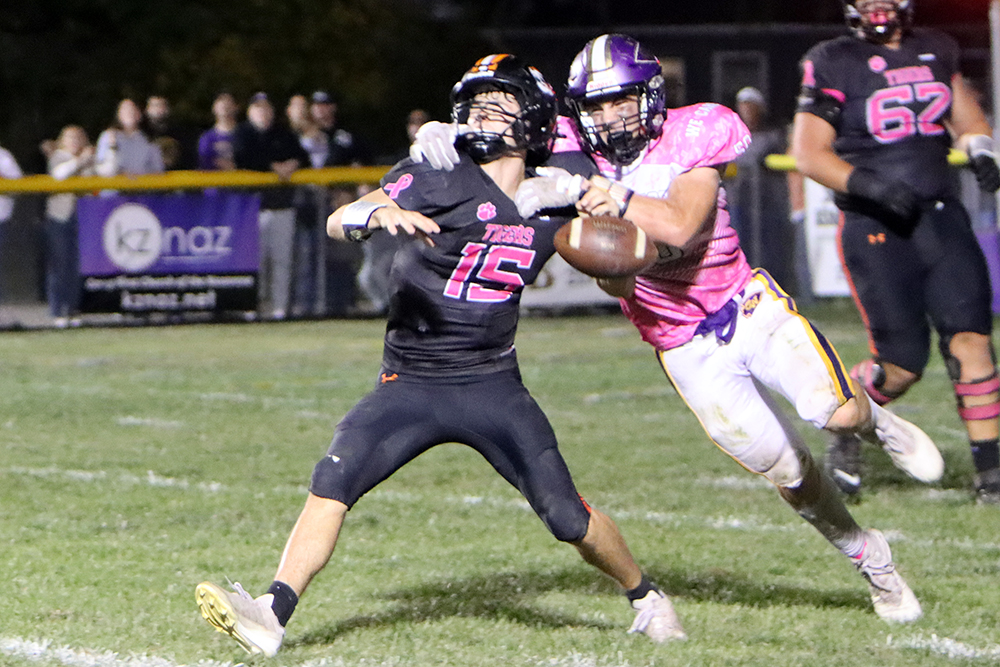
Warriors Fall to Olney 28-27 in Heartbreaking Battle for Little Illini Title

As military branches celebrate 250 years, Democrats vote against paying them

Chicago transit violent crime at 7 year high, funding concerns persist
WATCH: National Guard case before SCOTUS; Trump insists China soybean deal coming

Illinois quick hits: Harvey furloughs some employees; lead poisoning prevention continues

Illinois quick hits: Filings made to SCOTUS in National Guard case; Chicago sued DHS