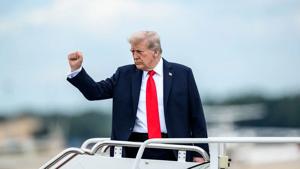
Questions remain on Trump’s plans for $2,000 tariff rebate checks
American consumers hoping for tariff refunds could be disappointed.
The U.S. Supreme Court invalidated President Donald Trump’s tariffs under the 1977 International Emergency Economic Powers Act in February. Trump used a different law to impose a 10% global tariff on U.S. imports, with exceptions, after the high court’s ruling.
Importers paid those taxes to the federal government, and more than 900 have already filed lawsuits to get that money back. Consumers aren’t entitled to a direct refund, though at least one company has said it will issue refunds.
Trump used tariffs to underpin key promises he made since re-taking the White House in 2025, including a proposed $2,000 tariff rebate check for everyone but the wealthy. He has also said tariffs could cover the cost of increased military spending, replace income taxes and pay down the federal government’s $38.7 trillion in debt. Tax watchdogs have said Trump’s tariffs won’t bring in enough money to cover the cost of those plans.
Trump has not spoken about the $2,000 rebate checks since the Supreme Court’s Feb. 20 decision, but his campaign said he’s still considering it.
A campaign email sent Feb. 27 read: “I’m looking into these checks very seriously. … I haven’t made the commitment yet, but I may make the commitment.”
The White House did not respond to questions on Monday from The Center Square about Trump’s tariff rebate plans in the wake of the 6-3 Supreme Court decision.
U.S. Customs and Border Protection reported it assessed $253.3 billion in tariffs, taxes, and fees since Jan. 20, 2025. The Penn Wharton Budget Model projected that the Supreme Court’s tariff ruling would generate up to $175 billion in refunds.
FedEx, one of the large companies that has already filed a lawsuit seeking tariff refunds, said it would give that money back to the people who paid it.
“Our intent is straightforward: if refunds are issued to FedEx, we will issue refunds to the shippers and consumers who originally bore those charges,” the company said in a post on its website. “When that will happen and the exact process for requesting and issuing refunds will depend in part on future guidance from the government and the court.”
Some Democrats have already called for refunds. U.S. Rep. Jasmine Crockett, D-Texas, introduced the Payback Act, which would require the Treasury Department to develop a transparent consumer refund formula and send out payments.
U.S. Treasury Secretary Scott Bessent wasn’t as optimistic about American consumers getting money back.
“I got a feeling the American people won’t see it,” he told the Economic Club of Dallas last month.






Sunny
Latest News Stories
Republican efforts to impeach Walz, Ellison fail in Minnesota
Trump says Iran agrees to turn over ‘nuclear dust’

U.S. Supreme Court slaps down Chevron oil lawsuit

Illinois Quick Hits: Illinois House approves student cell phone ban

Oil prices fall as Trump, Iran say Strait of Hormuz is ‘fully open’

US-Asia Fair Market Alliance launches, urges probe into digital trade practices in Asia

Fugitives arrested in New England sanctuary jurisdictions wanted on homicide charges

ICE director stepping down
Ex-Dem Rep. Stoneback can’t sue gun control group, current Rep. Olickal over NRA smears
Illinois leaders sweat over tight budget; GOP wants more cuts

Pritzker: Swipe fee ban works, banking groups, feds push for repeal

Illinois Quick Hits: State unemployment rate hits 5%