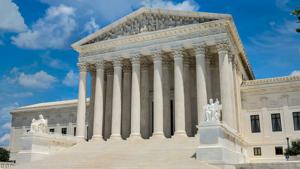
Supreme Court declines to hear felony gun possession case
The U.S. Supreme Court on Monday declined to decide whether individuals with felony records can be permanently disarmed under the Second Amendment.
The court declined to hear Vincent v. Bondi on Monday. The challenge targeted laws banning individuals with felony convictions from possessing firearms.
Melynda Vincent, a social worker and nonprofit founder, was convicted of federal bank fraud in 2008 for attempting to pass a fraudulent check. While nonviolent, the felony prohibits Vincent from possessing firearms.
In Vincent v. Bondi, Vincent argued the prohibition violated her Second Amendment rights. She sought to have the law declared unconstitutional and for an injunction to prevent the U.S. attorney general from enforcing it against her.
After denials in lower court, Vincent sought relief from the U.S. Supreme Court.
“Text, history, and tradition show that the government cannot permanently disarm Ms. Vincent – a single mother, social worker, adjunct college professor, and nonprofit founder with two college degrees – solely because of one seventeen-year-old conviction for passing a bad check,” Vincent’s lawyers wrote in a petition to the Supreme Court.
The government disputed Vincent’s claims of a permanent ban from the possession of firearms. In a petition to the court, lawyers for the Trump administration said the government reinstated a process for convicted felons to gain their rights to possess firearms, leaving Vincent’s challenge on a faulty basis.
Even still, lawyers for the government argued the ban on firearm possession for felons aligns with the history and tradition of the Second Amendment.
“American colonies imposed that penalty even for non-violent crimes such as counterfeiting, squatting on Indian land, burning timber intended for house frames, horse theft, and smuggling tobacco,” lawyers for the government wrote in a brief to the court.
Additionally, the Supreme Court denied similar petitions from Selim Zherka and Steven Duarte, who both sought permission from the government to possess firearms despite previous non-violent felony convictions.
The Supreme Court’s denial comes as justices on the bench prepare to hear a significant case on Second Amendment rights for individuals who engage in regular drug use on Monday. The case, U.S. v. Hemani, could drastically expand gun rights in the United States.





Chance Showers And Thunderstorms
Latest News Stories
Trump continues pursuit for peace in Eastern Europe, Middle East

WATCH: Sanctuary policies, public safety debated; House resolutions criticize Trump
Illinois quick hits: Pritzker tax payments revealed; teen abortion rate 3rd highest
Poll: Majority of Americans concerned with rise in political violence
Brief filed in effort to restore Fourteenth Amendment, end birthright citizenship

Federal judge extends order on NYC anti-terrorism funds
Trump says he may attend Supreme Court case challenging tariffs

L.A. County declares state of emergency for immigrants

Governors announce new multi-state health alliance

Horton resigns from DeKalb County School District
Second nationwide ‘No Kings Day’ protest set for Saturday
Trump, Patel tout ‘historic’ crime crackdown