
Supreme Court declines to hear felony gun possession case
The U.S. Supreme Court on Monday declined to decide whether individuals with felony records can be permanently disarmed under the Second Amendment.
The court declined to hear Vincent v. Bondi on Monday. The challenge targeted laws banning individuals with felony convictions from possessing firearms.
Melynda Vincent, a social worker and nonprofit founder, was convicted of federal bank fraud in 2008 for attempting to pass a fraudulent check. While nonviolent, the felony prohibits Vincent from possessing firearms.
In Vincent v. Bondi, Vincent argued the prohibition violated her Second Amendment rights. She sought to have the law declared unconstitutional and for an injunction to prevent the U.S. attorney general from enforcing it against her.
After denials in lower court, Vincent sought relief from the U.S. Supreme Court.
“Text, history, and tradition show that the government cannot permanently disarm Ms. Vincent – a single mother, social worker, adjunct college professor, and nonprofit founder with two college degrees – solely because of one seventeen-year-old conviction for passing a bad check,” Vincent’s lawyers wrote in a petition to the Supreme Court.
The government disputed Vincent’s claims of a permanent ban from the possession of firearms. In a petition to the court, lawyers for the Trump administration said the government reinstated a process for convicted felons to gain their rights to possess firearms, leaving Vincent’s challenge on a faulty basis.
Even still, lawyers for the government argued the ban on firearm possession for felons aligns with the history and tradition of the Second Amendment.
“American colonies imposed that penalty even for non-violent crimes such as counterfeiting, squatting on Indian land, burning timber intended for house frames, horse theft, and smuggling tobacco,” lawyers for the government wrote in a brief to the court.
Additionally, the Supreme Court denied similar petitions from Selim Zherka and Steven Duarte, who both sought permission from the government to possess firearms despite previous non-violent felony convictions.
The Supreme Court’s denial comes as justices on the bench prepare to hear a significant case on Second Amendment rights for individuals who engage in regular drug use on Monday. The case, U.S. v. Hemani, could drastically expand gun rights in the United States.





Chance Showers And Thunderstorms
Latest News Stories

About Us

Everyday Economics: CPI takes center stage as tariff-driven price pressures mount

100 Women Who Care donates $4,800 to Casey Township Library

Net negative migration is harmful to the economy, economists say

Details pending on billions in foreign investments coming from trade deals
Texas House sues six Democrats absconding in California

With antisemitism on the rise, a glimmer of hope at Jewish delis

‘Exactly what we need’: First expedited coal lease advances

In six months, ICE arrests 350 gang members in Houston

Faculty Union Asks for Delay, But Lake Land Board Approves New Stipends and Postpones Grievance Response
Multiple briefs filed with Texas Supreme Court in Abbott lawsuit against Wu
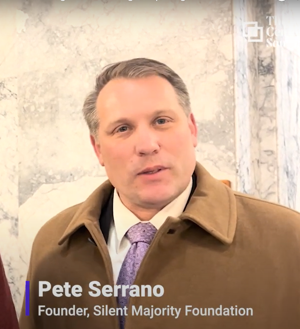
Pasco Mayor Pete Serrano to take Trump appointment as Eastern WA U.S. attorney