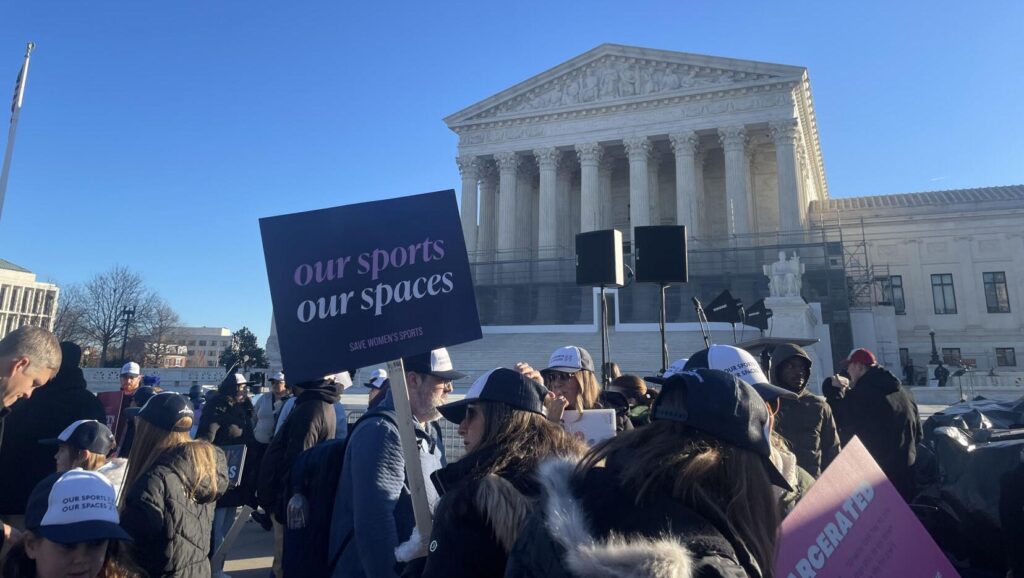
Supreme Court declines to hear felony gun possession case
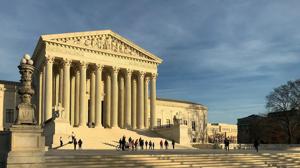
The U.S. Supreme Court on Monday declined to decide whether individuals with felony records can be permanently disarmed under the Second Amendment.
The court declined to hear Vincent v. Bondi on Monday. The challenge targeted laws banning individuals with felony convictions from possessing firearms.
Melynda Vincent, a social worker and nonprofit founder, was convicted of federal bank fraud in 2008 for attempting to pass a fraudulent check. While nonviolent, the felony prohibits Vincent from possessing firearms.
In Vincent v. Bondi, Vincent argued the prohibition violated her Second Amendment rights. She sought to have the law declared unconstitutional and for an injunction to prevent the U.S. attorney general from enforcing it against her.
After denials in lower court, Vincent sought relief from the U.S. Supreme Court.
“Text, history, and tradition show that the government cannot permanently disarm Ms. Vincent – a single mother, social worker, adjunct college professor, and nonprofit founder with two college degrees – solely because of one seventeen-year-old conviction for passing a bad check,” Vincent’s lawyers wrote in a petition to the Supreme Court.
The government disputed Vincent’s claims of a permanent ban from the possession of firearms. In a petition to the court, lawyers for the Trump administration said the government reinstated a process for convicted felons to gain their rights to possess firearms, leaving Vincent’s challenge on a faulty basis.
Even still, lawyers for the government argued the ban on firearm possession for felons aligns with the history and tradition of the Second Amendment.
“American colonies imposed that penalty even for non-violent crimes such as counterfeiting, squatting on Indian land, burning timber intended for house frames, horse theft, and smuggling tobacco,” lawyers for the government wrote in a brief to the court.
Additionally, the Supreme Court denied similar petitions from Selim Zherka and Steven Duarte, who both sought permission from the government to possess firearms despite previous non-violent felony convictions.
The Supreme Court’s denial comes as justices on the bench prepare to hear a significant case on Second Amendment rights for individuals who engage in regular drug use on Monday. The case, U.S. v. Hemani, could drastically expand gun rights in the United States.




Sunny
Latest News Stories

SC weighs whether Amazon must pay workers for mandatory COVID screenings

WATCH: Tax increase talk at Statehouse; Bost’s election lawsuit against Illinois wins standing
Illinois Quick Hits: Indiana governor ‘working hard’ to attract Bears
Vance’s tie-breaking vote tanks resolution restricting Venezuela military actions

Federal court upholds California congressional redistricting

Trump orders new mediation for New York rail contract dispute

U.S. House passes two more govt funding bills, sending to Senate

Governors seek delay on sharing cost of food stamp errors
Supreme Court ruling allows Bost to challenge Illinois election law

Illinois quick hits: Illinois auto insurance rates dropping

SCOTUS rules on warrantless searches, double convictions and election suits

WATCH: WA Democrats criticize reporter probes into potential daycare fraud