Costco faces lawsuit as consumers seek refunds from invalid tariffs
(The Center Square) – A member is suing warehouse retailer Costco to recoup his tariff costs, the latest sign that refunding President Donald Trump’s invalid tariffs could be a complex battle in the courts.
An Illinois man has initiated a class-action lawsuit seeking refunds, arguing that “the truly injured parties possess no direct avenue for redress.” While consumers ultimately paid much of the tariff costs, federal law grants refunds only to the companies that imported the goods.
“Only the importer of record has standing to seek a refund, regardless of who ultimately paid,” Chicago attorney George Zelcs wrote in the complaint. “Large corporations, even those who passed 100% (or more) of the tariff burden onto customers, remain fully empowered to recover a complete refund for any unlawful tariffs they paid.”
The suit also alleged that Costco, the world’s third-largest retailer, was “a pass-through vehicle” for the president’s tariffs under the International Emergency Economic Powers Act. The Supreme Court ruled in February that the president overstepped and couldn’t use the 1977 law to impose worldwide tariffs.
According to the complaint, “Costco, like most U.S. firms, passed the bulk of the tariff burden onto consumers.”
The complaint also argues that Costco profited from the tariff regime.
“Costco was able to expand margins during the peak of the IEEPA tariff regime by selectively raising prices on tariffed goods,” according to the complaint. “The higher prices consumers paid were a consequence of Costco’s increased cost of importation. Absent the imposition of the unlawful IEEPA tariffs, Costco would not have needed to raise prices on consumers in this way.”
In December, Costco filed its own lawsuit seeking a full refund of tariffs paid to the federal government. The Supreme Court curtailed Trump’s tariffs imposed under IEEPA in February.
Costco operates 918 membership warehouses, including 632 in the U.S. and Puerto Rico. It also operates e-commerce sites in the U.S.
Costco did not immediately respond to requests for comment. However, the company has previously stated that, as with past settlements, tariff refunds will be returned to customers.
“Our commitment will be to find the best way to return this value to our members through lower prices and better values,” if the company gets tariff refunds, Costco CEO Ron Vachris said on an earnings call.
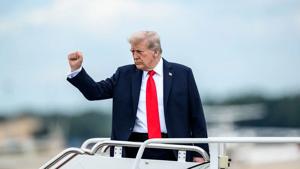
Recent research shows that Americans are bearing the cost of Trump’s tariffs. In 2025, Trump raised import duties to their highest level in more than a century, imposing at least a 10% tariff on all U.S. trading partners. While Trump said foreign countries and companies would pay the tariffs, studies indicate otherwise.
Multiple studies have found the opposite: U.S. businesses and consumers are bearing the brunt of Trump’s tariffs.
Since returning to the White House in 2025, Trump has used tariffs to advance key campaign promises, including proposing a $2,000 tariff rebate for most Americans. He has claimed that tariff revenues could fund increased military spending, replace income taxes, and help reduce the federal government’s $38 trillion debt. However, experts warn that tariff revenue is unlikely to cover the costs of these initiatives.





Chance Showers And Thunderstorms then Showers And Thunderstorms
Latest News Stories
Net negative migration is harmful to the economy, economists say
Details pending on billions in foreign investments coming from trade deals
Texas House sues six Democrats absconding in California
With antisemitism on the rise, a glimmer of hope at Jewish delis

‘Exactly what we need’: First expedited coal lease advances
In six months, ICE arrests 350 gang members in Houston

Faculty Union Asks for Delay, But Lake Land Board Approves New Stipends and Postpones Grievance Response
Multiple briefs filed with Texas Supreme Court in Abbott lawsuit against Wu
Pasco Mayor Pete Serrano to take Trump appointment as Eastern WA U.S. attorney
President Trump hosts Armenia, Azerbaijan for peace treaty signing
Trump, Putin to meet next week
Bill would codify Trump’s executive order banning ‘woke’ debanking