
U.S. Supreme Court rules against automatic prison release punishments
The U.S. Supreme Court, in an 8-1 decision, decided an individual on supervised release is not automatically extended when that person absconds from their release.
The case, Rico v. US, focuses on Isabel Rico who absconded her supervised release while she was on probation after being detained in federal prison. During her probation period, Rico was convicted of a state drug offense.
A judge charged her with time in prison and several months of supervised release.
Justices on the court said Rico cannot be automatically considered for an extension of supervised release just because she violated her previous release.
“The government seeks not a rule that stops the clock or ensures a defendant takes no advantage of abscondment, but one that imposes new punishment by automatically extending supervised release,” Justice Neil Gorsuch wrote in the court’s majority opinion.
The justices argued that the Sentencing Reform Act protects Rico from automatic additional punishment, even though she absconded her supervised release.
In 1984, Congress passed the Sentencing Reform Act, which created mandatory uniform national guidelines to increase transparency and unity in federal sentencing practices.
“The Act already provides many ways to ensure defendants do not profit from violations without automatically extending the period beyond what a judge ordered,” Gorsuch wrote.
Justice Samuel Alito provided the lone dissenting opinion. He argued the Sentencing Reform Act was used by the judge to determine Rico’s punishment after she absconded supervised release.
“It seems strange to regard a crime committed after the expiration of “unsupervised supervised release” as a non-event,” Alito wrote. “By that logic, if petitioner had gone on a murder spree after the expiration of the period of unsupervised supervised release, the sentencing judge would have been required to put that out of his mind.”




Slight Chance Showers And Thunderstorms then Chance Showers And Thunderstorms
Latest News Stories
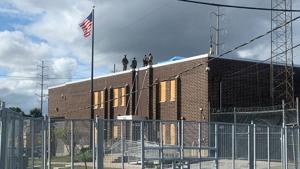
Broadview, Illinois reduces ICE protest zone after ‘chaos,’ 15 arrests
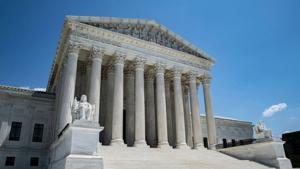
Louisiana: Voting Rights Act ‘balkanizes’ competing racial factions

Illinois’ ‘F’ grade leaves taxpayers on the hook for billions, watchdog says

Democrat Mills to challenge Collins with for U.S. Senate

Some New York school districts spend almost or more than $100,000 a student

Illinois quick hits: Chicago Jewish Alliance on peace developments; Blue Ribbon Schools announced

WATCH: Trump’s emergency Guard appeal denied; Fiscal Fallout reviews state salaries

Reforms prompt big money appeals in IL biometrics cases

Trump delivers message of peace, hope during historic Knesset address

Meeting Summary and Briefs: Casey City Council for October 6, 2025

Casey Amends Nuisance Ordinance to Standardize Penalties

Everyday Economics: Data blackout: Why the growth narrative doesn’t hold up