
U.S. Supreme Court rules against automatic prison release punishments
The U.S. Supreme Court, in an 8-1 decision, decided an individual on supervised release is not automatically extended when that person absconds from their release.
The case, Rico v. US, focuses on Isabel Rico who absconded her supervised release while she was on probation after being detained in federal prison. During her probation period, Rico was convicted of a state drug offense.
A judge charged her with time in prison and several months of supervised release.
Justices on the court said Rico cannot be automatically considered for an extension of supervised release just because she violated her previous release.
“The government seeks not a rule that stops the clock or ensures a defendant takes no advantage of abscondment, but one that imposes new punishment by automatically extending supervised release,” Justice Neil Gorsuch wrote in the court’s majority opinion.
The justices argued that the Sentencing Reform Act protects Rico from automatic additional punishment, even though she absconded her supervised release.
In 1984, Congress passed the Sentencing Reform Act, which created mandatory uniform national guidelines to increase transparency and unity in federal sentencing practices.
“The Act already provides many ways to ensure defendants do not profit from violations without automatically extending the period beyond what a judge ordered,” Gorsuch wrote.
Justice Samuel Alito provided the lone dissenting opinion. He argued the Sentencing Reform Act was used by the judge to determine Rico’s punishment after she absconded supervised release.
“It seems strange to regard a crime committed after the expiration of “unsupervised supervised release” as a non-event,” Alito wrote. “By that logic, if petitioner had gone on a murder spree after the expiration of the period of unsupervised supervised release, the sentencing judge would have been required to put that out of his mind.”



Sunny
Latest News Stories
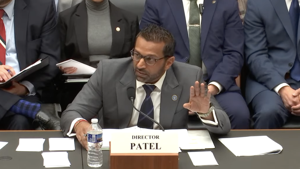
Congressman calls Patel a ‘breath of fresh air’ for the FBI

Arizona Senate leader seeks to rename highway after Kirk

Southern California events canceled because of ICE

House committee to investigate nexus between CCP, ‘civil unrest’
Report: Congress authorized $15 trillion in ’emergency’ deficit spending since 1991
House Dems press Patel on handling of the Epstein files

Illinois quick hits: Suspect in custody after state senator’s home struck with gunfire

WATCH: Governor candidate: Low-cost districts shine while most IL schools spend, fail

Fed cuts rates after holding off for months amid tariff turmoil
WATCH: Pritzker threatens executive action regulating hemp if legislature won’t act

Exclusive: Laws exacerbate firearm instructors shortage
House committee to examine possible link between ‘radicalization,’ social media apps