U.S. Supreme Court rules against automatic prison release punishments
The U.S. Supreme Court, in an 8-1 decision, decided an individual on supervised release is not automatically extended when that person absconds from their release.
The case, Rico v. US, focuses on Isabel Rico who absconded her supervised release while she was on probation after being detained in federal prison. During her probation period, Rico was convicted of a state drug offense.
A judge charged her with time in prison and several months of supervised release.
Justices on the court said Rico cannot be automatically considered for an extension of supervised release just because she violated her previous release.
“The government seeks not a rule that stops the clock or ensures a defendant takes no advantage of abscondment, but one that imposes new punishment by automatically extending supervised release,” Justice Neil Gorsuch wrote in the court’s majority opinion.
The justices argued that the Sentencing Reform Act protects Rico from automatic additional punishment, even though she absconded her supervised release.
In 1984, Congress passed the Sentencing Reform Act, which created mandatory uniform national guidelines to increase transparency and unity in federal sentencing practices.
“The Act already provides many ways to ensure defendants do not profit from violations without automatically extending the period beyond what a judge ordered,” Gorsuch wrote.
Justice Samuel Alito provided the lone dissenting opinion. He argued the Sentencing Reform Act was used by the judge to determine Rico’s punishment after she absconded supervised release.
“It seems strange to regard a crime committed after the expiration of “unsupervised supervised release” as a non-event,” Alito wrote. “By that logic, if petitioner had gone on a murder spree after the expiration of the period of unsupervised supervised release, the sentencing judge would have been required to put that out of his mind.”





Mostly Sunny then Slight Chance Showers And Thunderstorms
Latest News Stories

Iran reverses course, closes Strait of Hormuz

Los Angeles school district seeks state’s money for pay hikes
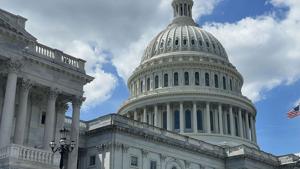
Congress kicks off government funding process for 2027
Seattle affordable housing goal elusive despite millionaire’s tax

Illinois Quick Hits: Teachers union says CPS to bus students to rally

Pritzker says of BUILD Plan for homes would not cost taxpayers

Hermann’s Two-Way Dominance Propels Robinson Past Casey-Westfield 3-1

Illinois GOP aims to keep power plants open, increase charge transparency

Inspector: Chicago finance department lacks tools to collect $8.1 billion owed

Congress passes FISA Section 702 stopgap after 18-month extension fails in House

Five-Run Fifth Inning Propels Casey-Westfield Past Robinson 7-3

Illinois lawmakers seek to eliminate state diversity commission