
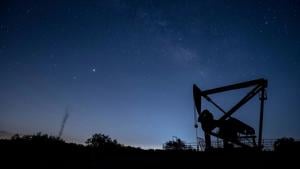
Dallas Fed: Geopolitical conflicts creating uncertainty for U.S. oil and gas industry
A new quarterly Dallas Fed Energy Survey indicates the U.S.-Israeli conflict with Iran and other geopolitical conflicts are negatively impacting and creating uncertainty for the U.S. oil and natural gas industry.
Oil prices and associated costs are expected to remain high even after the conflict ends.
Many exploration and production (E&P) firms said they are going to “wait and see” on new drilling due to increased costs and instability in the market the conflict has created.
Despite President Donald Trump’s campaign pledge to “drill baby drill” and “unleash” domestic production in the U.S., it has not fully materialized. There are 49 fewer operational oil rigs since he’s been in office, according to Baker Hughes. Rig counts are down globally by 96 since March 2025.
“Until the conflict with Iran is stopped, the price risk of oil and natural gas increases will continue and likely exaggerate with a clear inflation rate increase,” E&P firms replied in the survey.
They also said their “operators are going to take a wait-and-see stance on any increased drilling plans to see how oil and gas prices fare over the next six months. We could all use what could be a short-term cash flow boost to repair balance sheets, reduce debt and get caught up on deferred but necessary capital spending, operating spending and general spending outside of drilling.”
“The geopolitical aspect of our industry cannot be ignored,” survey respondents added. “Today there is Iran’s efforts to close the Strait of Hormuz and the continued Ukrainian war with Russia. China and Taiwan are brewing. One has to expect wild swings based on world conflict.”
The E&P firms also raised concerns about U.S. reserves, noting they are “about half of what full can be.” Trump is draining them to low levels to offset higher costs at the pump.
There are roughly 30 publicly listed independent E&P firms in the U.S. with market capitalizations of more than $1 billion each, the Fed notes. When asked how many they believed would still be operating by the end of the decade, the majority of respondents said between 19 and 24.
Roughly half of the E&P executives whose firms drilled or completed horizontal wells in the past two years said their firms’ drilling plans haven’t changed this year. Twenty-six percent said their firms expected to slightly increase drilling; 21% said their firms’ plans for drilling were to “increase significantly.”
The Dallas Fed confirmed that E&P firms need $66 per barrel (p/b) on average to profitably drill a new well. “Average break-even prices to profitably drill range from $62 to $70 per barrel. Break-even prices in the Permian Basin average $67 per barrel,” the report notes.
Oil and gas production was little changed in the first quarter, although activity in the sector increased and the business activity index and company outlook index also turned positive, the Fed said.
Overall costs and the finding and development costs index also increased compared to the prior quarter, the report states.
Respondents said they expect a West Texas Intermediate (WTI) futures oil price to reach $74 p/b by the end of the year. WTI spot prices averaged $94.65 p/b during the survey period, the Fed notes.
On Thursday morning, the WTI was climbing to more than $112 p/b, up nearly 13% from Wednesday’s close.
“Even if the conflict were to end tomorrow and the Strait of Hormuz were to reopen, oil prices would not return to pre-conflict levels of $67 per barrel,” Andrew Lipow, with Houston-based Lipow Oil Associates, said. “The damage to energy infrastructure is done and will take months, if not years, to repair the more extensively damaged facilities. The damage to Ras Laffan in Qatar will reduce LNG supplies while damage to area refineries will reduce gasoline and diesel availability.”
Impacts on the Texas industry include higher oil prices that provide short-term benefit for producers and royalty owners and increased costs at major refineries, Ed Longanecker, president of the Texas Independent Producers and Royalty Owners Association (TIPRO), told The Center Square. This leads to higher costs for consumers, “which is simply a factor of market dynamics that we have no control over,” he said.
“The Texas oil and gas industry prefers stability over volatility, even if higher prices deliver short-term financial benefits to some operators. Predictable markets allow for better long-term planning, sustained investment, and reliable supply to consumers.”






Chance Showers And Thunderstorms then Showers And Thunderstorms
Latest News Stories

Big Things Attractions
Trash Pick a Day Late

Main Street Closed for Candy Canes on Main

Candy Canes On Main Dec 6 & 7, 2024

- « Previous
- 1
- …
- 194
- 195
- 196