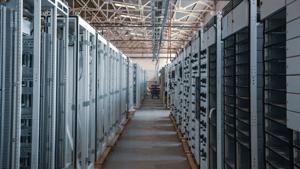
NAACP sues xAI over air pollution near Memphis data center
The NAACP filed a lawsuit in federal court Tuesday against Elon Musk’s xAI, saying the company is illegally operating 27 methane gas turbines in Mississippi to power its Colossus 2 data center complex across the state line in Memphis.
In the lawsuit filed in the U.S. District Court for the Northern District of Mississippi, the NAACP says emissions from the gas turbines violate the Clean Air Act. The Colossus 2 data center near Memphis is the primary training facility for Grok-4, xAI’s next generation chatbot.
The NAACP says between August and December, xAI and its subsidiary MZX Tech, operated 27 gas turbines in Southaven, Miss., “without an air permit or regard for the health and safety of people living nearby.”
Represented by Earthjustice and the Southern Environmental Law Center, the NAACP is suing to halt xAI’s operations until the company obtains permits, installs the most effective pollution controls available, and pays financial penalties for every day that air quality violations occurred.
In response to the legal action, xAI confirmed commitment to environmental standards.
“The temporary power generation units are operating in compliance with all applicable laws,” a company statement said.
“A data center should not be a potential death sentence for a community’s health,” said Abre’ Conner, NAACP director of environmental and climate justice. “By looking to evade clean air laws to operate dirty turbines that emit pollution and known carcinogens, these companies are following a shameful, familiar pattern: asking Black and frontline communities to bear the toxic brunt of ‘innovation.’”
The Southern Environmental Law Center says xAI’s failure to obtain a permit for the power generation plant created health risks for families in northern Mississippi and Memphis in violation of the Clean Air Act, which requires major sources of pollution to obtain air permits before beginning construction or operations.
The plaintiffs contend the gas turbines emit pollutants like formaldehyde and nitrogen oxides into predominantly Black communities already overburdened by industrial pollution.
The NAACP says in the lawsuit that the gas turbines on the Colossus 2 site could potentially emit over 1,700 tons of nitrogen oxides annually, which would make it the largest industrial source of the pollutant in the 11-county Memphis metropolitan area.
The lawsuit filed Tuesday by the NAACP follows a legal fight in 2025 over xAI’s use of gas turbines without permits to power the Colossus 1 data center. In 2024, Mississippi and Tennessee officials allowed xAI to operate gas turbines without a permit because they were classified as “temporary” and “mobile” units intended to run for less than a year. Under this “temporary-mobile” exemption, no official tracking of toxic releases was required.
In June 2025, after the NAACP and the Southern Environmental Law Center issued a formal notice of intent to sue, xAI removed 20 turbines from the Colossus 1 site and eventually obtained permits for the remaining 15 units.
The Colossus 2 data center will host 555,000 Nvidia GPUs and that potentially require 2 gigawatts of generation capacity, according to xAI. At the Colossus 2 site, the company plans to train chatbots with improvements over previous versions that include advanced reasoning abilities, faster data processing, and near-instant response times for end users.
To help manage the massive power load, xAI reports it has deployed about 600 industrial-grade batteries with approximately 2.3 gigawatt-hours of storage designed to provide energy buffer at times of high energy usage by the Colossus data center while also capable of supplying the local grid during peak demand.
According to the NAACP, the gas turbines at the site still pose a significant risk, with potential annual emissions of 180 tons of fine particulate matter, 500 tons of carbon monoxide, and 19 tons of formaldehyde – a toxic, cancer-causing chemical.
“xAI’s continued operation of these turbines without a permit and without adequate pollution controls is not only illegal, it’s an insult to families living nearby who for months have expressed serious concerns about how air pollution from the company’s personal power plant could impact their health and well-being,” said Ben Grillot, senior attorney at the Southern Environmental Law Center, a party in the lawsuit.






Showers And Thunderstorms
Latest News Stories

Mary Elizabeth “Betty” (Mills) Boyd Hippler

Board Approves Over $74,000 in Facility Upgrades, Equipment
School District Buys Tractor to Curb Outsourcing Costs, Projects Future Savings
Casey-Westfield School District to Save Over $52,000 on Insurance Premiums
Casey Proposes Electric Rate Hike to Stave Off Deficits; Gas Rates Next Under Review
Casey’s Proposed Budget Jumps 53% to $31 Million, Driven by Grant Opportunities

Meeting Briefs: Casey City Council for July 21, 2025

Patrick Randel Simpson

Roy Lee Hock

Casey Rotary Club Meeting Held

Council Increases Popcorn Festival Funding to $25,000 After Heated Budget Debate

Casey Moves Forward with Hotel Feasibility Study and TIF District Analysis