U.S. Supreme Court slaps down Chevron oil lawsuit
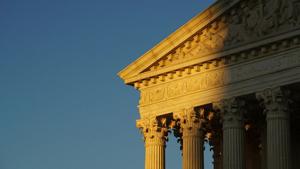
The U.S. Supreme Court, in an 8-0 decision Friday, sent back a state court ruling in favor of oil companies Chevron and ExxonMobil seeking millions of dollars for decades of oil production in Louisiana.
Chevron will now be able to appeal the state verdict in federal court.
The case, Chevron v. Plaquemines Parish, questions to what extent a state court can litigate against an oil company for its production of oil even if it is for federal purposes.
The litigation challenges activities of the oil company dating back to World War II in some cases. After a trial in state court, a jury had awarded Plaquemines Parish a $745 million verdict for coastal damages caused by oil production. But lawyers for Chevron argued that the company was adhering to federal oil production requirements during wartime and the lawsuit belonged in federal court.
“Chevron “act[ed] under federal officers when it performed its refining duties,” Justice Clarence Thomas wrote in the court’s majority opinion.
The court’s justices said state courts cannot pursue litigation against federal entities or companies that contracted under those entities.
“Chevron’s federal contracts can be a but-for cause of the challenged crude-oil production without specifically directing that production,” Thomas wrote.
All justices on the court agreed that the state court was not the proper venue for the litigation of the case, allowing Chevron to move the case to federal court, a potentially friendlier venue.
“The case arises from a broader campaign of woke lawfare in which activists and municipal governments seek to use courtrooms to determine what companies are allowed to produce and what consumers can buy,” O.H Skinner, executive director of Alliance for Consumers, said.
Justice Samuel Alito recused himself from the case.
Christopher Mills, constitutional lawyer and former law clerk to U.S. Supreme Court Justice Clarence Thomas, said: “The Supreme Cout unanimously vindicated the promise of a neutral federal forum for those who help carry out the federal government’s duties. Especially in a time when the government increasingly relies on outside contractors and others to fulfill essential functions, this protection is vital to the government’s operation and the rule of law.”
Prof. John Yoo, former law clerk to Justice Thomas and senior research Fellow at the Civitas Institute, and Michael Toth, research director at the Civitas Institute, issued a joint statement.
“The Supreme Court’s ruling in the Louisiana coastal case is a down payment toward protecting U.S. energy dominance,” they said.
Hon. Michael Mukasey, former United States attorney general, said the decision “provides welcome assurance” to private entities.
“Today’s Plaquemines decision by a unanimous Supreme Court provides welcome assurance to private parties who act in the interest and at the behest of federal authorities that if plaintiffs and their lawyers sue over those acts, those parties will have recourse to federal courts and will not be left at the mercy of plaintiff-friendly state tribunals,” Mukasey said.


Sunny
Latest News Stories

Casey-Westfield FCCLA Ranked No. 1 in Region for Service Hours
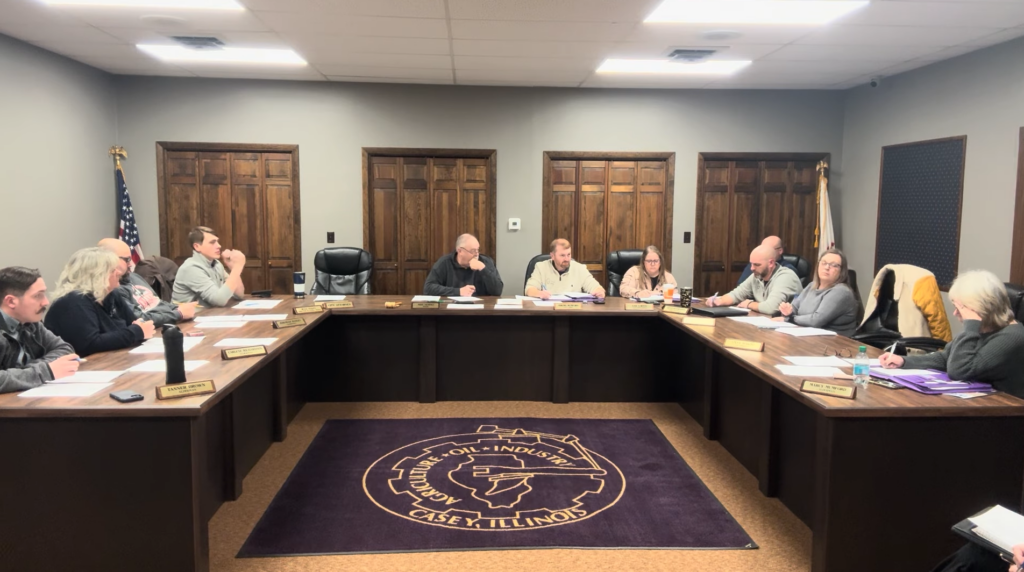
Senate Bill Secures $1 Million for Casey Sewer Improvements
EXCLUSIVE: 5 largest U.S. cities don’t have enough money to pay bills: report
INVESTIGATION: Wisconsin university closes DEI unit but keeps most staff working on equity issues
Board Approves Updated School Resource Officer Agreement
Casey Advances Housing Strategy with Land Bank Transfers and Inspection Contract

Chicago’s $41 billion financial hole exposes city’s pension crisis
Trump seeks $1B from Harvard in federal funding dispute
Lawmakers react to U.S. Supreme Court’s ruling on Prop. 50

WATCH: Senators slam fraud, call for welfare scrutiny in Minnesota

Nurses demand inclusion in professional degree definition
Early voting starts Thursday in most Illinois jurisdictions